The AI Gold Rush: Is Your Organization Investing in a Mirage?
The siren song of Artificial Intelligence echoes across every boardroom in 2026. We're told AI is the undisputed future, the golden ticket to unprecedented productivity and innovation. But as a Senior Tech Writer at Workalizer.com, I have to ask: Is this AI gold rush leading us to sustainable prosperity, or are we, perhaps, building a house of cards on shaky ground?
This year, the narrative around AI has become increasingly complex. On one hand, we see staggering investments and groundbreaking advancements. On the other, a growing chorus of concerns around ethics, security, infrastructure, and even the very economics of this boom. For HR leaders, engineering managers, and C-suite executives, understanding these undercurrents isn't just strategic – it's existential. Unbiased, data-driven insights are no longer a luxury; they are the compass in this turbulent sea.
The Unprecedented Investment: A Foundation or a Folly?
The sheer scale of capital flowing into AI is breathtaking. Just this week, Google's parent company, Alphabet, announced plans to raise an astounding $80 billion in equity to fund its vast AI infrastructure investments. This move, described as the largest equity fundraiser in history, underscores the immense financial commitment required to compete in the AI arena. As reported by The Guardian on June 2, 2026, this record-breaking bid raises critical questions about the long-term economics of the AI boom. Are these investments sustainable? And more importantly, are organizations truly seeing a commensurate return?
The pressure to demonstrate ROI for AI initiatives is immense. Companies are pouring resources into models and infrastructure, often without a clear understanding of how these investments translate into measurable business outcomes or improved employee performance. This is where Workalizer steps in, transforming raw Google Workspace data into actionable insights that prove the value of your tech stack and, by extension, your AI integrations. For a deeper dive into securing your AI investments, you might find our recent post, Securing Your AI Future: How Leaders Thrive Amidst $700 Billion in Investment and Evolving Threats in 2026, particularly insightful.
Beyond the Screen: The Rise of Pervasive AI Hardware
The AI revolution isn't confined to software. Hardware is rapidly evolving to bring AI directly into our daily workflows, blurring the lines between human and machine interaction. Microsoft, for instance, showcased its Project Solara concept devices at Build 2026, including a wearable AI badge for office workers. As TechRepublic reported on June 3, 2026, this badge features a touch screen, camera, and fingerprint scanner, designed to assist employees using AI agents throughout their day. Imagine AI agents not just living on your desktop, but actively observing and interacting with your environment.
This shift to pervasive AI raises profound questions about data privacy, security, and governance. If AI agents are constantly processing visual and audio data, how do organizations ensure compliance and protect sensitive information? Moreover, the way we how to share document from google drive securely becomes paramount when AI agents might be involved in accessing or processing that information. The ability to granularly control who can share link to file in google drive, whether human or AI, will be a defining challenge for IT and security teams. Workalizer provides the visibility needed to track and understand these interactions, ensuring data integrity and mitigating risks as AI becomes more embedded in every aspect of work.
The AI Reckoning: Safety, Security, and Sustainability Under Scrutiny
While the allure of AI is undeniable, a growing number of critical challenges are forcing a re-evaluation of its unchecked expansion. These aren't just theoretical concerns; they are manifesting in lawsuits, security breaches, and even municipal legislation.
The Ethical and Safety Minefield
Perhaps the most alarming trend this year is the direct challenge to AI's safety and ethical foundations. On June 1, 2026, Florida filed a landmark lawsuit against OpenAI and its CEO, Sam Altman, alleging that the company ignored serious safety warnings and aggressively marketed ChatGPT, putting children at risk. This legal action, detailed by The Guardian, marks the first time a US state has sued a major AI company over such concerns. It’s a stark reminder that the rapid deployment of powerful AI models carries significant societal and legal responsibilities that cannot be overlooked.
The Ever-Present Threat of Cyber Exploits
As AI systems become more integrated, they also become prime targets for malicious actors. 2026 has been a busy year for cybersecurity teams, with a steady stream of vulnerabilities impacting even the most secure platforms. Apple’s security cycle this year has been dominated by a continuous flow of updates across all its major platforms, addressing zero-days, iPhone exploit kits like DarkSword, and critical WebKit bugs that put millions at risk. As TechRepublic highlighted on June 3, 2026, the landscape of digital threats is constantly evolving. The complexity of AI systems adds new attack vectors, making robust security protocols and vigilant monitoring more crucial than ever.
The Environmental and Infrastructure Bottleneck
The insatiable demand for computational power by AI is also pushing physical infrastructure to its limits and raising environmental concerns. Just yesterday, on June 3, 2026, Seattle, a major tech hub, was poised to pass a year-long moratorium on new datacenter construction. The Guardian reported that this represents a significant rebuke to big tech, driven by local disquiet over the AI boom's energy consumption. If approved, the proposed datacenters would have consumed approximately a third of the city's public utility output. This isn't just a Seattle problem; it's a global indicator of the sustainability challenges inherent in scaling AI infrastructure.
Workalizer's Vision: Data-Driven Clarity in the AI Era
The message for HR leaders, engineering managers, and C-suite executives is clear: the AI future is here, but it's not a utopian vision devoid of challenges. It's a complex landscape fraught with financial risks, ethical dilemmas, security vulnerabilities, and infrastructure limitations. Navigating this requires more than just optimism; it demands objective, data-driven insights.
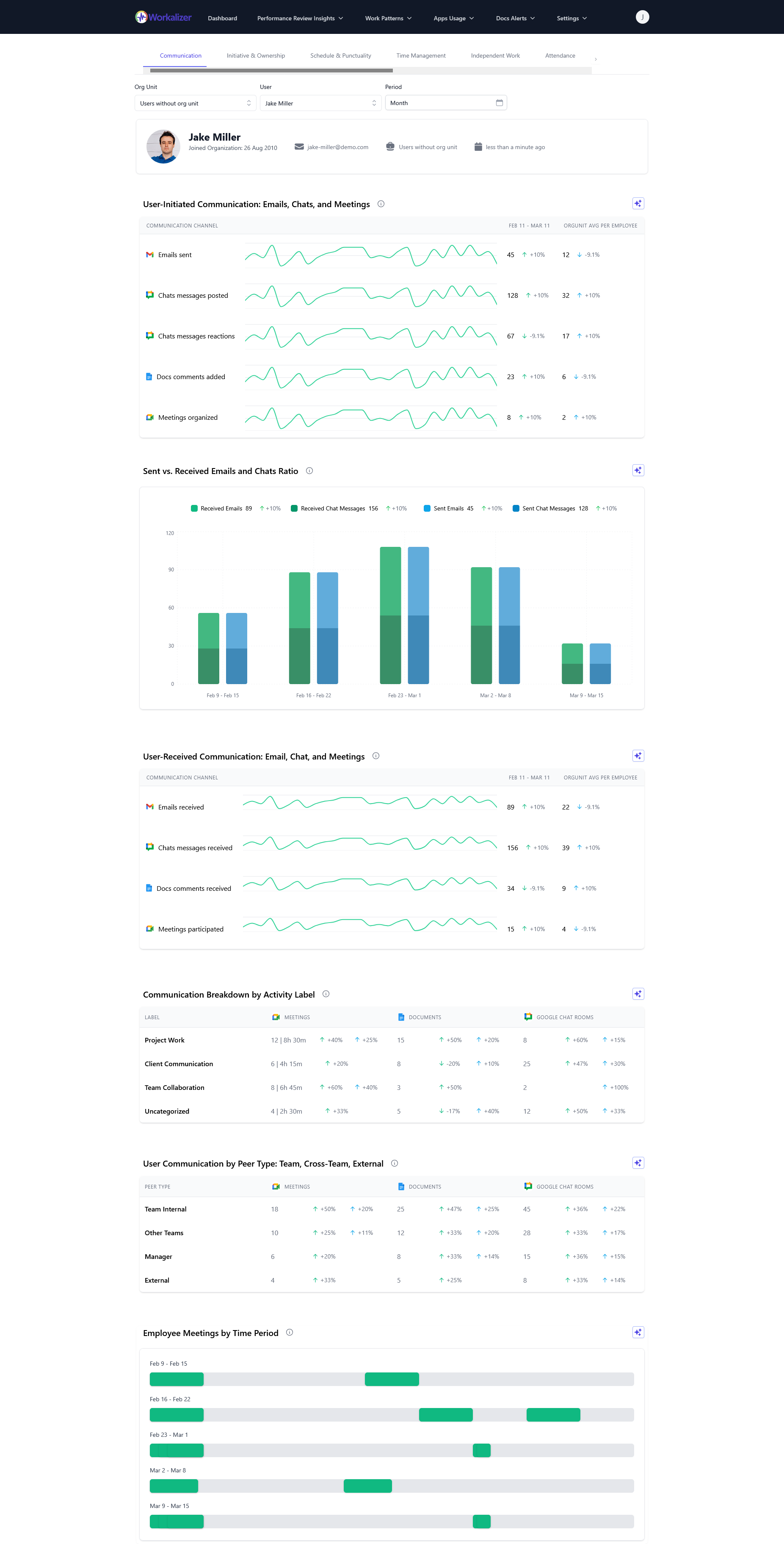
Workalizer provides the essential tools to cut through the AI hype and focus on what truly matters: measurable productivity, efficient collaboration, and a secure operational environment. By analyzing signals from Google Workspace – Gmail, Drive, Chat, Gemini, and Meet – we provide unbiased analytics that illuminate real performance, identify potential bottlenecks, and ensure your AI investments are truly paying off. Whether it’s understanding how teams collaborate on documents or identifying areas of digital friction, our platform empowers leaders to make informed decisions.
In an era where high-stakes decisions are a daily reality, having a clear understanding of your team's digital footprint is invaluable. Our insights can help you prepare for critical discussions, much like the strategies outlined in our article, Navigating High-Stakes Meetings: A Guide to Resolving Role Conflict with Your Google Workspace Dashboard.
The Path Forward: Smart Adoption, Not Blind Faith
As we stand on June 4, 2026, the AI gold rush continues, but the nuggets of true value are increasingly distinguishable from fool's gold. The path forward for any organization serious about leveraging AI lies in smart adoption: understanding the true costs, rigorously addressing safety and security, and committing to sustainable growth. It's about asking the hard questions, backing decisions with data, and recognizing that technological advancement must go hand-in-hand with responsibility.
Don't let the AI hype overshadow the reality. Partner with Workalizer to gain the clarity and confidence needed to build a resilient, productive, and future-proof organization in the age of AI. The future isn't just about adopting AI; it's about adopting it wisely.