Securing Your AI Future: How Leaders Thrive Amidst $700 Billion in Investment and Evolving Threats in 2026
The year 2026 is rapidly solidifying its place in history as the year of unprecedented AI acceleration. Forget incremental upgrades; we are witnessing a full-throttle sprint, fueled by staggering investments and insatiable demand. As HR leaders, Engineering Managers, and C-Suite executives, you're not just observing this shift – you're at the helm, tasked with steering your organization through a landscape brimming with both transformative potential and complex new risks. This isn't a moment for passive observation; it's a call for decisive, data-driven leadership.
The Unstoppable AI Investment Wave: $700 Billion and Counting
We're barely halfway through June 2026, and the scale of investment in artificial intelligence is already breathtaking. Just last week, Google's parent company, Alphabet, announced plans to raise a colossal $80 billion to fund its massive AI infrastructure buildout. This includes a significant $10 billion stock sale to Berkshire Hathaway, underscoring the confidence even in traditional investment powerhouses in AI's future. Alphabet explicitly stated that demand for its AI solutions and services from enterprises and consumers is "exceeding the company’s available supply." This isn't just about Google; the tech industry as a whole is expected to pour an astounding $700 billion into AI capital expenditures this year alone.
What does this mean for your organization? It signals an era where AI isn't a luxury, but a foundational layer for competitive advantage. The ability to integrate, leverage, and manage AI resources effectively will determine market leadership. However, this hyper-investment also creates pressure. How do you ensure your AI spending translates into tangible gains? How do you measure the ROI of new Gemini integrations, advanced analytics, or automated workflows? Without clear visibility into how these tools are actually impacting productivity and collaboration within your Google Workspace, you’re flying blind.
**The Shadow Side of Innovation: Deepfakes, Liability, and the Need for Vigilance
As AI capabilities soar, so do the associated risks. The very technologies designed to enhance communication and efficiency are simultaneously being weaponized by bad actors. We're seeing a sharp rise in AI deepfake impersonation scams, where sophisticated algorithms mimic voices of trusted individuals – family, colleagues, even C-suite executives – to defraud unsuspecting victims. Just yesterday, Google announced a critical rollout of fake call detection to Android 12+ devices, starting with Pixel, to combat this threat. This feature uses a "digital handshake" between devices to verify legitimate calls, providing a crucial layer of defense.
But the threats extend beyond individual scams. The legal and ethical implications of generative AI are becoming increasingly apparent. Florida recently became the first state to sue OpenAI, alleging links between ChatGPT's outputs and real-world violence and self-harm. This landmark case, alongside a string of private lawsuits, highlights the urgent need for companies to not only implement robust security protocols but also to understand their liability in deploying AI. For your teams, this means heightened awareness. Educating employees on how to identify and "report fraudulent gmail account" activity or suspicious communications is no longer optional; it's a critical component of enterprise security.
**Navigating the Evolving AI Regulatory Landscape
The rapid pace of AI development has inevitably led to calls for greater oversight. In a surprising about-face, President Trump issued a new executive order just last week, signalling a tiptoe toward real AI oversight. This order proposes that tech companies would voluntarily allow the government to review their new AI models before public release. While voluntary, this move sets a precedent for increased scrutiny and hints at a future where AI governance will become a significant factor for any enterprise.
For HR leaders and C-Suite executives, this means proactively developing internal AI governance policies. What are your guidelines for AI tool usage? How do you ensure ethical deployment and mitigate bias? Ignoring these questions now could lead to significant compliance headaches and reputational damage down the line. The "Great AI Divergence" is upon us, and as we discussed in a previous post, what enterprise leaders must master in 2026 extends far beyond technical implementation to include robust ethical and regulatory frameworks.
**Optimizing Your Enterprise for the AI-First Era with Google Workspace
In this landscape of hyper-investment and emerging risks, how do you ensure your organization doesn't just survive but thrives? The answer lies in data-driven efficiency, particularly within your existing digital ecosystem. Microsoft Build 2026, for instance, showcased Satya Nadella's doubling down on AI agents, hinting at a future where intelligent assistants are ubiquitous. Your Google Workspace is already a powerhouse of collaboration and productivity, but are you truly maximizing its potential in an AI-first world?
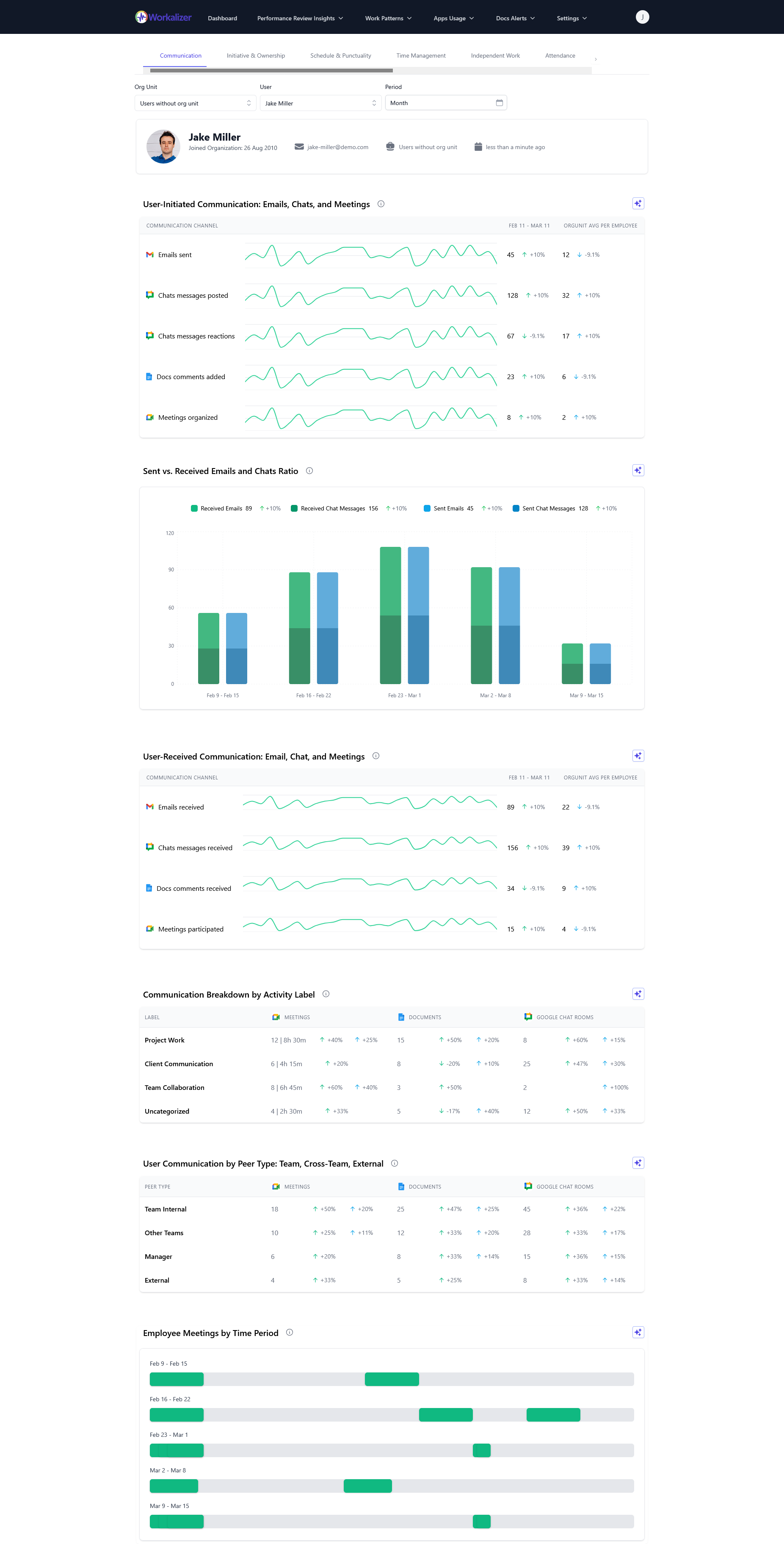
Understanding precisely "how to use google docs for collaboration" effectively, for example, goes beyond mere feature knowledge. It’s about analyzing usage patterns: Are teams truly collaborating efficiently, or are they getting bogged down in endless revisions and communication silos? Are your Google Meet sessions productive, or are they a drain on valuable time? Workalizer.com is purpose-built for this exact challenge. By analyzing signals from Gmail, Drive, Chat, Gemini, and Meet, we provide data-driven, unbiased productivity analytics that highlight exactly where your teams are excelling and where opportunities for improvement lie. This granular insight helps HR leaders identify training needs, empowers Engineering Managers to streamline workflows, and provides C-Suite executives with a clear picture of organizational efficiency. It’s about turning raw usage data into actionable strategies that optimize your human capital, even as AI tools become more prevalent. For example, understanding how different teams approach navigating high-stakes meetings can reveal critical insights into communication effectiveness.
****The Path Forward: Data, Diligence, and Decisive Leadership
The year 2026 is proving to be a watershed moment for AI. The sheer scale of investment – exemplified by Alphabet's $80 billion raise and the industry's $700 billion commitment – underscores AI's undeniable role in our future. Yet, this progress is tempered by the very real threats of deepfake scams and the growing call for regulatory oversight. For enterprise leaders, the path forward is clear: embrace the transformative power of AI, but do so with vigilance, an unwavering commitment to security, and a data-driven approach to organizational efficiency. Tools like Workalizer are no longer just an advantage; they are an essential compass for navigating this complex, exhilarating new frontier.