Navigating High-Stakes Meetings: A Guide to Resolving Role Conflict with Your Google Workspace Dashboard
Navigating High-Stakes Meetings: A Guide to Resolving Role Conflict
In the dynamic world of work, it's not uncommon for employees to find themselves at a crossroads with their managers regarding role expectations, responsibilities, and overall strategic alignment. These situations, often simmering for months, can culminate in a high-stakes meeting involving senior leadership. While daunting, such meetings present a unique opportunity for clarity and resolution.
Consider a scenario recently highlighted in an online HR forum: an employee in the UK, the sole holder of their job title and the institutional knowledge for critical processes, found themselves in a months-long conflict with their direct manager. The core issue? A fundamental disagreement on the scope and expectations of their role, diverging from their job description. With an outside opportunity on the table, the employee proactively engaged their VP, leading to a mediated meeting with both their boss and the VP. The VP, recognizing the employee's value and initiative, asked everyone to come prepared with their biggest priorities for the role.
This situation, while specific, offers universal lessons for both employees and People Ops professionals. How do you prepare for such a pivotal conversation, articulate your value, and navigate potential friction without damaging crucial relationships? More importantly, how can objective data support your case for resolution and growth?
Why Preparation is Paramount for Resolution
A high-stakes meeting isn't just a discussion; it's a strategic engagement. Walking in unprepared can lead to misunderstandings, missed opportunities, and a reinforcement of existing tensions. For the employee, it's a chance to redefine their narrative, showcase their indispensable contributions, and steer their career trajectory. For the organization, it's an opportunity to retain valuable talent and ensure role clarity aligns with business objectives.
It's Not Just About You
Remember, your manager and their boss also have priorities. Your manager might feel their authority is being undermined, or they might genuinely believe their expectations are aligned with company goals, even if they conflict with your understanding. The VP, on the other hand, is likely looking for a solution that benefits the company first and foremost – retaining talent, ensuring productivity, and maintaining a functional team dynamic. Understanding these perspectives is crucial for effective preparation.
Your Pre-Meeting Preparation Checklist
Effective preparation involves more than just thinking about what you want to say. It requires data, empathy, and a clear vision for the future.
1. Document Your Contributions and Impact
This is your opportunity to quantify your value. Go beyond your job description and list your achievements, projects you've led, processes you've optimized, and any unique knowledge you possess. Think about the impact of your work on the company's bottom line, efficiency, or strategic goals.
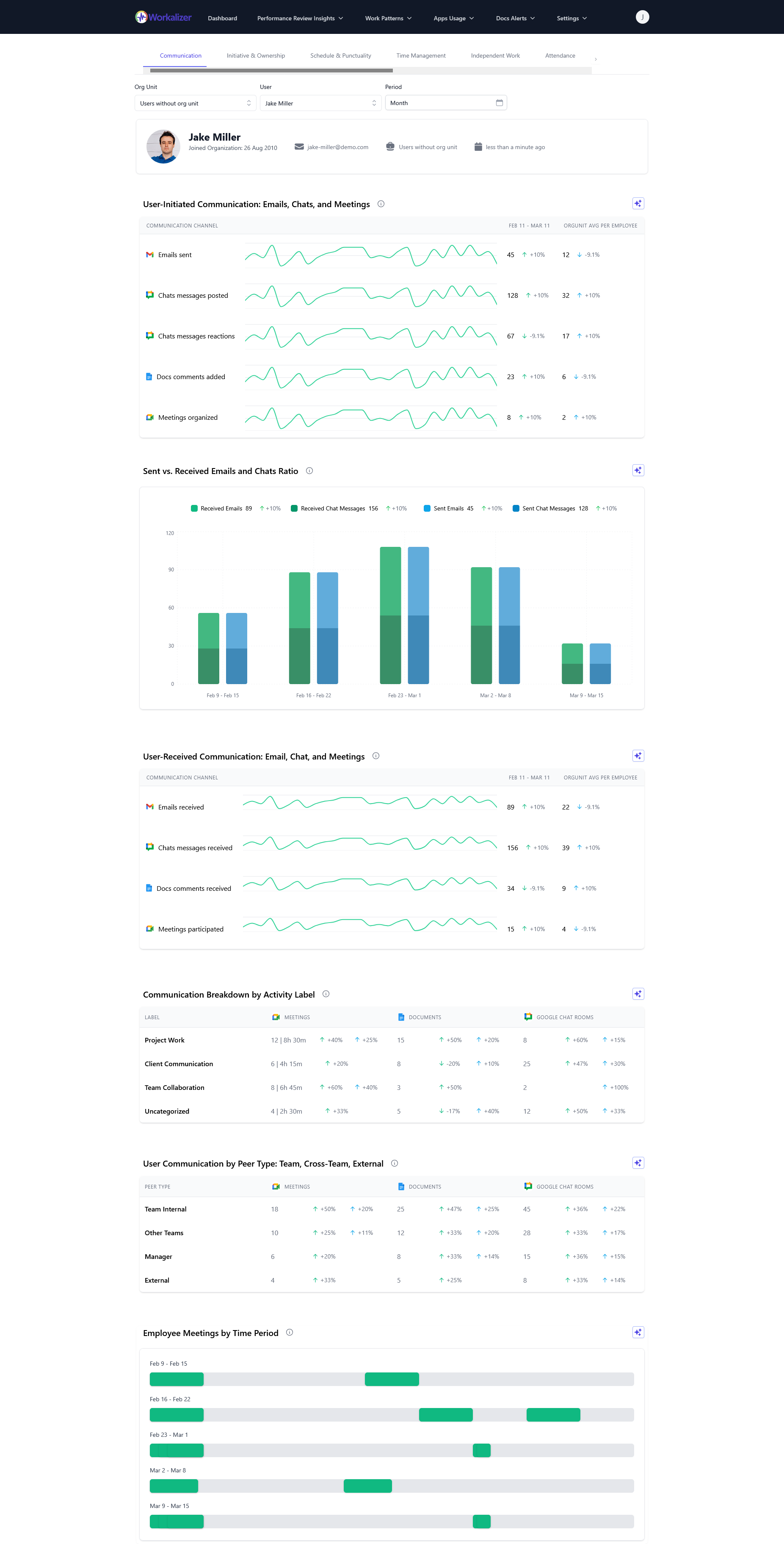
Where Workalizer Helps: This is where objective data becomes your most powerful ally. Tools like Workalizer can provide a clear picture of your activity and contributions within Google Workspace. You can leverage the Google Workspace dashboard to review your overall engagement, demonstrating your active participation and workload. Specifically, the Google Drive usage report can highlight your contributions to shared documents, presentations, and spreadsheets, showcasing your role in creating and maintaining critical company knowledge – especially vital if, like our Reddit user, you're the sole keeper of process knowledge. This data can help you articulate the volume and significance of your work, and even identify areas where documentation is lacking but your activity is high.
2. Clarify Your Role and Vision
Review your original job description. What were the core responsibilities? How have they evolved? Articulate what you believe your role should be, aligning it with your skills, the company's strategic direction, and your career aspirations. Be prepared to present a clear, concise vision for your role that benefits both you and the organization.
3. Anticipate Their Perspective
Put yourself in your manager's and the VP's shoes. What are their biggest priorities for your role? What concerns might they have? What specific examples of conflict or misalignment might they bring up? Preparing for these points will allow you to respond thoughtfully rather than react defensively.
4. Craft Your Narrative: Solutions Over Accusations
The goal is resolution, not blame. Instead of saying, "My manager constantly gives me tasks outside my job description," frame it as: "I've noticed a divergence between my core responsibilities and some of the tasks I've been assigned. I'd like to discuss how we can best align my efforts with the strategic priorities of my role, perhaps by documenting current processes to free up my capacity for higher-level initiatives." Focus on the impact of the conflict on productivity and team dynamics, not on personal failings.
5. Strategize for the Outside Opportunity (If Applicable)
If you have an outside opportunity, as our Reddit user did, decide how you want to use this information. It can serve as leverage, signaling your market value and the urgency of resolution. However, it should be handled delicately. Instead of an ultimatum, frame it as: "I've been approached about opportunities that reflect my growth and expertise, but my preference is to resolve these issues and continue contributing to [Company Name]. I believe there's a path forward where my role can evolve to meet both my aspirations and the company's needs."
Navigating the Conversation: During the Meeting
Once in the meeting, your demeanor and communication style are just as important as your prepared points.
Focus on Solutions, Not Blame
Maintain a professional and collaborative tone. Use "I" statements to express your feelings and observations without accusing others. For example, "I feel that my contributions are not fully utilized when I'm focused on X, and I believe I could add more value by focusing on Y."
Active Listening and Openness
Listen intently to your manager's and the VP's perspectives. Acknowledge their points, even if you disagree. This shows respect and a willingness to find common ground. Be open to feedback and compromise.
Propose Concrete Next Steps
Don't just discuss problems; propose solutions. This could include a revised job description, a clear project plan, a schedule for regular check-ins, or a plan to document processes. For instance, "To ensure clarity, I propose we collaboratively update my job description to reflect current and future priorities, and establish quarterly reviews using a structured framework like Workalizer's Performance Review for Employee to ensure ongoing alignment."
Post-Meeting: Solidifying the Path Forward
The meeting isn't the end; it's the beginning of a new chapter. Follow up promptly with a summary of the discussion, agreed-upon action items, and next steps. This ensures everyone is on the same page and provides a documented record of the conversation. Schedule follow-up meetings to review progress and address any new issues.
Where Workalizer Helps: Data-Driven Clarity in Role Definition
In situations of role conflict, objective data can be a game-changer. Workalizer provides the insights needed for both employees and managers to have more productive conversations:
- Performance Review for Employee: Employees can use their activity data to highlight their contributions and demonstrate engagement, providing concrete evidence for discussions about role scope and impact. See also: /help/guides-and-how-tos/performance-review-for-employee/
- Performance Review for Manager: Managers can gain a holistic view of team member activity, helping them understand where time is being spent and identify potential misalignments between expectations and actual work patterns. See also: /help/guides-and-how-tos/performance-review-for-manager/
- Google Drive Usage Report: Essential for understanding collaboration and documentation efforts. If an employee is the sole holder of critical process knowledge, this report can show their extensive involvement in creating and managing files, underscoring the need for better documentation and knowledge transfer. This data can be accessed via the www.https://workspace.google.com/dashboard or directly through Workalizer. See also: /help/guides-and-how-tos/google-drive-usage-report/
- Activity Labels: By applying labels to specific projects or tasks, both employees and managers can track time allocation more effectively, providing data-backed insights into where effort is truly being spent versus where it should be. See also: /help/guides-and-how-tos/activity-labels/
By leveraging these tools, organizations can move beyond subjective interpretations and foster a culture of data-driven performance management, ensuring that every role is clearly defined and aligned with strategic objectives.
Conclusion
High-stakes meetings, while stressful, are crucial inflection points for career growth and organizational health. By approaching them with thorough preparation, a solution-oriented mindset, and objective data, both employees and managers can transform conflict into clarity, fostering stronger relationships and a more productive work environment. Empower yourself with data, articulate your value, and pave the way for a resolution that benefits everyone.