Unlock Unprecedented Efficiency: How AI's Rapid Evolution Reshapes Your Enterprise in 2026
We're standing on the precipice of a technological acceleration unlike anything we've witnessed before. As of May 2026, the narrative around Artificial Intelligence has shifted from speculative future to undeniable present. It's no longer just about incremental improvements; it's about exponential leaps that are fundamentally redefining industries, driving unprecedented efficiencies, and simultaneously sparking profound questions about the future of work. For HR leaders, engineering managers, and C-suite executives, understanding these shifts isn't just strategic—it's existential.
This year, AI isn't merely a tool; it's a force reshaping market dynamics, organizational structures, and the very definition of productivity. From the factory floor to the boardroom, companies are grappling with the dual promise of immense gains and the looming specter of significant disruption. It’s a pivotal moment demanding proactive adaptation, not passive observation.
The Relentless March of AI: Beyond Incremental Gains
The past year has been a testament to AI's relentless progress, demonstrating capabilities that were once confined to science fiction. We're seeing a convergence of advanced computing, sophisticated algorithms, and real-world application that is unlocking efficiencies previously unimaginable.
From Code Honesty to Autonomous Fleets: AI's Maturation
Consider the leaps in generative AI. Anthropic's recent release of Claude Opus 4.8 is a prime example. This isn't just another model update; it's a significant stride towards more reliable and "honest" AI. Anthropic reports that Opus 4.8 is four times less likely to let code flaws pass unremarked, marking a critical improvement in trustworthiness for agentic tasks. Its performance across benchmarks has seen solid gains, with agentic coding scores rising from 64.3% to 69.2% on Terminal-Bench 2.1, and knowledge work scores improving from 1,753 to 1,890. This level of precision and self-correction is transformative for software development and complex problem-solving. Furthermore, the tease of Mythos-class models, which have already identified over 10,000 critical software vulnerabilities through Project Glasswing, underscores the profound impact AI is having on cybersecurity and system integrity. The market clearly believes in this potential, as Anthropic recently secured a staggering $65 billion Series H round, pushing its post-money valuation to an eye-watering $965 billion.
The automotive sector, too, is experiencing a revolution driven by AI. China's BYD, the world's largest EV maker, has unveiled the Xuanji A3, its first automotive-grade 4nm driving chip. This chip delivers a remarkable 700 TOPS (Tera Operations Per Second) of computing power, with a cluster of three chips reaching 2,100 TOPS — enough to support Level 3 and Level 4 autonomous driving functions. What's more, it achieves this with roughly 20% less power consumption than comparable semiconductors. This vertical integration, from chip design to vehicle manufacturing, allows BYD to expand its advanced "God's Eye" driver-assistance system to mass-market models, including the incredibly affordable $10,300 Seagull. This move wasn't just innovation for innovation's sake; it was a strategic pivot driven by eight consecutive months of falling sales and a 55% profit decline, demonstrating how AI can be a catalyst for survival and resurgence.
Waymo, Alphabet's self-driving unit, is also making waves with its sixth-generation Ojai robotaxi. Purpose-built for autonomous ride-hailing, the Ojai cuts the sensor count by a massive 42% compared to its predecessor, yet enhances capabilities with a new 17-megapixel imager that can identify objects up to 500 meters away in darkness. This efficiency translates directly to cost savings, with the Ojai costing roughly $75,000 less to produce per unit than the Jaguar I-PACE it replaces. This is a game-changer for scaling autonomous fleets, making them economically viable for broader deployment in cities like San Francisco, Los Angeles, and Phoenix.
Miniaturization and Predictive Health: The AI You Wear
Beyond industrial applications, AI is also shrinking, becoming more personal and pervasive. Oura's Ring 5, launched this week, is a technological marvel. It's 40% smaller than its predecessor, making it the smallest smart ring on the market at just 6.09mm wide. Despite its diminutive size, it retains sensor accuracy, offers up to nine days of battery life, and introduces AI-powered Health Radar monitoring. This system continuously tracks biometric signals, including body temperature and heart rate variability, to detect patterns suggestive of strain and proactively alert the wearer. The addition of blood pressure pattern detection further solidifies its role as a sophisticated, passive health monitor. With preorders starting at $399 and an anticipated IPO at an $11 billion valuation, Oura is demonstrating the power of AI in discreet, predictive health management — a trend with significant implications for corporate wellness programs and personalized employee health insights.
The Unavoidable Workforce Transformation: Efficiency at a Cost?
While the efficiency gains from AI are undeniable, they come with a profound societal and organizational challenge: workforce transformation. The speed at which AI is automating tasks is accelerating, leading to significant shifts in employment landscapes.
Morgan Stanley recently doubled its forecast for AI-driven job losses across the European banking sector. Their updated estimate suggests that as much as 20% of total banking employment — approximately 400,000 jobs — could be eliminated by 2030. This figure is double the 10% projection made just five months prior in January 2026. The job cuts are concentrated in back-office, KYC-and-AML compliance, and middle-office risk-monitoring positions. What changed so rapidly? Banks are publicly committing to AI-led restructuring at an accelerated pace, and productivity gains from generative AI deployment are materializing faster than even the most bullish 2025 forecasts had assumed. Major institutions like ABN Amro have already announced plans to cut roughly 20% of their full-time workforce by 2028, primarily through automation, while HSBC aims to eliminate around 20,000 jobs as AI absorbs back-office work.
This stark reality underscores a critical dilemma: profit surges driven by AI efficiency are fueling workforce anxiety. As we've explored in our recent post, The AI Paradox of 2026: Why Profit Surges Are Fueling Workforce Anxiety, this isn't just an economic shift; it's a human one. Organizations must proactively address these changes with robust reskilling initiatives, clear communication, and a commitment to redeploying talent where possible, rather than simply reducing headcount.
Adapting Your Enterprise for the AI-Accelerated Future
The message is clear: the pace of AI advancement is not slowing down. For HR leaders, engineering managers, and C-suite executives, this means strategic inaction is no longer an option. The enterprises that will thrive are those that embrace this transformation, focusing on how AI can augment human capabilities, automate repetitive tasks, and unlock new avenues for innovation.
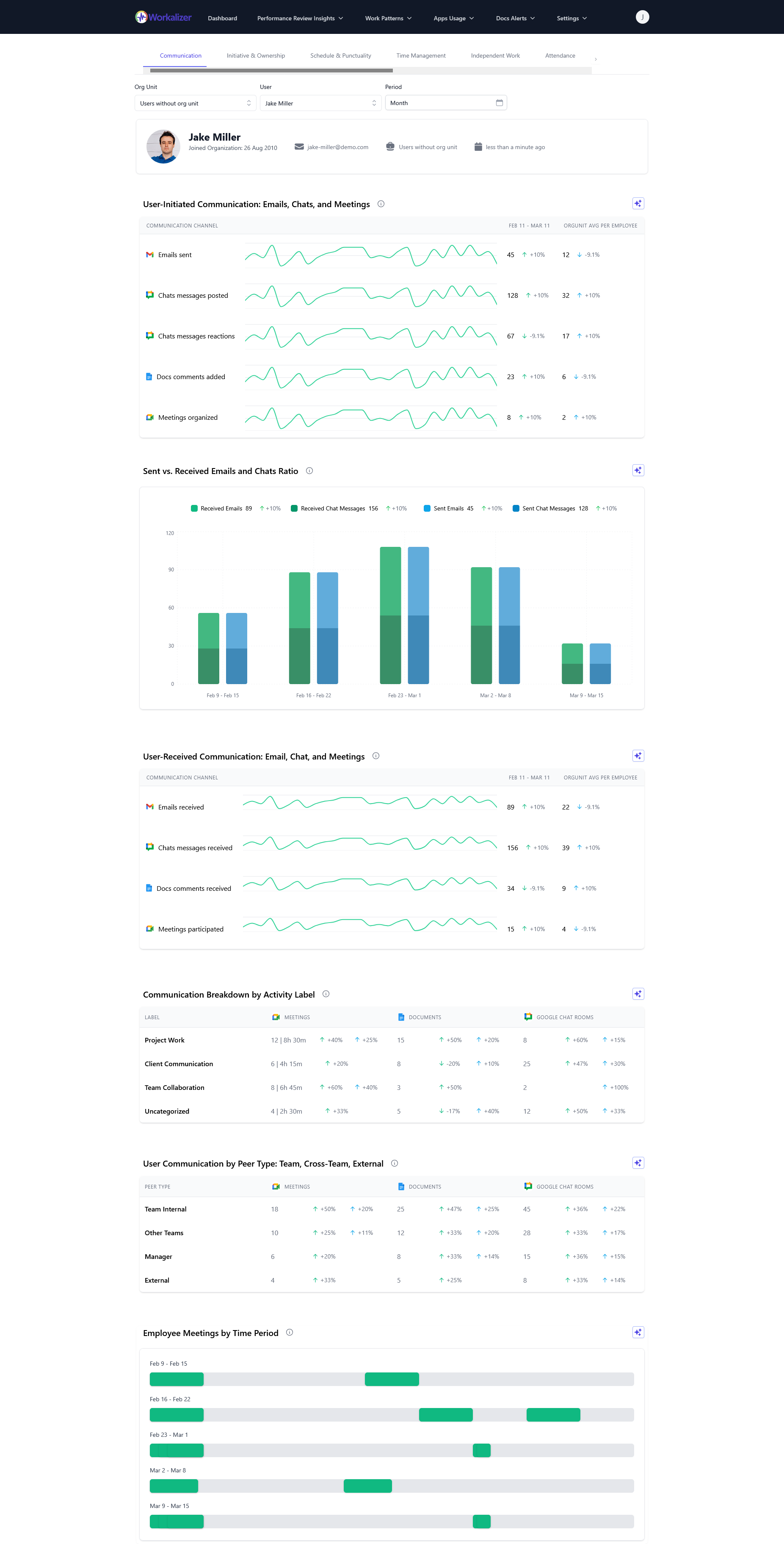
In this new landscape, optimizing every facet of daily operations becomes paramount. Think about the seemingly simple tasks, like how to share document google drive effectively or how to share file to google drive securely within your teams. While these might seem minor, cumulative inefficiencies compound. AI is increasingly stepping in to streamline such fundamental collaborative processes, ensuring that information flows freely and securely, reducing friction, and ultimately boosting overall team output. Workalizer's analytics provide the granular insights needed to understand not just that work is happening, but how efficiently it's being done across your Google Workspace.
The strategic imperative for 2026 and beyond involves:
- Re-evaluating Core Processes: Identify areas ripe for AI-driven automation, especially in back-office, compliance, and data-intensive functions.
- Investing in Upskilling and Reskilling: Prepare your workforce for new roles that leverage AI rather than being replaced by it. Focus on creativity, critical thinking, and complex problem-solving — uniquely human skills.
- Data-Driven Decision Making: Use platforms like Workalizer to gain unbiased insights into how your teams are truly performing in an AI-augmented environment. Measure the impact of new AI tools on productivity and collaboration across your Google Workspace.
- Cultivating an Adaptive Culture: Foster an organizational mindset that embraces continuous learning and technological change.
As we navigate 3 Critical AI Shifts Redefining Enterprise Productivity in 2026, the need for clear, actionable data has never been greater. Workalizer is designed to provide those insights, transforming raw Google Workspace data into actionable intelligence that empowers leaders to make informed decisions about performance, efficiency, and workforce strategy in this rapidly evolving AI era.
Conclusion: Seize the AI Opportunity
The year 2026 stands as a watershed moment for AI. We're witnessing a paradigm shift where AI is no longer a distant promise but a present reality driving profound changes across every sector. From enhancing the honesty of generative models and revolutionizing autonomous transport to miniaturizing health tech and reshaping global employment, AI's impact is accelerating at an astonishing rate.
For forward-thinking enterprises, this isn't a threat to be feared, but an opportunity to be seized. By understanding these trends, proactively adapting your workforce, and leveraging data-driven insights — like those Workalizer provides from your Google Workspace — you can not only navigate this complex landscape but also position your organization to thrive, unlock unprecedented efficiencies, and lead in the AI-accelerated future.