The AI Paradox of 2026: Why Profit Surges Are Fueling Workforce Anxiety
It's May 28, 2026, and the air crackles with a peculiar tension. On one side, the AI gold rush is in full swing, minting trillion-dollar valuations and record profits. On the other, a growing undercurrent of anxiety ripples through the workforce, questioning AI's true impact beyond the C-suite. At Workalizer, we see this paradox daily through the lens of data, and it's time we confronted it head-on.
The Billion-Dollar Boom: AI's Unprecedented Profit Wave
Just this week, the tech world watched as the rivalry between Elon Musk and Sam Altman reached a boiling point, with both SpaceX and OpenAI reportedly accelerating towards their respective IPOs. As reported by The Guardian, a 'tiny circle of tech leaders tightens its grip on AI’s future,' indicating a massive concentration of wealth and power at the top of the AI revolution.
But the most striking indicator of AI's financial might came yesterday from Samsung. News broke that employees in Samsung Electronics’ memory chip division are set to receive average bonuses of approximately £310,000 each, thanks to a landmark profit-sharing agreement fueled by the AI boom. This staggering figure isn't an anomaly; it's a symptom of an industry in hyper-growth, with two more chipmakers recently joining the exclusive $1 trillion valuation club. The message is clear: AI is generating immense value, and it’s doing so at an unprecedented pace.
**The Ground-Level Tremors: Why the Workforce is Wary
Yet, away from the boardrooms and stock market tickers, a very different narrative is unfolding. Just days ago, US students made headlines for booing pro-AI graduation speakers. Their sentiment was clear: 'They’re not reading the room.' Recent college graduates view AI not as a beacon of progress, but as a direct threat to their career prospects, reflecting a deep-seated fear of job displacement and an uncertain future. This isn't just youthful skepticism; it's a tangible disconnect between the promise of AI and its perceived impact on the average worker.
This isn't about grand, abstract AI, but the tangible enhancements that streamline everyday work. For instance, AI is increasingly baked into Google Workspace, offering intelligent assistance whether you need to create and share Google Docs for a new project, or efficiently navigate how to share a Google Doc link with a large team. These are the tools meant to boost productivity, yet they exist in a climate of apprehension. Even Google's latest Gboard upgrade, highlighted by Android Police this week, leverages AI to turn 'rambling into something you can actually send,' acknowledging that while humans speak three times faster than they type, clear communication still needs refinement. These practical applications are meant to empower, but without trust, they can feel like another step towards automation.
The Disconnect: Hype vs. Practicality
The core issue lies in a fundamental disconnect. While companies chase the next big AI innovation, many employees are left wondering how these advancements will truly benefit them, rather than diminish their roles. This gap often leads to what we at Workalizer have previously termed the 'AI Washing' Reckoning of 2026. Are leaders genuinely investing in AI that enhances human capability and organizational efficiency, or are they simply riding the hype wave, inadvertently fostering fear and resentment?
Bridging the Divide: Data-Driven Trust and Transparent AI Adoption
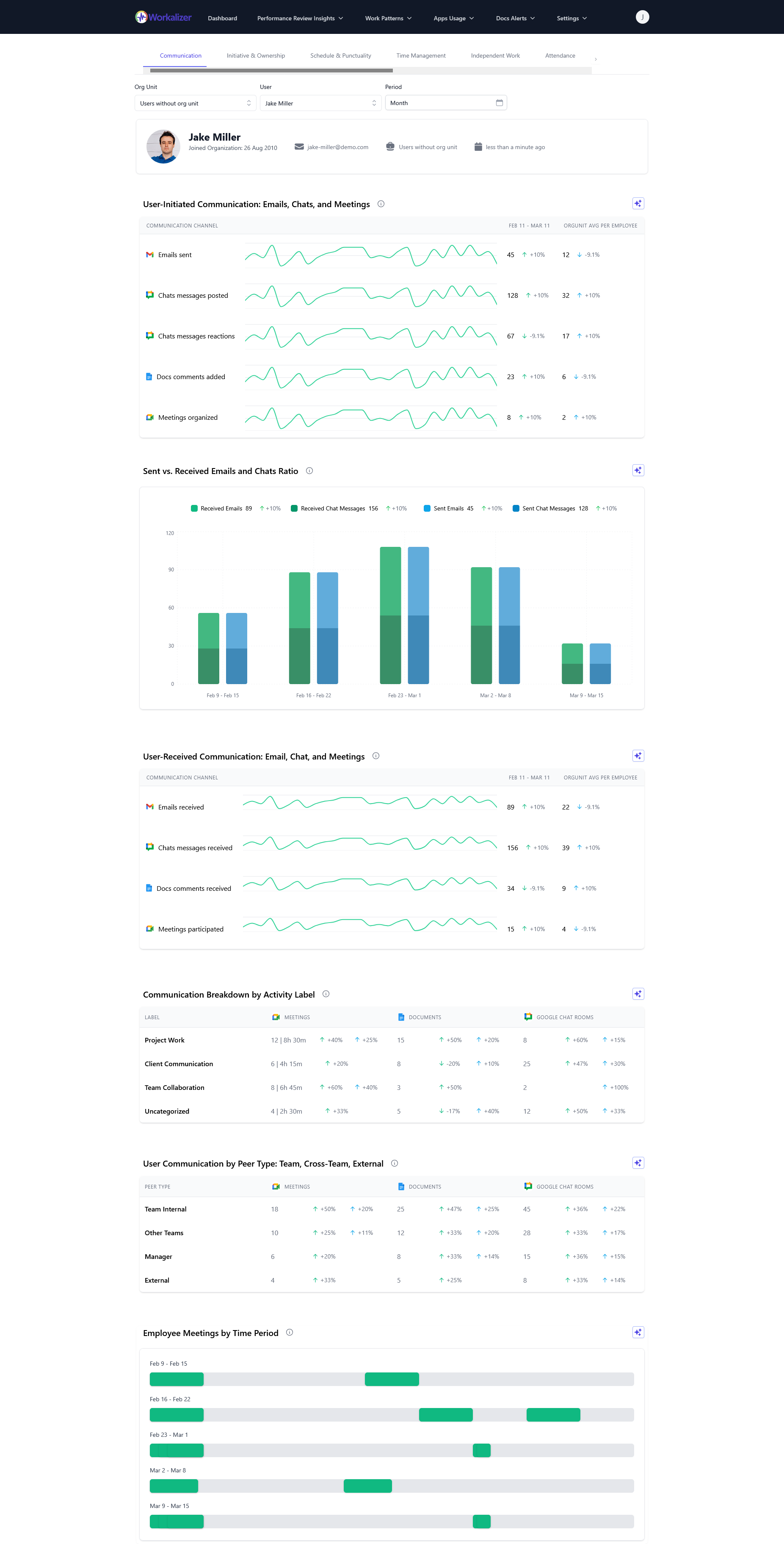
For HR leaders, engineering managers, and C-Suite executives, ignoring this paradox is no longer an option. The path forward demands transparency, empathy, and, crucially, data. This is where Workalizer comes in. Our AI-powered platform provides unbiased, data-driven performance review insights by analyzing signals from your company's Google Workspace usage – Gmail, Drive, Chat, Gemini, and Meet. We don’t just track activity; we reveal patterns of collaboration, communication, and productivity that can either validate AI’s positive impact or flag areas where its implementation is causing friction.
By leveraging Workalizer's analytics, organizations can move beyond anecdotal evidence and understand the real-world effects of AI tools on their teams. Are those new AI-powered writing assistants actually saving time, or are employees spending more time editing AI-generated drafts? Is Gemini truly fostering innovation, or is it creating information overload? The data tells the story, offering a foundation for meaningful dialogue and strategic adjustments.
**From Fear to Flourishing: Crafting a Human-Centric AI Strategy
The future of enterprise AI, as we've discussed in The Future of Enterprise AI: Why 2026 Marks a Pivotal Shift Towards Practicality and Regulation, hinges on practicality and regulation, but also on human acceptance. Companies that will thrive are those that prioritize a human-centric AI strategy. This means:
- Transparent Communication: Clearly articulating the 'why' behind AI adoption and its intended benefits for employees, not just the bottom line.
- Upskilling and Reskilling: Investing in training programs that empower employees to work *with* AI, transforming potential threats into opportunities for growth.
- Employee Involvement: Soliciting feedback and involving employees in the selection and implementation of AI tools to build buy-in and address concerns proactively.
- Measuring Real Impact: Using platforms like Workalizer to objectively assess AI's influence on productivity, collaboration, and employee well-being, adjusting strategies based on real data, not just vendor promises.
The Way Forward for HR and Leadership
The AI paradox of 2026 presents a critical challenge and an immense opportunity. Leaders who can bridge the gap between AI's financial promise and its perceived threat to the workforce will unlock unparalleled organizational efficiency and foster a culture of innovation and trust. Ignoring the workforce's anxieties, however, risks alienating talent and undermining the very productivity gains AI promises.
It's time for HR leaders, engineering managers, and C-Suite executives to move beyond the headlines and into the data. Understand how your teams are truly interacting with AI, where it's adding value, and where it's creating friction. By doing so, you can transform the AI paradox into a powerful catalyst for a more efficient, engaged, and future-ready workforce.
**