The Future of Agentic AI: Unlocking Next-Gen Productivity in Google Workspace by 2027
The Future of Agentic AI: Unlocking Next-Gen Productivity in Google Workspace by 2027
The year is 2026, and if you’re an HR Leader, Engineering Manager, or C-Suite Executive, you’re likely grappling with the relentless pace of AI integration into your organizational fabric. But here’s a conviction you need to internalize: the AI we've been talking about for the past few years – the reactive, prompt-driven kind – is rapidly giving way to something far more transformative: Agentic AI. This isn't just about using AI as a tool; it's about deploying intelligent, autonomous agents that can execute complex tasks, make decisions, and drive projects forward with minimal human oversight. By 2027, this shift will fundamentally redefine productivity within Google Workspace, and your organization needs to be ready.
Think beyond simply asking Gemini to draft an email. Imagine an AI agent that proactively manages your project timelines, coordinates team meetings, analyzes communication patterns in Gmail, and even anticipates resource needs in Google Drive. This isn't science fiction; it’s the immediate future, powered by advancements that are rapidly moving from research labs to your enterprise tools.
From Reactive Prompts to Proactive Autonomy: The Agentic Leap
For too long, AI has been a powerful, albeit passive, assistant. We prompt it, it responds. Agentic AI flips this script. These agents possess a degree of autonomy, a 'memory' of past interactions, and the ability to plan and execute multi-step tasks to achieve a goal. They observe, reason, act, and learn. This is where the real efficiency gains lie, especially within a deeply integrated ecosystem like Google Workspace.
Google itself is at the forefront of this revolution. The recent redesign of Google’s search box, the first in 25 years, isn't just cosmetic; it signals a foundational shift towards more intelligent, context-aware interactions that lay the groundwork for agentic capabilities. This deeper integration of AI into the very fabric of Google’s offerings means that your Workspace environment will soon be capable of far more than you currently imagine.
Google’s Billion-Dollar Bet: AI Agents Redefining Workspace
The signals from Google are clear: they are investing heavily in making these autonomous agents a reality for enterprise users. VentureBeat reported on Google’s new AI agents that can draft your emails, monitor your inbox for critical updates, and even, eventually, manage aspects of your spending. Imagine the time savings when an agent handles routine correspondence, prioritizes urgent messages, and even initiates the procurement process for approved expenses – all within your Google Workspace environment.
For instance, an agent could be tasked with streamlining document creation and sharing. Instead of a team member manually creating a google doc to share with specific permissions, an agent could interpret a project brief from Google Chat, draft the initial document in Docs, and then proactively manage the process of getting a google docs shared document with group access to the relevant stakeholders, tracking their contributions, and even nudging them for feedback. This isn't just automation; it's intelligent delegation.
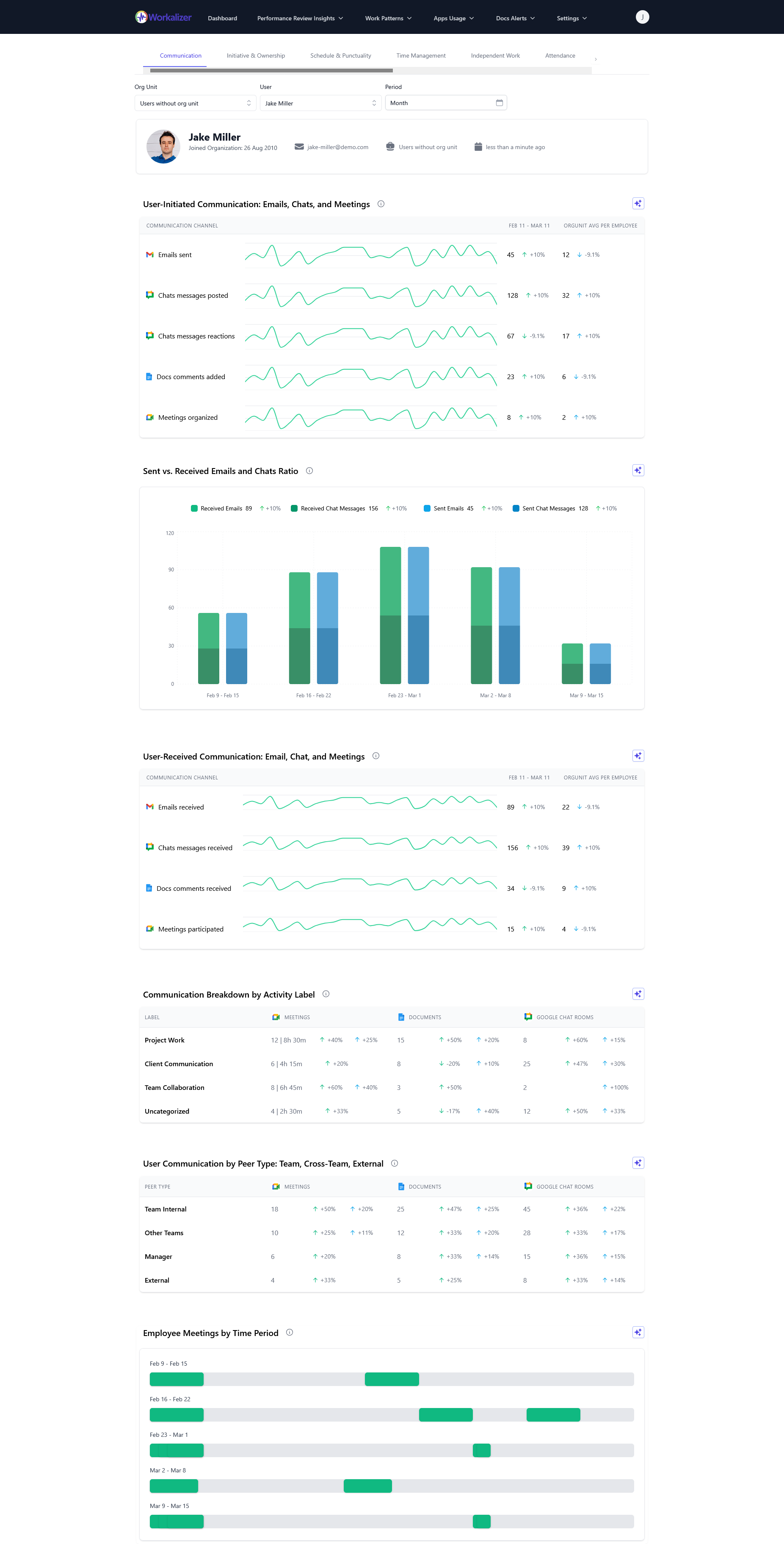
Workalizer.com, as an AI-powered platform providing performance review insights based on company usage of Google Workspace, is uniquely positioned to help you understand and measure the impact of these agentic shifts. We analyze signals from Gmail, Drive, Chat, Gemini, and Meet to provide data-driven, unbiased productivity analytics. As agents take on more tasks, understanding their interaction with human workflows and their contribution to overall organizational efficiency becomes paramount. This is especially critical for HR and tech leaders navigating AI's Billion-Dollar Bet: 3 Strategic Imperatives for HR & Tech Leaders in 2026.
Strategic Imperatives for Leaders in 2027
The advent of agentic AI isn't without its complexities. For HR leaders, Engineering Managers, and C-Suite executives, several strategic imperatives emerge:
1. Data Governance and Security
Autonomous agents operating across your Google Workspace will interact with vast amounts of sensitive data. Robust data governance policies, strict access controls, and continuous monitoring will be non-negotiable. Understanding where your agents operate and what data they access is crucial for compliance and security.
2. Ethical AI and Accountability
As agents gain autonomy, questions of accountability arise. Who is responsible when an AI agent makes an error or a suboptimal decision? Establishing clear ethical guidelines for AI deployment and building in human oversight mechanisms will be vital. Regulatory frameworks, such as those discussed in Gemini Pro's Photorealism Challenge: Navigating EU AI Act Impact and Workspace Management, will increasingly shape how we manage AI within the enterprise.
3. Workforce Transformation and Upskilling
Agentic AI will automate many repetitive tasks, freeing up human employees for higher-value, more creative, and strategic work. This necessitates a proactive approach to workforce transformation, focusing on upskilling employees in areas like AI oversight, critical thinking, problem-solving, and advanced data analysis. The goal isn't replacement, but augmentation.
4. Measuring Agent Performance and ROI
How do you measure the productivity of an AI agent? Traditional metrics may not apply. New frameworks will be needed to assess the efficiency, accuracy, and overall ROI of autonomous agents. Workalizer's platform can provide invaluable insights here, helping you understand the real impact of these agents on your team’s performance and collaboration within Google Workspace.
The Broader AI Arms Race: What it Means for Your Enterprise
The push towards agentic AI isn't limited to Google. The broader AI ecosystem is in a furious state of innovation and competition. The recent news of OpenAI co-founder Andrej Karpathy joining Anthropic underscores the intense talent war and the strategic importance of this field. Furthermore, Anthropic’s acquisition of developer tools like Stainless (as reported by TechRepublic) highlights the rapid consolidation and strategic moves happening across the industry to build robust AI capabilities.
Even infrastructure providers are making massive bets. Dell's "AI Factory" initiative, involving significant investments in NVIDIA networking and strong racks (detailed by TechRepublic), illustrates the foundational technological shifts required to power this next generation of AI. These developments signify a universal commitment to an AI-driven future, one where intelligent agents are not just a possibility, but an inevitability across all enterprise operations.
Conclusion: Embrace the Agentic Future, Measure with Precision
The future of productivity in Google Workspace, and indeed across the enterprise, will be defined by agentic AI. By 2027, the organizations that have strategically embraced these autonomous capabilities will be operating at an unprecedented level of efficiency and innovation. For HR leaders and C-suite executives, the time to prepare is now. Understand the technology, establish robust governance, invest in upskilling, and most critically, leverage platforms like Workalizer to precisely measure the impact and derive actionable insights from this profound transformation. The future isn't just coming; it's actively building itself, and your proactive engagement will determine your competitive edge.