The AI Gold Rush: Is 'Ubiquitous Intelligence' Creating More Problems Than It Solves?
AI is no longer a futuristic concept whispered in tech labs; it's a pervasive force, embedding itself into the very fabric of our daily lives and enterprise operations. From the deepest corners of classified government networks to the sleek dashboards of our vehicles, large language models and generative AI tools are becoming ubiquitous. This rapid proliferation is undeniably exciting, promising unprecedented leaps in efficiency and innovation. But as Senior Tech Writer at Workalizer.com, I have to ask: Is this 'ubiquitous intelligence' creating more problems than it solves? Are we truly ready for the complexities, hidden costs, and strategic dilemmas this widespread adoption brings to the C-suite and HR leaders?
The Energy Price Tag of Pervasive AI
The sheer computational demands of modern AI models are staggering, and the energy required to power them is quickly becoming a critical concern for businesses and nations alike. Consider the recent moves by TSMC, the world's largest contract chipmaker. While raking in record profits from the insatiable demand for AI chips, TSMC is simultaneously making massive investments in renewable energy. Just last week, on May 6, 2026, Ars Technica reported that TSMC inked a 30-year corporate power purchase agreement for 100% of the power produced by the Hai Long offshore wind project. This isn't altruism; it's a strategic imperative. The deal covers over 1 gigawatt of power capacity, enough to power more than a million Taiwanese households, highlighting the colossal energy footprint of AI manufacturing.
This situation presents a dual challenge for enterprise leaders. Firstly, the operational costs associated with running AI infrastructure are skyrocketing. Even if you're not manufacturing chips, the cloud resources consumed by sophisticated AI models translate directly into significant expenditure. Secondly, there's the looming question of sustainability and corporate responsibility. As AI becomes integral to business, its environmental impact will increasingly fall under scrutiny. Forward-thinking organizations must factor energy consumption into their AI strategy, not just as a cost, but as a core component of their ESG commitments. The 'AI gold rush' isn't just about innovation; it's about powering that innovation responsibly.
The Paradox of Choice and the Peril of Vendor Lock-in
As AI tools flood the market, enterprises are grappling with a new kind of strategic challenge: managing an increasingly diverse and fragmented AI ecosystem. The days of a single, monolithic AI solution are rapidly fading, replaced by a landscape of specialized models and platforms. This trend is evident across the board, from consumer devices to highly sensitive government operations.
Take Apple, for instance. A May 5, 2026, TechCrunch report revealed that iOS 27, slated for release later this year, will offer users a 'Choose Your Own Adventure' of AI models. Through a new 'Extensions' feature, iPhone users will be able to pick from various third-party large language models (with Google and Anthropic reportedly being tested) to power Apple Intelligence features like Siri and Writing Tools. This consumer-centric approach foreshadows a future where enterprises might face similar demands for flexibility and choice from their employees.
On an even more strategic level, the U.S. Department of Defense is actively diversifying its AI vendor base to avoid lock-in. TechCrunch reported on May 1, 2026, that the Pentagon has signed deals with Nvidia, Microsoft, Amazon Web Services, and Reflection AI, in addition to existing agreements with Google, SpaceX, and OpenAI. Their explicit goal is to build an architecture that “prevents AI vendor lock-in and ensures long-term flexibility for the Joint Force.” This move, following a high-profile dispute with Anthropic over usage terms, underscores the critical importance of maintaining control and adaptability in an AI-first world.
For HR leaders and Engineering Managers, this proliferation of choice presents a significant operational hurdle. How do you standardize training? How do you ensure data privacy and compliance across multiple AI vendors? How do you measure the collective impact and ROI when different teams are using different models, potentially with varying levels of effectiveness? The promise of choice can quickly become the burden of complexity, leading to what we at Workalizer call the 'slop trap' of unmanaged AI. For more on this, consider our recent article, How to Drive Enterprise Efficiency with Specialized AI, Avoiding the 'Slop' Trap in 2026.
Operationalizing AI's Spread: Bridging the Gap Between Hype and Productivity
The ubiquity of AI isn't just about specialized models; it's about everyday tools becoming smarter. Google's Gemini AI assistant, for instance, is making a significant leap into the automotive sector. As of April 30, 2026, Gemini is rolling out to millions of vehicles with Google built-in, offering a more natural, conversational way for drivers to interact with their cars. This consumer-facing integration highlights how seamlessly AI is weaving into our lives, and by extension, into our work behaviors.
The challenge for enterprises isn't just adopting AI; it's effectively *operationalizing* it. It's about moving beyond the initial excitement to truly understand its impact on productivity, collaboration, and organizational efficiency. With AI now enhancing everything from email drafting in Gmail to document creation in Drive and real-time insights in Meet, the traditional metrics of productivity are shifting.
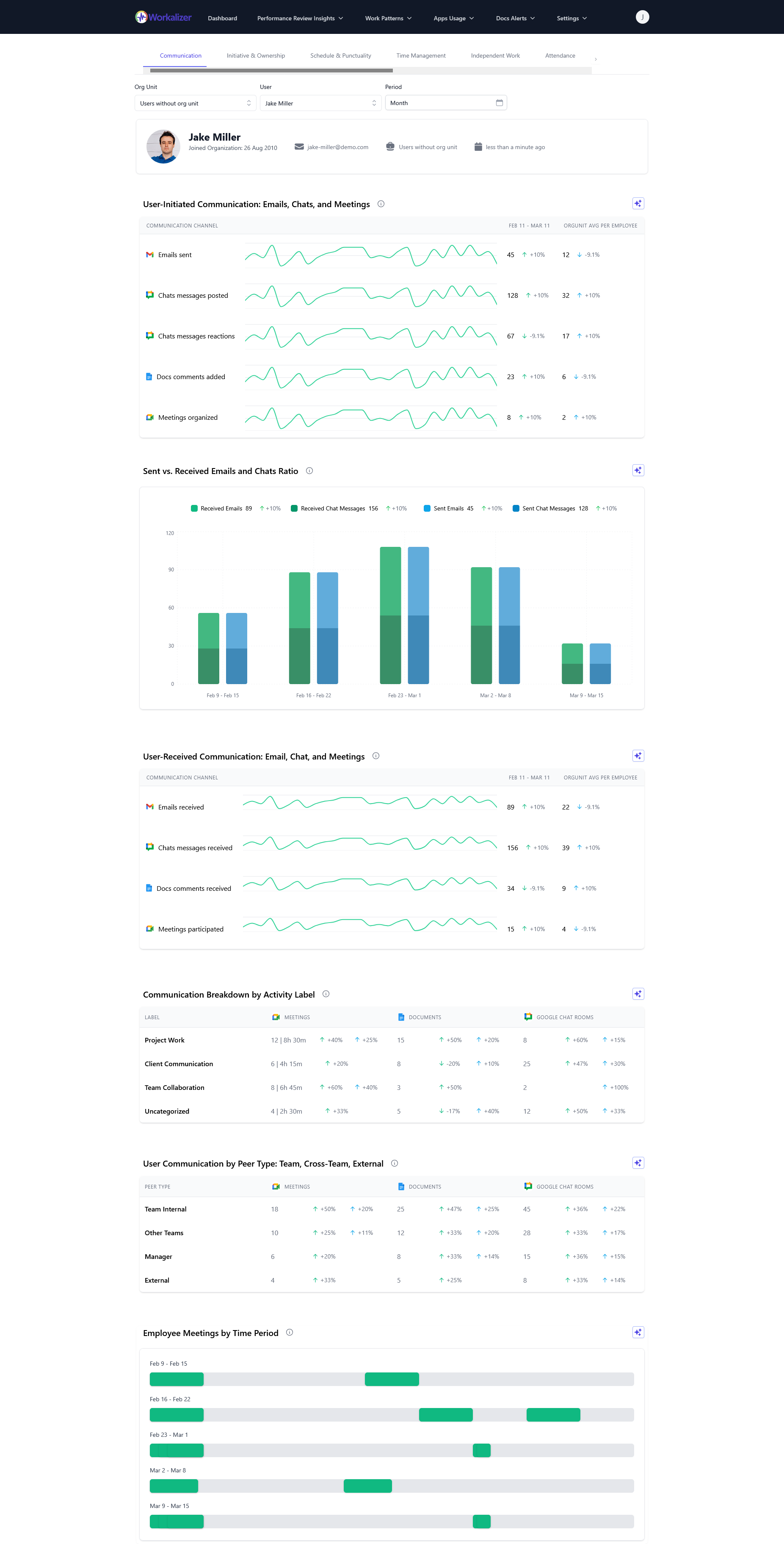
This is precisely where Workalizer steps in. Our AI-powered platform provides data-driven, unbiased productivity analytics by analyzing signals from your company's Google Workspace usage. We don't just tell you *that* AI is being used; we show you its *impact*. For instance, as teams increasingly leverage generative AI to draft documents or analyze data, understanding the efficiency of processes like how to share drive file link for these AI-enhanced outputs becomes paramount. Are insights being disseminated effectively? Or when you share google drive files with anyone, is that leading to productive collaboration or simply information overload?
By monitoring interactions across Gmail, Drive, Chat, Gemini, and Meet, Workalizer provides HR Leaders, Engineering Managers, and C-Suite Executives with actionable insights. We help you cut through the noise to identify where AI is truly boosting performance and where it might be creating bottlenecks or inefficiencies. In an era of mandated AI and unforeseen infrastructure challenges, understanding these dynamics is crucial for future-proofing your enterprise strategy. For a deeper dive into these broader shifts, refer to our post on 4 Seismic Shifts: How AI, M&A, and Market Dynamics are Reshaping Enterprise Strategy in 2026.
The Path Forward: Strategic Clarity in an AI-First World
The 'AI Gold Rush' of 2026 is undeniable. AI's ubiquity promises transformative benefits, but it also demands a sober assessment of its implications. For enterprise leaders, the path forward requires strategic clarity:
- Acknowledge the Energy Footprint: Integrate energy consumption and sustainability into your AI infrastructure planning.
- Navigate the Choice Paradox: Develop clear governance and adoption strategies for managing diverse AI tools and vendors. Prioritize interoperability and security.
- Focus on Measurable Impact: Move beyond mere adoption to quantify AI's true contribution to productivity and efficiency.
At Workalizer, we believe that informed decision-making is the bedrock of successful AI integration. As AI becomes an invisible layer across all our digital interactions, the ability to understand its real-world impact – on your teams, your efficiency, and your bottom line – is no longer a luxury, but a necessity. Don't let the promise of ubiquitous intelligence obscure its potential problems. Equip your leadership with the data to navigate this complex new frontier effectively.