How to Measure Developer Productivity: A Holistic Approach with Google Workspace and DevActivity
In today's fast-paced tech landscape, understanding how to measure developer productivity is crucial for HR/Ops leaders and managers. It's about more than just lines of code; it's about fostering an environment where innovation thrives and teams collaborate effectively. Traditional metrics often fall short, failing to capture the full picture of an engineer's contribution. At workalizer.com, we believe a truly insightful approach combines communication patterns from Google Workspace with granular technical output data.
Beyond Lines of Code: A Holistic View of Developer Productivity
Measuring developer productivity can feel like chasing a moving target. Relying solely on metrics like commit frequency or story points can be misleading, as they don't account for crucial aspects like code quality, collaboration, problem-solving, or knowledge sharing. A holistic view considers both the 'what' (code produced) and the 'how' (collaboration, communication, problem-solving). This is where integrating insights from your team's daily tools becomes invaluable.
Leveraging Google Workspace for Collaboration Insights
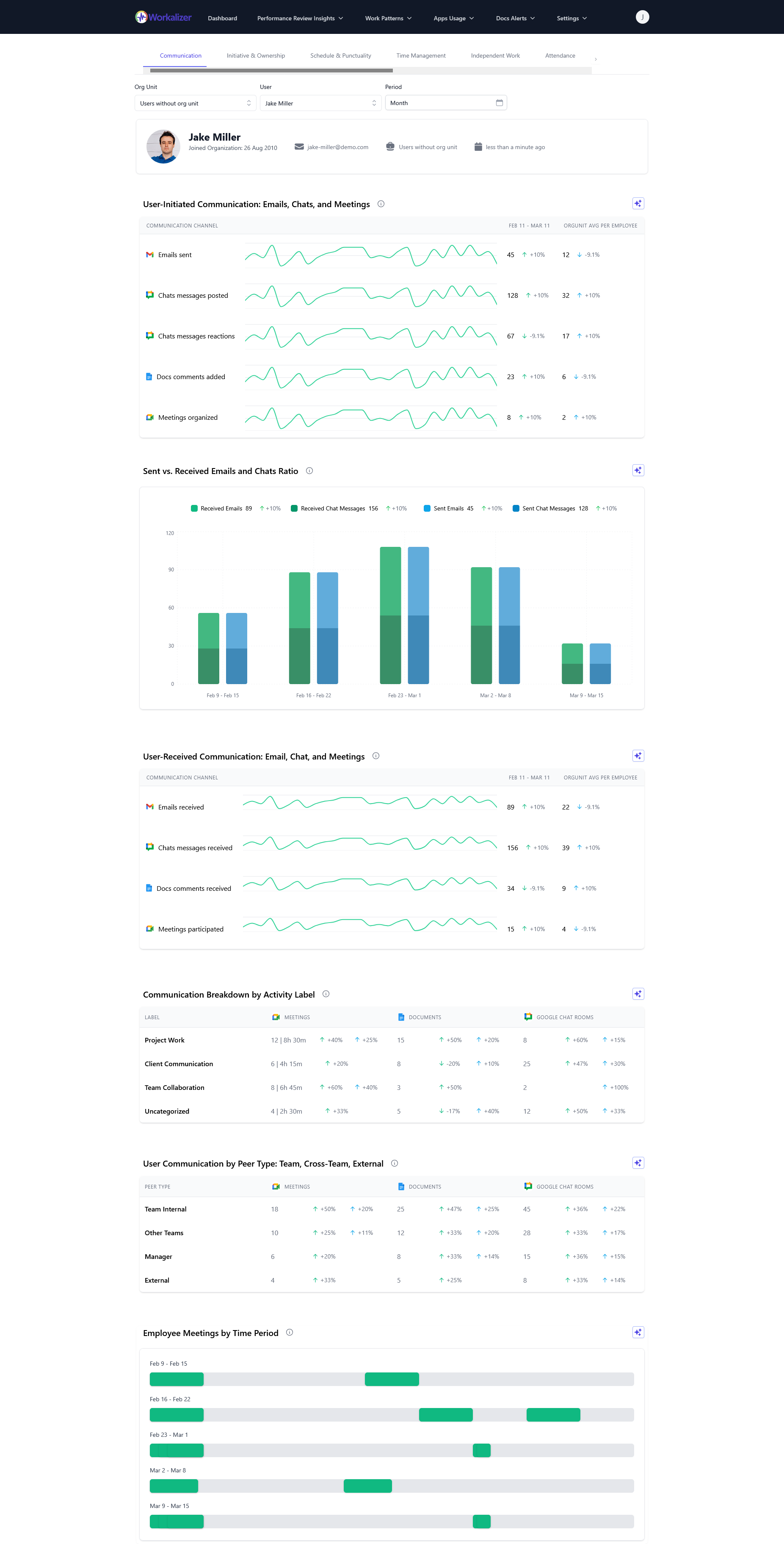
Google Workspace is the backbone of communication and collaboration for many engineering teams. The data generated through tools like Gmail, Google Meet, Google Chat, and Google Drive offers a rich, often untapped, source of productivity signals:
- Communication Patterns: How frequently do team members engage in Google Chat discussions related to specific projects? Are there bottlenecks in email responses?
- Meeting Effectiveness: Analyzing Google Meet data can reveal meeting frequency, duration, and participant engagement. Are meetings productive, or are they consuming excessive development time without clear outcomes?
- Document Collaboration: Google Drive activity shows who is contributing to design documents, technical specifications, and code reviews. This indicates active participation in the planning and review stages.
- Information Flow: Understanding how information moves through your Workspace ecosystem helps identify knowledge silos or areas where communication could be improved.
By analyzing these collaboration signals, managers can gain insights into team dynamics, identify potential blockers, and understand the non-coding contributions that are vital to project success.
How to Measure Developer Productivity: Integrating Technical Output with DevActivity
While Google Workspace provides the 'how' of collaboration, tools like DevActivity fill in the 'what' by offering deep insights into technical output from platforms like GitHub. DevActivity is an AI-powered GitHub analytics and gamification tool designed to enhance engineering efficiency by providing actionable data on:
- Code Contributions: Beyond raw commits, DevActivity analyzes pull request activity, code review participation, and merge rates.
- Impact and Quality: Understand the impact of code changes, identify areas of high refactoring, and track code quality metrics.
- Team Dynamics: Visualize individual and team contributions, identify top contributors, and spot areas where support might be needed.
- Project Progress: Connect code activity directly to project milestones and track progress against goals.
When you combine these granular technical insights from DevActivity with the collaboration data from Google Workspace, you create a powerful, 360-degree view of developer productivity. For example:
- A developer with high code output (DevActivity) but low collaboration in Google Chat/Meet might be working in isolation, potentially creating future integration challenges.
- A developer actively participating in Google Drive documents and Google Meet discussions (Workspace) but with moderate code contributions might be heavily involved in architectural design, mentorship, or unblocking others – crucial work not captured by code metrics alone.
- Teams with efficient Google Meet practices and clear communication in Google Chat (Workspace) often show smoother pull request cycles and faster merge times (DevActivity).
This integrated approach allows HR/Ops leaders and managers to move beyond simplistic metrics and truly understand the multifaceted nature of engineering work. It enables data-driven decisions that support individual growth, optimize team performance, and ultimately drive better business outcomes. To dive deeper into effective measurement strategies, explore resources on how to measure developer productivity.