The Agentic Workplace: How AI's Pervasive Productivity Demands a New Era of Digital Privacy in 2027
The year 2026 has unequivocally cemented one truth: AI isn't just a tool; it's rapidly becoming an agent. From proactive suggestions to autonomous task execution, the agentic workplace is no longer a futuristic concept but a present reality reshaping how we work and collaborate. Yet, as AI-driven productivity reaches unprecedented heights, it brings with it an equally urgent mandate: a new era of digital privacy.
As Senior Tech Writer at Workalizer.com, I've observed firsthand how our clients—HR Leaders, Engineering Managers, and C-Suite Executives—grapple with this dual reality. On one hand, the promise of hyper-efficient teams leveraging AI across Google Workspace is tantalizing. On the other, the specter of data misuse, privacy breaches, and erosion of trust looms large. The challenge for 2027 isn't merely to adopt AI, but to master its integration with a steadfast commitment to privacy and ethical governance. This isn't just about compliance; it's about building a sustainable, trustworthy foundation for the future of work.
The Ascent of Agentic AI: Productivity Unleashed
The current trajectory of AI development, particularly within the Google ecosystem, paints a clear picture: intelligence is becoming embedded, anticipatory, and pervasive. We're moving beyond simple automation to systems that learn, predict, and act on our behalf. This is the essence of agentic AI.
**Just this month, at the Android Show I/O Edition 2026, Google unveiled significant advancements, showcasing new Googlebook laptops and critical updates to Gemini. The promise? Gemini will work "seamlessly across devices bringing agentic AI to the masses," as reported by Mashable on May 13, 2026. This isn't just about a smarter chatbot; it's about an intelligent layer that understands context, anticipates needs, and streamlines workflows across Gmail, Drive, Chat, and Meet.
A prime example of this embedded intelligence is Android's rollout of AI-powered "Contextual suggestions." This on-device AI learns from your habits, providing "helpful suggestions from your apps and services based on your routine activities and locations." 9to5Google detailed on May 13, 2026, how this could manifest: your music app suggesting a gym playlist at your usual workout time, or your device prompting you to cast a sports game to your living room TV on a Saturday. These aren't just notifications; they're intelligent, proactive interventions designed to enhance personal and, by extension, professional productivity.
For organizational leaders, this means a workforce empowered by digital assistants that don't just respond to commands but actively contribute to efficiency. Imagine project timelines optimized by AI, communication streamlined, and knowledge workers freed from mundane tasks to focus on strategic initiatives. Workalizer's insights become crucial here, helping organizations understand the real-world impact of these new AI capabilities on team collaboration and individual output. To delve deeper into this transformative shift, I highly recommend our earlier post, The Agentic Workplace: What to Expect from AI's Productivity and Peril in 2026.
The Unavoidable Privacy Imperative in an AI-First World
However, the rapid proliferation of agentic AI, which thrives on understanding user behavior and data, simultaneously amplifies the need for robust digital privacy. The more AI knows about us, the more critical it becomes to control what it knows and how that knowledge is used.
**The market is already responding to this demand. Just recently, Meta AI introduced an "Incognito Chat" feature, promising "completely private" conversations that make "sensitive conversations invisible to anyone else," as reported by Mashable. This isn't just a feature; it's a recognition of user anxiety around AI's data processing capabilities. Similarly, Google's Contextual suggestions, while powerful, operate within an "encrypted space on your device." Crucially, the data used for these suggestions is "never shared with apps or Google, and never leaves your device" unless explicit permission is granted, a key detail highlighted by 9to5Google. This commitment to on-device processing signifies a growing industry trend towards privacy-by-design.
For organizations leveraging Google Workspace, this translates into a heightened responsibility. Employees are increasingly aware and concerned about their digital footprint. Questions like "google drive who can see my files" are no longer niche IT concerns but fundamental aspects of digital trust. Leaders must ensure transparency and provide clear governance. It's imperative that employees easily understand how to view shared files in google drive and manage their access permissions, fostering a culture of digital literacy and control.
The Peril of Pervasive AI: When Trust Erodes
Beyond data collection, AI's generative capabilities pose a different kind of privacy and trust challenge. The ability of AI to create hyper-realistic, yet entirely fabricated, content can undermine the very foundations of truth and transparency within an organization.
We saw a stark example of this just this year. A "hyped product launch of 2026" was, in part, "ruined" by generative AI. As Android Police reported on May 13, 2026, the liberal use of AI's image-generation tools created "fake, but plausible images" of the product before its official reveal. This didn't just spoil anticipation; it created confusion and potentially eroded trust in official communications. In a corporate setting, such incidents, whether intentional or accidental, can have severe repercussions on internal communications, project integrity, and brand reputation.
Leaders must prepare their workforces not just for AI's productivity, but also for its potential to mislead. This demands a renewed focus on critical thinking, digital verification, and robust internal communication protocols. As we discussed in The Agentic Era: Is Your Workforce Ready for AI's Brutal Repricing?, the skills required for success in this new landscape are evolving rapidly.
Workalizer's Role: Unbiased Insights for the Agentic Era
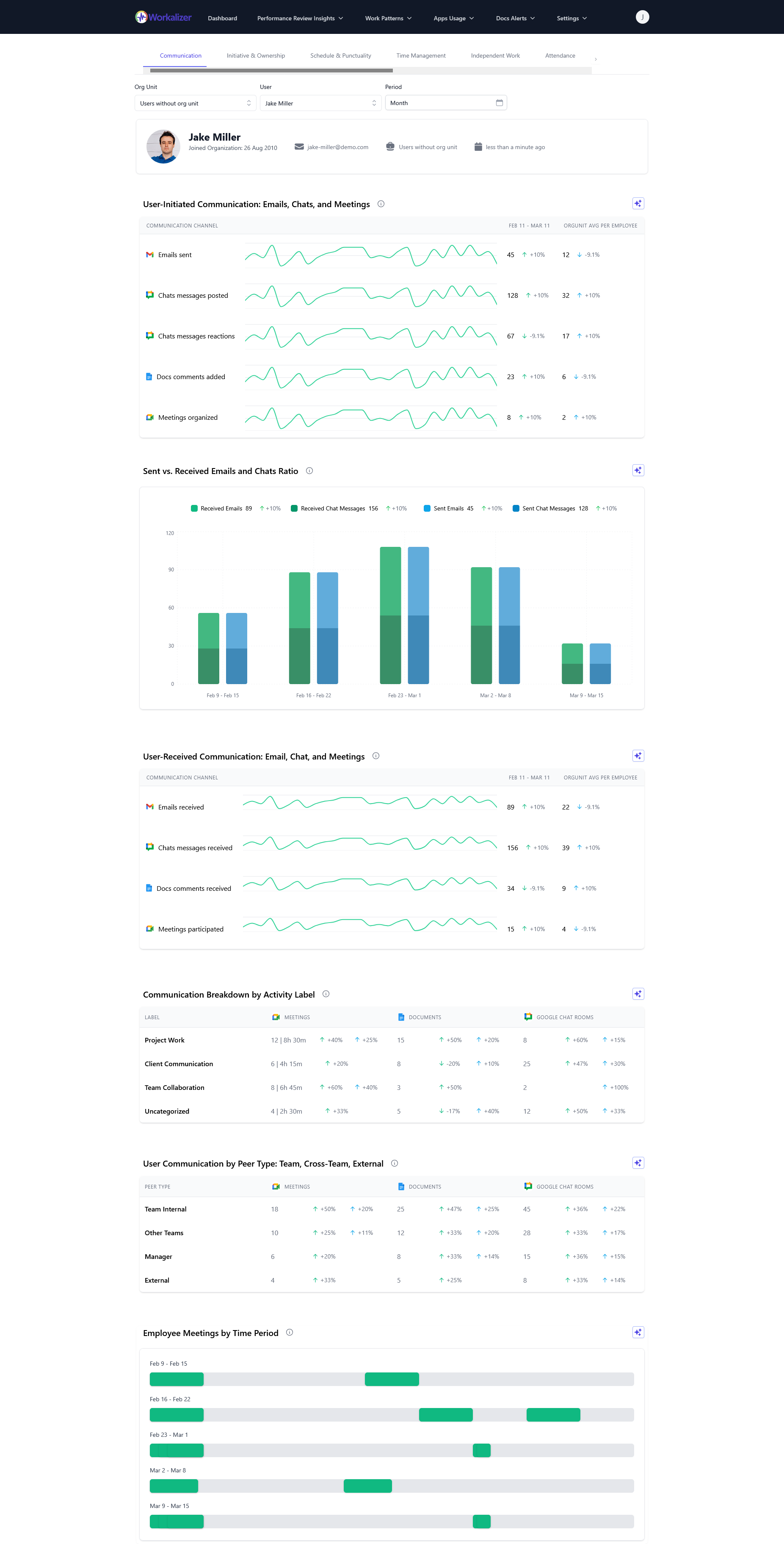
At Workalizer.com, we believe that embracing agentic AI doesn't mean sacrificing privacy or transparency. Our AI-powered platform provides performance review insights based on your company's usage of Google Workspace—analyzing signals from Gmail, Drive, Chat, Gemini, and Meet—to deliver data-driven, unbiased productivity analytics.
We empower HR Leaders, Engineering Managers, and C-Suite Executives to understand the true impact of AI on their teams, identify efficiency gains, and address potential bottlenecks, all while respecting individual privacy. Our insights help you:
- Measure AI's Impact: Understand how agentic tools are truly affecting collaboration and output.
- Identify Productivity Trends: Pinpoint where AI is creating leverage and where human intervention remains critical.
- Foster a Culture of Transparency: Use data to inform ethical AI policies and ensure employees feel secure in their digital environment.
- Optimize Resource Allocation: Make data-backed decisions on training, tool adoption, and strategic initiatives.
In the agentic workplace of 2027, the ability to navigate the complex interplay between AI-driven productivity and digital privacy will define organizational success. It's about leading with intent, leveraging technology for good, and building a resilient, ethical digital culture.
Conclusion: Leading with Intent in 2027 and Beyond
The dawn of agentic AI is here, promising a future of unparalleled efficiency and innovation. Yet, this future is only sustainable if built on a bedrock of trust and robust privacy frameworks. As we move into 2027, the leaders who will thrive are those who don't just adopt AI, but thoughtfully integrate it, prioritizing transparency, data security, and employee digital well-being.
The conversation around AI can no longer be solely about what it can do, but about what it should do and how it should be governed. Workalizer is your partner in this journey, providing the insights you need to make informed decisions, foster an ethical agentic workplace, and unlock the full potential of your Google Workspace investment, securely and responsibly.