The Future of Integrated Productivity: What to Expect from AI and Google Workspace in 2027
It's May 14, 2026, and if you're still viewing Artificial Intelligence as a futuristic concept, you're already behind. AI is not just at our doorstep; it's already inside, rearranging the furniture of our daily workflows and fundamentally redefining what 'productivity' means. For HR leaders, engineering managers, and C-suite executives, this isn't merely a technological shift; it's a strategic imperative. The question is no longer if AI will impact your organization, but how deeply it will integrate into your core operations, particularly within the Google Workspace ecosystem, by 2027.
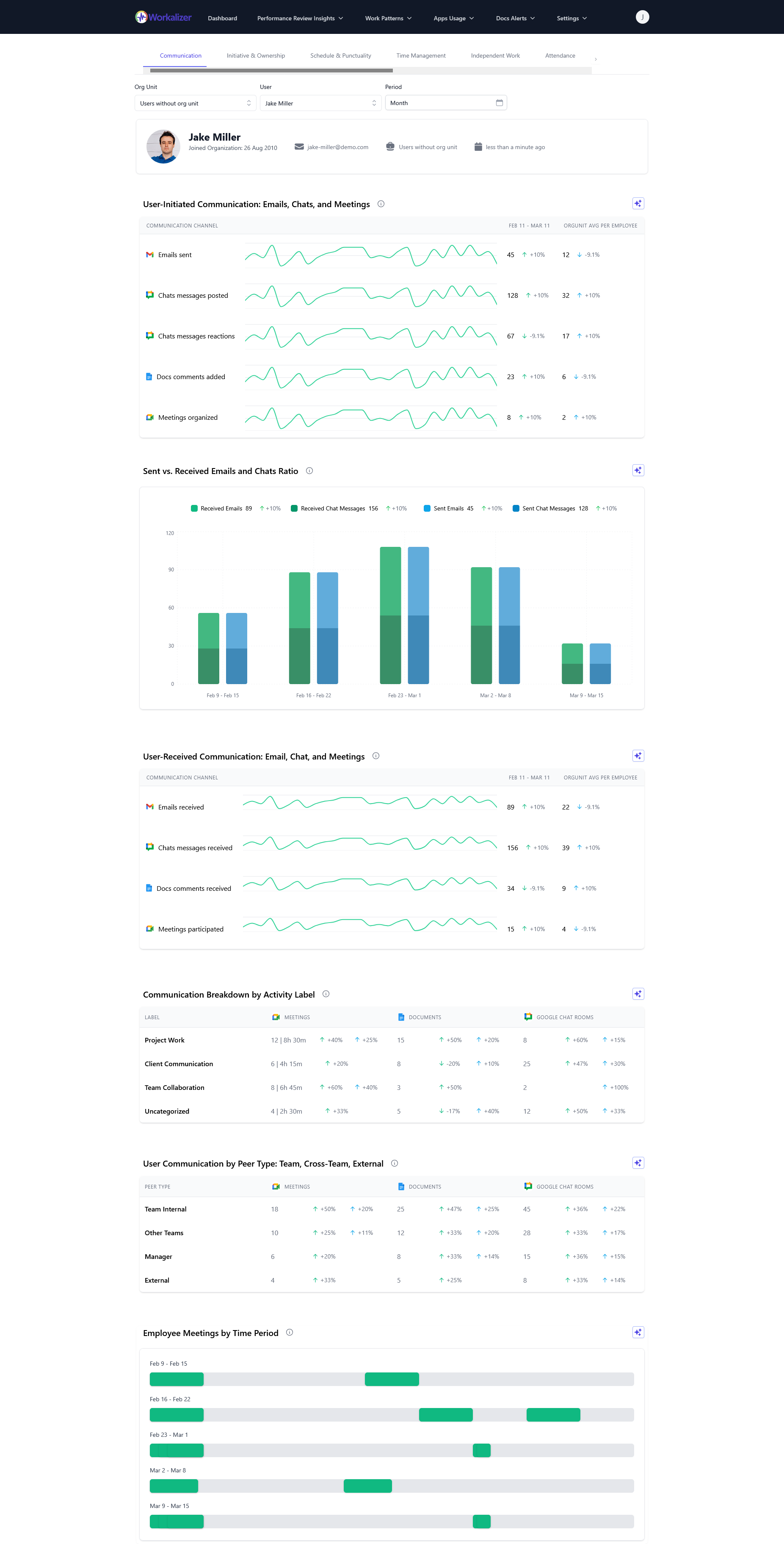
At Workalizer.com, we believe that understanding this evolution is critical. Our platform provides unbiased, data-driven insights into Google Workspace usage, offering a clear lens through which to view these transformative trends. Let's dive into what integrated productivity, powered by AI, truly means for your enterprise.
The AI-Powered Planner: Reclaiming Time from Fragmentation
One of the most immediate and impactful applications of AI we're seeing this year is in personal and team planning. Consider the pervasive challenge of fragmented schedules – tasks added midweek, forgotten deadlines, and inefficient time allocation. It’s a common pain point that siphons valuable hours from employees and impacts overall organizational output.
However, the advent of sophisticated AI agents like Gemini is turning the tide. As reported by Android Police this week, users are pairing Gemini with Google Calendar to plan their week, moving from reactive, piece-meal scheduling to a proactive, comprehensive planning session. This shift addresses what many call the "setup bottleneck" – the initial mental overhead of organizing a complex week. By leveraging Gemini, individuals can transform disparate thoughts and tasks into a cohesive, optimized schedule, often in a single sitting. This isn't just about personal convenience; it's about fostering a culture of intentionality and reducing cognitive load across your workforce.
For organizations, this translates to more focused work, fewer missed deadlines, and a tangible boost in efficiency. When employees are empowered to plan their weeks effectively with AI assistance, they free up mental bandwidth for higher-value tasks, aligning perfectly with the evolving demands of The Agentic Workplace: What to Expect from AI's Productivity and Peril in 2026.
Beyond Simple Automation: Orchestrating Complex Workflows
The next frontier in integrated productivity isn't just automating simple, repetitive tasks; it's about orchestrating complex, multi-step workflows that traditionally required significant manual oversight. The distinction between basic automation and intelligent orchestration is critical for any organization seeking a competitive edge.
How-To Geek recently highlighted how platforms like n8n can automate tasks that even robust systems like Home Assistant can't handle alone. While Home Assistant excels at smart home triggers, n8n steps in for more sophisticated needs, such as logging events to a spreadsheet for analysis. This analogy scales directly to the enterprise: your Google Workspace is a powerful engine, but connecting its various components through intelligent automation platforms unlocks a new level of data collection, analysis, and action.
Imagine the efficiency gains when an AI-powered workflow automates the intricate process of how to share multiple documents on google docs for a new project, ensuring correct permissions, tracking access, and notifying stakeholders. This isn't just about saving clicks; it's about reducing human error, maintaining compliance, and ensuring that critical information flows seamlessly. Workalizer's insights help you identify where these workflow bottlenecks exist and how AI-driven solutions can provide measurable improvements.
The Pervasive AI: Setting New Expectations for All Tools
AI's integration isn't confined to specialized productivity apps; it's becoming an expected layer across all digital interactions. Amazon's recent transformation of its search bar into an AI shopping assistant that remembers your conversations—combining Rufus's product expertise with Alexa+'s conversational capabilities—is a prime example. This "Alexa for Shopping" isn't just a gimmick; it's described as the "best, most personalized AI assistant for shopping."
This consumer-facing innovation has a profound implication for enterprise tools. Employees, accustomed to highly personalized, context-aware AI in their personal lives, will increasingly expect the same intelligence from their professional applications. This means Google Workspace tools, already powerful, must evolve to offer more predictive, personalized, and proactive assistance.
However, this pervasive integration also raises critical questions about data security and privacy. As we increasingly rely on AI to manage and share information, the need for robust, client-side data protection becomes paramount. While Android devices are "fortresses" against external threats, securing individual, sensitive files has historically been clunky. Fortunately, solutions are emerging, with How-To Geek reporting on the easiest way to encrypt files on Android, taking just 30 seconds. For HR leaders and compliance officers, this trend underscores the necessity of integrating robust security protocols with AI-driven collaboration. When you google doc share edit access, AI should ideally be able to flag potential risks or suggest optimal permission settings based on document sensitivity and user roles, demanding a new era of digital privacy. This aligns with our ongoing discussions in The Agentic Workplace: How AI's Pervasive Productivity Demands a New Era of Digital Privacy in 2027.
Unlocking Latent Potential: The Case for Deeper Tool Engagement
Despite the explosion of AI tools, many powerful capabilities remain underutilized simply because their perceived niche is too narrow. Take Codex, for instance. As How-To Geek's Dibakar Ghosh explains, 3 reasons why Codex is better than ChatGPT for certain tasks, even for non-programmers. Yet, many users overlook it, assuming its "code" in the name restricts its utility to developers.
This phenomenon extends to enterprise software. Organizations invest heavily in Google Workspace and other productivity suites, but without a clear understanding of each tool's full potential—especially its AI-enhanced features—much of that investment goes untapped. The true value of integrated productivity isn't just in having advanced tools, but in actively engaging with them to solve real-world problems.
This is precisely where Workalizer shines. By analyzing how your teams actually use Google Workspace components like Gmail, Drive, Chat, Gemini, and Meet, we provide the data necessary to identify underutilized features, pinpoint productivity bottlenecks, and measure the impact of new AI integrations. It's about moving beyond assumptions to data-driven strategies that ensure your organization is truly leveraging the future of integrated productivity.
The Path to 2027: An Intelligent, Integrated Enterprise
The trajectory for 2027 is clear: AI will continue to weave itself deeper into the fabric of our digital workplaces. From intelligent scheduling and complex workflow orchestration to pervasive, personalized assistants, the tools at our disposal are becoming smarter, more connected, and more demanding of our strategic attention.
For HR leaders, engineering managers, and C-suite executives, the mandate is to embrace this intelligent integration, not just as a technological upgrade, but as a fundamental shift in how work gets done. By understanding usage patterns, identifying opportunities for AI-driven efficiency, and prioritizing data security, you can ensure your organization isn't just adapting to the future, but actively shaping it. Workalizer is here to provide the insights you need to navigate this exciting, complex landscape, ensuring your productivity is not just enhanced, but truly transformed.