Boosting Enterprise Performance: How Google's AI Innovations and Evolving Infrastructure Demand a New Security Playbook in 2026
Boosting Enterprise Performance: How Google's AI Innovations and Evolving Infrastructure Demand a New Security Playbook in 2026
The tech landscape is in constant flux, but even by its own dizzying standards, the past week has been a whirlwind of pivotal announcements from Google. As Senior Tech Writer at Workalizer.com, I've been dissecting these developments, and the message for HR leaders, engineering managers, and C-Suite executives is clear: the future of work, powered by AI, is here, and it demands both bold innovation and an unyielding commitment to security. We're not just talking about incremental updates; we're witnessing a foundational shift in how enterprises will operate, collaborate, and protect their most valuable assets.
The AI Revolution Accelerates: Google's Vision for Enterprise Productivity
Just last Tuesday, at Google’s virtual Android Show: I/O Edition, the company unveiled a suite of advancements that underscore its aggressive push into AI-first productivity. The standout? Googlebook, a new line of laptops launching this fall, built with Gemini Intelligence at their very core. Imagine a device where your cursor, the ‘Magic Pointer,’ is infused with Gemini, offering proactive, personal assistance throughout your workday. This isn't just about faster processing; it's about a fundamentally smarter computing experience designed to anticipate needs and streamline workflows. Partners like Acer, Asus, Dell, HP, and Lenovo are already on board, ready to roll out these Gemini-powered machines in various forms.
Beyond hardware, Google is democratizing AI-powered personalization with features like ‘Create My Widget.’ Set to debut on Samsung Galaxy and Google Pixel phones this summer, this innovation allows users to generate custom, 'vibe-coded' widgets using natural language. For organizations, this means a new level of individual user optimization within the Google Workspace ecosystem, fostering environments where tools adapt to the user, not the other way around. This kind of intuitive, AI-driven interaction is redefining productivity, a trend we explored in depth in our recent post, Unlocking Peak Performance: How AI-Driven Insights Redefine Google Workspace Productivity in 2026.
The New Frontier: Orbital Data Centers and AI Compute
The processing power required for this AI revolution is immense, pushing the boundaries of traditional infrastructure. This is precisely why the recent report from TechCrunch, detailing talks between Google and SpaceX to launch orbital data centers, is so compelling. SpaceX, gearing up for a staggering $1.75 trillion IPO later this year, is pitching the idea that space-based data centers will become the most cost-effective solution for AI compute within a few years. While Elon Musk champions the potential for cheaper operation and freedom from terrestrial buildout friction, TechCrunch also highlights a crucial counterpoint: factoring in satellite construction and launch costs, today's ground-based data centers remain significantly cheaper. This nuanced perspective is vital for any enterprise considering long-term infrastructure investments.
Regardless of the immediate cost parity, the sheer ambition is undeniable. Google, which invested $900 million in SpaceX back in 2015, isn't putting all its eggs in one orbital basket, reportedly engaging with other rocket-launch companies and planning its own prototype satellites by 2027 under 'Project Suncatcher.' This signals a long-term strategic play, not just for Google, but for any enterprise relying on advanced AI. The implications for data latency, global access, and even energy consumption are profound, suggesting a future where your critical AI workloads might literally be running in the cloud above us.
The Unavoidable Imperative: Cybersecurity in an AI-Driven World
As innovation surges, so too does risk. The past week served a stark reminder of the escalating cybersecurity threat landscape. TechCrunch revealed that Foxconn, a manufacturing behemoth behind devices for Apple, Google, and Nvidia, confirmed a cyberattack affecting its North American facilities on Monday. The Nitrogen ransomware gang claimed responsibility, alleging the theft of over 11 million files, including confidential customer data, and publicly showcasing product schematics and bank statements as proof.
This isn't just about one manufacturer; it's a bellwether for the entire interconnected supply chain. When a breach impacts a company like Foxconn, it sends ripples through the ecosystems of giants like Apple, Dell, Google, Intel, and Nvidia. The 'double-extortion' tactic employed by Nitrogen – encrypting data while also threatening to leak stolen files – highlights the sophisticated and aggressive nature of modern cyber threats. For organizations leveraging Google Workspace, this incident underscores the critical importance of robust access controls and vigilant data governance. In an environment where confidential schematics and financial statements can be exfiltrated so readily, every leader must scrutinize their internal data-sharing practices.
Consider the foundational aspects of collaboration within your organization. Do your teams fully understand how to access shared Google Docs securely? Are the processes for how to create a shared Google Docs folder with appropriate, granular permissions consistently applied and regularly audited? These seemingly basic questions become critical vulnerabilities when a supply chain partner, or even your own internal systems, faces a sophisticated attack. Data integrity and access management within Google Drive, Gmail, and other Workspace tools are no longer merely IT concerns; they are front-line defenses against organizational reputational damage and financial loss. The cost of a breach, beyond the immediate ransom demands, can be astronomical, impacting customer trust and intellectual property. It’s a stark reminder that while AI promises efficiency, it also broadens the attack surface, making proactive security measures and continuous monitoring more vital than ever.
Navigating the Future with Workalizer: Unbiased Performance Insights
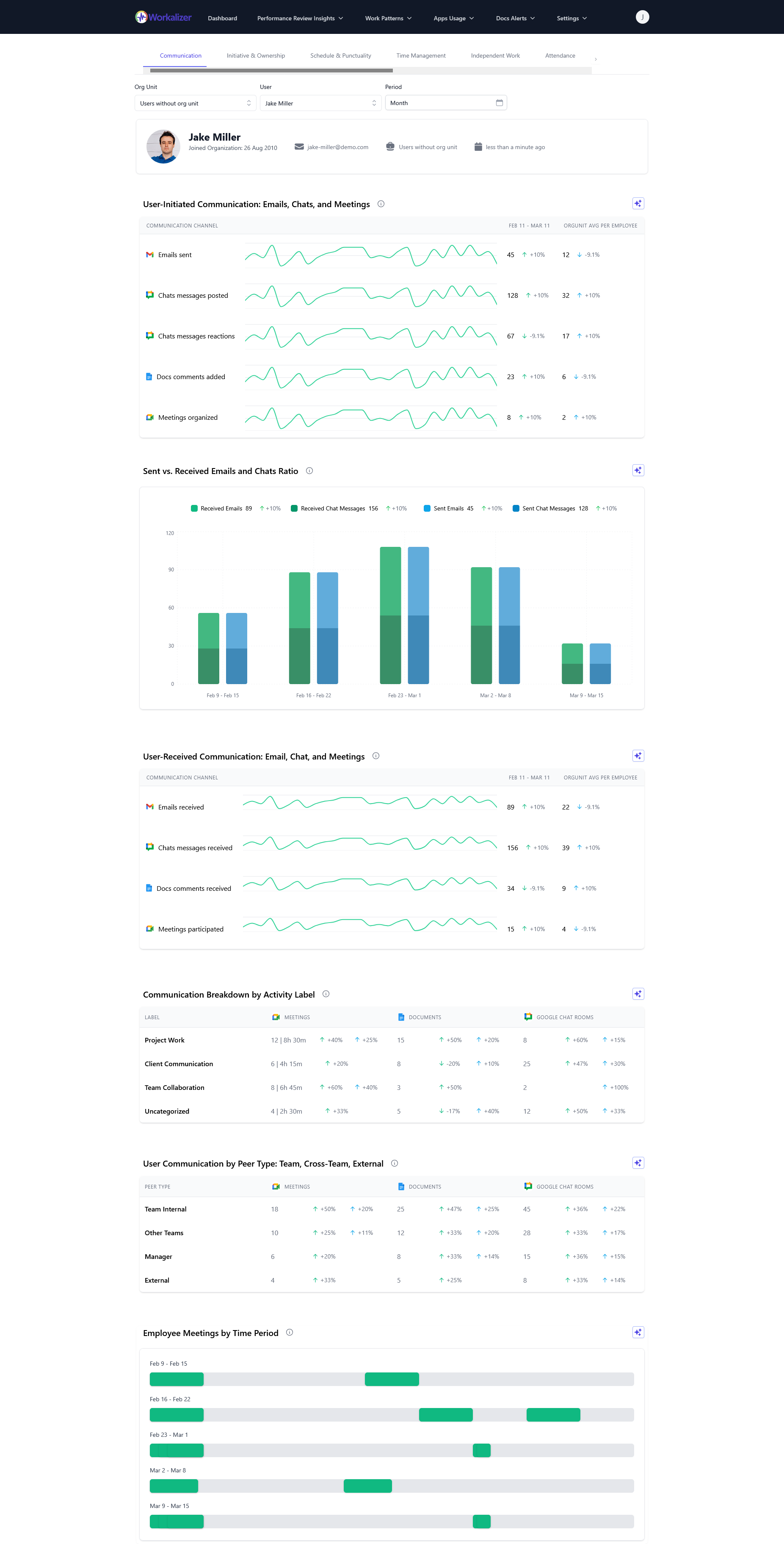
In this rapidly evolving landscape of AI-powered productivity tools, unprecedented infrastructure, and pervasive cyber threats, how do HR leaders, engineering managers, and C-Suite executives maintain visibility and control? The answer lies in data-driven insights. Workalizer.com is purpose-built for this challenge. We cut through the noise, providing unbiased productivity analytics by analyzing signals from your company's Google Workspace usage – Gmail, Drive, Chat, Gemini, and Meet.
Understanding genuine productivity, identifying bottlenecks, and fostering efficient collaboration in an era of AI-infused workflows is no longer a 'nice-to-have'; it's a strategic imperative. As we look to 2027 and beyond, the 'Agentic AI Wave' promises even more profound shifts, as discussed in our article, The Agentic AI Wave: Reshaping Work and Commerce in 2027 and Beyond. Workalizer ensures you have the objective data to navigate these changes, optimize performance, and protect your enterprise from the unseen risks of a hyper-connected, AI-driven world.
Conclusion
The announcements from Google this past week are more than just product launches; they are signposts for the future of enterprise work. From smart laptops to orbital data centers, the push for AI-driven efficiency is relentless. But this progress comes with a critical caveat: the need for heightened security and transparent performance insights. As your organization embraces these powerful new tools, ensure you're equipped with the intelligence to leverage them effectively and securely. The stakes have never been higher, and the path to peak performance is paved with data.