Solving the Timesheet Tug-of-War: Strategies for Timely Submissions and Your Google Workspace Dashboard
The Eternal Battle: Why Timesheets Are a People Ops Headache
The lament from a recent Reddit post — "PLEASE GIVE ME YOUR HOURS SO I CAN PAY YOU OMG" — echoes through the halls of countless HR and People Ops departments. If you’re in charge of payroll, you know the struggle: chasing down late timesheets isn't just an annoyance; it's a critical operational bottleneck that impacts everything from payroll accuracy to client billing. For a small consulting firm with field staff, like the one described in the post, this challenge is amplified by remote work and varied schedules.
Currently, an 80% compliance rate with an "end of pay period" deadline might seem acceptable to some, but it leaves 20% of your workforce — and your payroll team — scrambling. The common excuse, "I didn't have time to do it," points to deeper issues than mere forgetfulness. It suggests a need for clearer policies, streamlined processes, and perhaps a better understanding of employee work patterns.
Let's dive into practical strategies to transform timesheet submission from a dreaded chore into a smooth, efficient process.
Why Timely Timesheets Are Non-Negotiable
Before we talk about enforcement, it’s crucial to reiterate why timesheets are so vital. It’s not just about paying people on time — though that's certainly a primary concern.
Legal Compliance and Risk Mitigation
- Wage & Hour Laws: In regions like California, strict labor laws mandate accurate record-keeping of hours worked, especially for non-exempt (hourly) employees. Failure to do so can lead to significant fines, penalties, and even lawsuits.
- Overtime Calculations: Precise timesheets are essential for correctly calculating overtime, meal breaks, and rest periods, ensuring compliance and preventing costly errors.
Operational Efficiency and Financial Health
- Accurate Payroll: The most obvious benefit. Timely submissions mean timely and accurate paychecks, boosting employee morale and trust.
- Client Billing: For consulting firms, timesheets are the backbone of client invoicing. Delayed or inaccurate timesheets directly impact revenue cycles and project profitability.
- Project Management: Understanding actual hours spent on projects helps in future project planning, resource allocation, and identifying scope creep.
- Performance Insights: Analyzing time data can reveal insights into workload distribution, productivity trends, and areas where efficiency can be improved.
Addressing the "I Didn't Have Time" Excuse: Common Pitfalls
The most frequent complaint — "I didn't have time" — is a symptom, not the root cause. It often points to one or more of these issues:
- Lack of Clarity: Employees may not fully understand the importance or the precise deadline.
- Overwhelm: End-of-period entry can feel like a massive task, especially after a busy week or two.
- Cumbersome Systems: Even with an app like Workforce, if it's not intuitive, buggy, or requires too many steps, it becomes a barrier.
- Lack of Accountability: If there are no clear consequences for late submissions, the behavior persists.
- Management Disconnect: Managers might not be actively reinforcing the policy or modeling good behavior themselves.
Strategies for Effective Timesheet Enforcement
Moving beyond frustration requires a multi-pronged approach combining clear policy, user-friendly tools, and consistent enforcement.
1. Implement Clearer, More Frequent Submission Deadlines
The Reddit post author considered moving to a "daily for hourly, weekly for salary" model. This approach has significant merits:
- Daily Entry (Hourly Staff):
Pros: Maximizes accuracy (details are fresh), minimizes end-of-period burden, allows for real-time tracking of overtime.
Cons: Requires consistent daily discipline, might be perceived as micromanagement initially. - Weekly Entry (Salaried Staff):
Pros: Provides a good balance between detail and administrative effort, useful for project tracking and client billing.
Cons: Still requires a weekly commitment, can accumulate if neglected.
Recommendation: Consider a phased rollout. Start with clear communication about why the change is happening (e.g., "to ensure timely and accurate pay" and "support accurate client billing"). Emphasize that daily/weekly entry takes less time overall than trying to recall two weeks' worth of activity.
2. Streamline Your Tools and Processes
The company uses the Workforce app. Great! But is it optimized?
- User-Friendliness: Is the app truly intuitive? Can employees clock in/out with minimal clicks? Is it reliable in the field?
- Mobile Accessibility: Ensure the app works flawlessly on mobile devices, as field staff rely on them.
- Training & Support: Provide clear, concise training on how to use the app effectively. Offer accessible support for technical issues.
- Automated Reminders: Configure your system (or a separate tool) to send automated daily or weekly reminders.
3. Foster a Culture of Accountability
- Leadership Buy-in: Managers must understand the importance of timesheets and actively encourage (and enforce) compliance within their teams. They should lead by example.
- Clear Policy Document: Update your employee handbook with the new timesheet policy, including deadlines and consequences for non-compliance.
- Consistent Communication: Regularly remind employees about the policy and its importance through various channels (email, team meetings, internal comms).
4. Implement Incentives and Consequences
While ideally, employees would submit timesheets because it's their job, sometimes a little push helps.
- Positive Reinforcement: Acknowledge and appreciate teams or individuals with consistent, timely submissions.
- Clear Consequences: Establish a clear, escalating disciplinary process for late submissions. This might include:
- Verbal warning from manager.
- Written warning, noting potential payroll delays.
- Delayed payroll processing for the affected period (ensure this is legally compliant in your jurisdiction, especially for non-exempt employees).
- Further disciplinary action, up to and including termination, for repeated, unaddressed non-compliance.
Caution: Always consult with qualified legal counsel when establishing or enforcing policies that could impact employee pay or lead to disciplinary action, especially in states with complex labor laws like California.
Where Workalizer Helps: Operational Insights Beyond Timesheets
While Workalizer doesn't directly manage timesheet submission, it provides invaluable insights into overall team activity and productivity patterns within your Google Workspace environment. Understanding how your team utilizes tools can shed light on why administrative tasks like timesheet entry might be delayed.
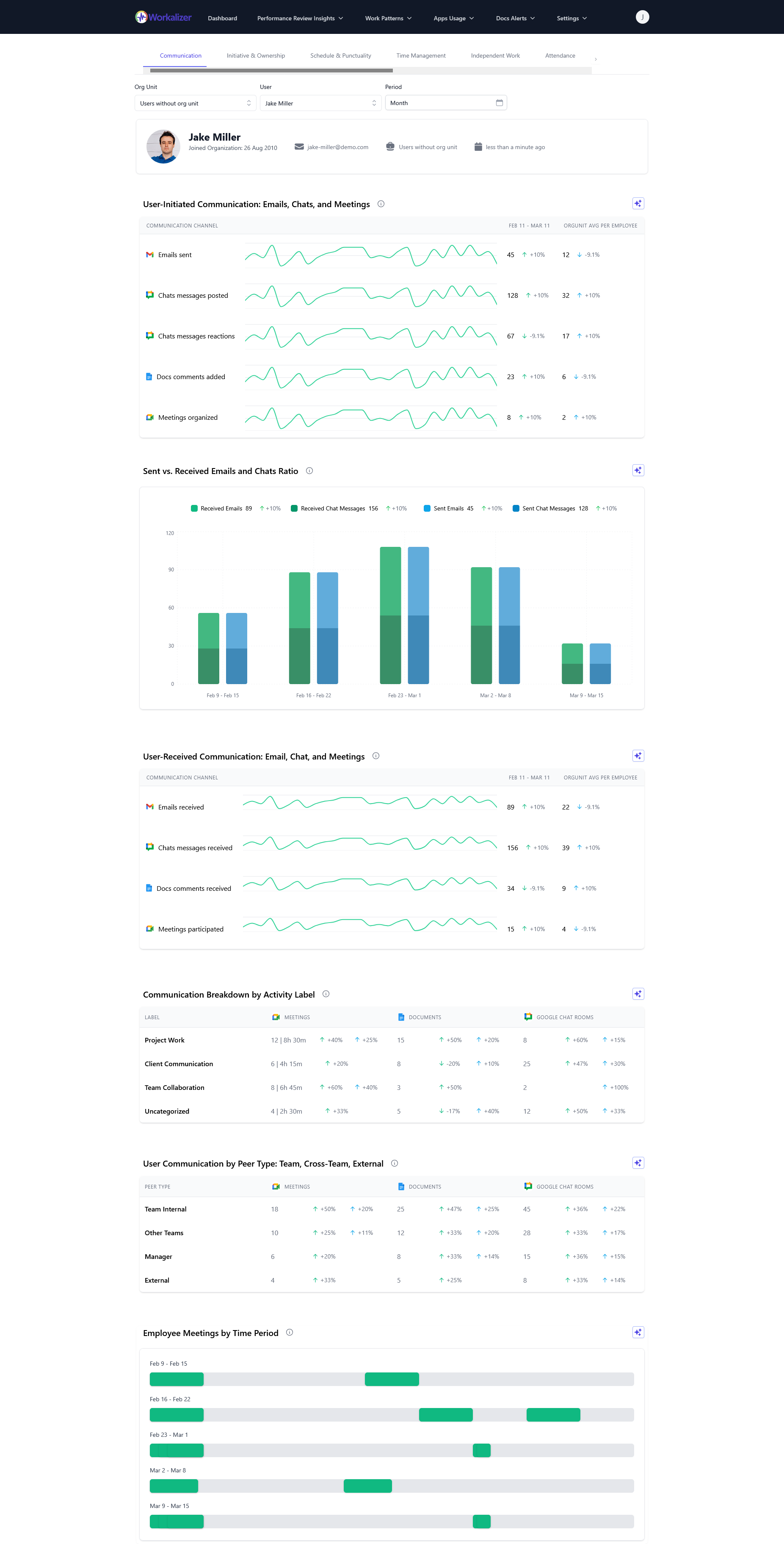
For instance, a quick dashboard gsuite login to your Workalizer platform can reveal trends in workload and collaboration. Are certain team members consistently overwhelmed with meetings or document creation, leading to the "I didn't have time" excuse? By using the Google Workspace Dashboard, you can monitor overall engagement and identify potential bottlenecks that might indirectly impact administrative tasks.
For example, if you notice high google drive cpu usage for certain individuals or teams, it might indicate heavy project work or complex data processing that leaves little mental bandwidth for other tasks. Similarly, if teams are struggling with sharing documents, perhaps a complex google drive public file sharing process is consuming valuable time that could otherwise be spent on administrative duties.
Workalizer's Performance Review for Team (Work Patterns) can help you identify if specific work patterns correlate with timesheet submission issues, allowing you to address root causes rather than just symptoms. By understanding the bigger picture of how your team works, you can implement more targeted solutions for timesheet compliance.
Your Timesheet Enforcement Checklist
Ready to tackle the timesheet challenge? Here's a quick checklist to get you started:
- ✅ Review and update your timesheet policy: Define clear daily/weekly submission requirements.
- ✅ Communicate the updated policy clearly and frequently, explaining the "why."
- ✅ Evaluate your timesheet app (e.g., Workforce) for user-friendliness and mobile access.
- ✅ Implement automated reminders for submission deadlines.
- ✅ Secure leadership and managerial buy-in for active enforcement.
- ✅ Establish a clear, escalating process for consequences for late submissions (consult legal counsel!).
- ✅ Leverage tools like Workalizer’s Google Workspace Dashboard to understand underlying work patterns that might impact compliance.
Conclusion
The battle for timely timesheets doesn't have to be eternal. By implementing clear policies, optimizing your tools, fostering accountability, and using data-driven insights from platforms like Workalizer, you can transform a frustrating administrative burden into a smooth, efficient process that benefits everyone — from your payroll team to your field staff and, ultimately, your bottom line.
Disclaimer: This blog post provides general information and recommendations for HR and People Operations best practices. It is not intended as legal advice. Always consult with qualified legal counsel regarding specific employment law compliance, especially concerning wage and hour regulations in your jurisdiction.