The Future of Agentic AI: What to Expect in Development and Integration by 2027
The AI revolution isn't just a buzzword; it's a profound shift redefining how we work, collaborate, and innovate. As of May 15, 2026, we're well past the initial hype cycle and deep into the era of practical, production-ready AI. While chatbots captured early attention, the real game-changer emerging this year and set to dominate 2027 is agentic AI – systems capable of understanding complex goals, planning multi-step actions, using tools, and self-correcting along the way. At Workalizer, where we provide unbiased performance review insights from Google Workspace usage, we see firsthand how these advancements are transforming organizational efficiency.
For HR leaders, engineering managers, and C-suite executives, understanding the trajectory of agentic AI development and integration isn't just about staying competitive; it's about strategically positioning your organization for unparalleled productivity. This deep dive will explore the critical advancements shaping the landscape of agentic AI, from robust development frameworks to accelerated deployment, and what these mean for your Google Workspace environment in 2027.
The Rise of Agentic AI: Beyond Simple Automation
Forget simple scripts or predefined automations. Agentic AI represents a paradigm shift towards intelligent, autonomous systems that can perform complex tasks, adapt to new information, and even make decisions. But building these sophisticated agents, especially for production environments, presents unique challenges: ensuring reliability, incorporating human oversight, and maintaining comprehensive observability across their operations.
Google's recent introduction of Genkit Middleware, announced just yesterday on May 14, 2026, is a direct answer to these challenges. Genkit, an open-source framework for building full-stack, AI-powered applications, now features composable hooks that intercept generation calls and tool execution loops. This means developers can inject custom behaviors like retries and fallbacks for maximum reliability, mandate human approval before destructive tool calls, and establish critical observability across every layer of an agent's operation. This advancement is crucial for moving AI agents from experimental scripts to hardened, enterprise-grade solutions.
Building Robust Agents with Control and Transparency
The ability to 'intercept, extend, and harden' agentic apps through middleware is a game-changer. It means your AI agents can be designed with safety nets, compliance checks, and performance monitoring built-in from the ground up. Imagine an AI agent tasked with managing complex project workflows within Google Workspace – with Genkit middleware, you can ensure it adheres to company policies, seeks approval for critical actions, and provides clear logs of its decision-making process. This level of control is essential for trust and widespread adoption within organizations.
Accelerating AI from Cloud to Edge: Performance Unleashed
For agentic AI to truly deliver on its promise, speed and efficiency are paramount. This year has seen significant strides in accelerating AI workloads, both in the vast scale of the cloud and on local devices, directly impacting how quickly and effectively agents can operate.
Cloud-Scale Performance: Feeding the GPU Beast
Training and deploying large AI models often hit a bottleneck: data loading. Fetching and processing terabytes and petabytes of data from remote storage can starve GPUs, wasting valuable computational resources. Google Cloud addressed this head-on with the Rapid Bucket solution, integrating Google’s Colossus storage architecture directly with PyTorch via the fsspec interface. Launched in April 2026, Rapid Bucket bypasses legacy REST APIs, utilizing persistent gRPC bidirectional streaming for high-performance object storage in dedicated zonal buckets. This innovation ensures that GPUs remain busy, dramatically speeding up AI/ML workloads on Google Cloud.
For organizations leveraging Workalizer, this means faster processing of vast datasets from Google Workspace, leading to quicker, more granular insights into team performance and collaboration patterns. When AI models can be trained and refined more rapidly, the intelligence they provide becomes even more current and actionable.
On-Device Brilliance: AI at the Edge
Beyond the cloud, the push for on-device AI is enabling instant, highly personalized experiences without the latency or privacy concerns of cloud processing. Think real-time video effects in Google Meet, advanced ASR in Google Chat, or motion capture in mobile apps. Historically, running large models on-device meant choosing between high-latency CPU execution or fragmented specialized accelerators.
However, the landscape has changed dramatically. The collaboration between Arm and Google AI Edge has led to significant optimization for on-device AI. Arm Scalable Matrix Extension 2 (SME2) now integrates a dedicated matrix-compute unit directly into the CPU, delivering up to 5x faster inference for matrix-heavy generative AI workloads. This is seamlessly leveraged by LiteRT, Google’s cross-platform framework for on-device AI, which also unlocks Neural Processing Units (NPUs) for optimal performance across mobile, desktop, and IoT platforms. LiteRT's unified API abstracts the complexity of integrating with diverse NPU SDKs, making it easier for developers to deploy high-speed AI features without compromising battery life, device thermals, or frame rates.
Streamlining the AI Agent Development Lifecycle
The journey from an AI agent concept to a production-ready service has traditionally been fraught with fragmentation. Developers often waste precious time and computational resources bridging the gap between local development environments and cloud deployment. This inefficiency directly impacts the speed at which organizations can deploy innovative AI solutions.
From Idea to Production in Hours, Not Weeks
Recognizing this critical bottleneck, Google introduced Agents CLI in Agent Platform in April 2026. This unified programmatic backbone for the Agent Development Lifecycle (ADLC) on Google Cloud transforms the fragmented ecosystem into a seamless assembly line. Agents CLI provides AI coding assistants like Gemini CLI and Claude Code with a direct, machine-readable line to the full Google Cloud agent stack, including Agent Platform, Cloud Run, and A2A Integration.
The impact is profound: organizations can now streamline the journey from idea to production in hours, not weeks. This acceleration is vital for engineering managers looking to rapidly prototype, test, and deploy AI agents that enhance team productivity and automate routine tasks. For a deeper dive into how AI is set to integrate into our daily workflows, you might find our recent post on The Future of Integrated Productivity: What to Expect from AI and Google Workspace in 2027 particularly insightful.
Integrating AI with Your Google Workspace Ecosystem
These foundational advancements in agentic AI development and deployment are not isolated; they are converging to create a more intelligent, responsive, and efficient Google Workspace ecosystem. For HR leaders, engineering managers, and C-suite executives, this integration means more than just new tools; it means a smarter way to work.
AI Agents and Data Management
Consider the sheer volume of information stored in google drive shared files storage. AI agents, powered by the robust frameworks discussed, can now be deployed to intelligently organize, categorize, summarize, and even flag critical information within these shared drives. This capability dramatically reduces time spent searching for information, improves data governance, and ensures that teams have instant access to the most relevant documents. Imagine an agent that automatically drafts meeting summaries from Google Meet transcripts and files them in the correct project folder in Drive, or one that identifies inconsistencies across various shared spreadsheets.
Managing AI-Powered Productivity and Performance
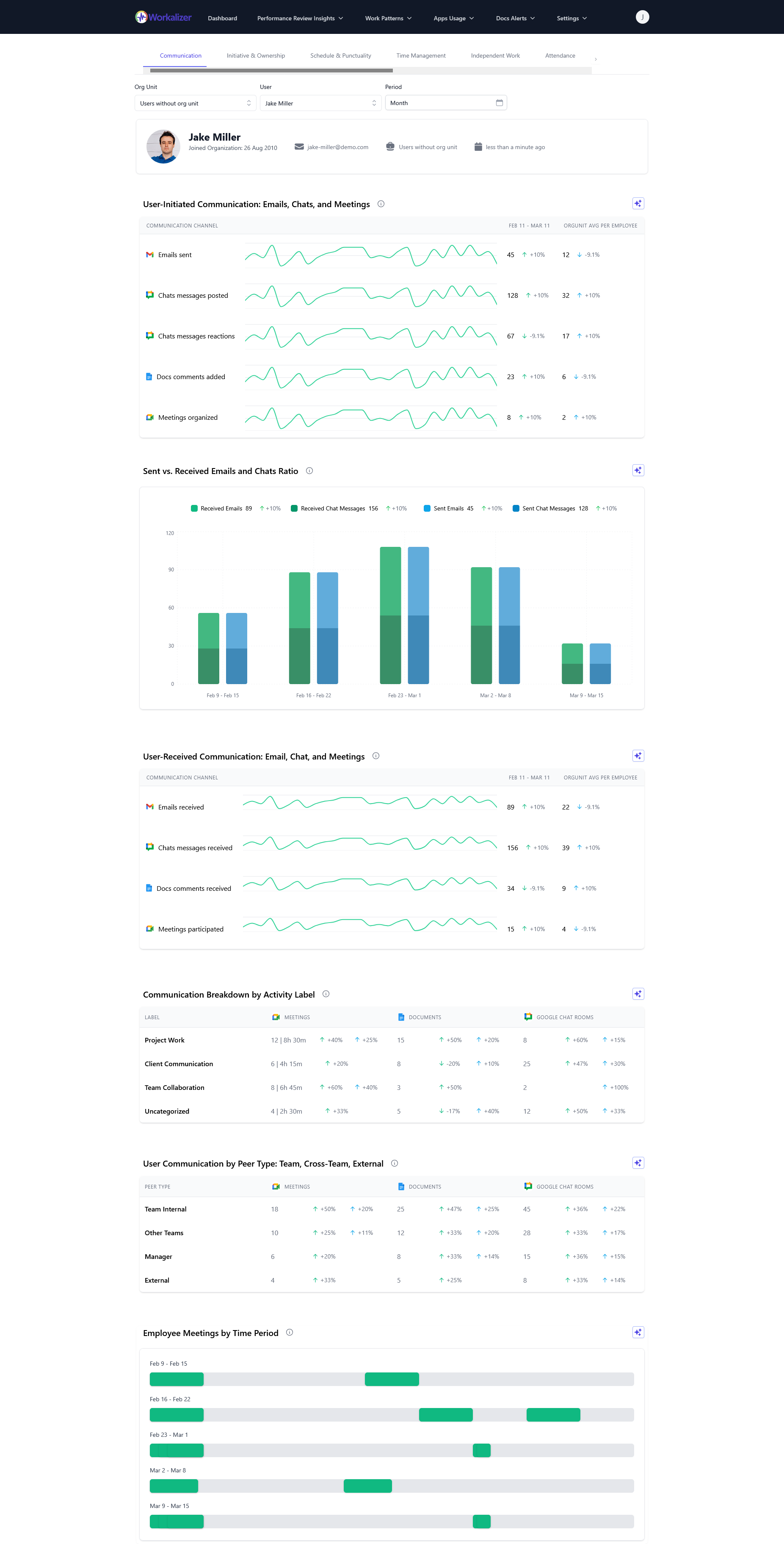
With more AI agents at work, the need for robust management and oversight becomes critical. This is where Workalizer's mission truly shines. Our platform analyzes signals from Gmail, Drive, Chat, Gemini, and Meet to provide data-driven, unbiased productivity analytics. As AI agents become more prevalent, our insights will evolve to help leaders understand the impact of these agents on human workflows and overall team performance.
Leaders can leverage Workalizer's dashboards alongside their google dashboard manage your google account settings related to AI services. This comprehensive view allows for monitoring agent activity, ensuring ethical deployment, and assessing their contribution to organizational goals. For instance, an engineering manager could use Workalizer to identify if an AI agent is effectively reducing manual toil for their team, freeing up engineers for more strategic work. This holistic approach ensures that AI innovations truly boost team output. To learn more about how Google's latest AI innovations drive unbiased productivity insights, check out our recent article: Boost Your Team's Output: How Google's Latest AI Innovations Drive Unbiased Productivity Insights.
The Road Ahead for 2027 and Beyond
As we look towards 2027, the trajectory is clear: agentic AI will become an increasingly integral part of the enterprise landscape, especially within the Google Workspace ecosystem. The advancements in middleware for robust agent building, the acceleration of AI workloads from cloud to edge, and the streamlining of the agent development lifecycle are not just technical feats; they are foundational shifts that empower organizations to achieve unprecedented levels of efficiency and innovation.
For HR leaders, this means fostering a culture that embraces intelligent automation, allowing employees to focus on high-value, creative tasks. For engineering managers, it's about leveraging powerful tools to build and deploy AI solutions with greater speed and confidence. And for the C-suite, it's about realizing the strategic advantage of a truly intelligent, integrated, and data-driven workforce. The future of work is agentic, and the time to integrate is now.