The Top 3 AI Transformations Driving Google Workspace Productivity in 2026
Forget the hype cycle; AI isn't just a buzzword anymore. As of May 31, 2026, it is the undisputed, foundational layer of modern enterprise productivity. For HR Leaders, Engineering Managers, and C-Suite Executives, this isn't about incremental gains; it's about a complete re-architecture of how work gets done, especially within the Google Workspace ecosystem. At Workalizer, we're seeing these shifts in the data, and the message is clear: adapt or be left behind.
This year, the integration of advanced AI models like Google Gemini into everyday tools is not just enhancing features; it's fundamentally redefining enterprise efficiency. We're moving beyond simple automation to intelligent, adaptive systems that anticipate needs, streamline collaboration, and unlock unprecedented levels of productivity. The future of work isn't coming; it's here, and it's powered by AI. Let's dive into the top three AI transformations driving Google Workspace productivity in 2026.
1. The Dawn of Proactive, Predictive Workflows
The days of merely reacting to tasks are rapidly fading. AI in 2026 is about anticipation. It's about a system that understands your context, predicts your next move, and proactively offers solutions before you even know you need them. This isn't science fiction; it's the reality powered by advancements like Google's Gemini Omni and Gemini 3.5 models, prominently featured at Google I/O 2026.
Consider the typical workday. How much time is lost searching for information, drafting initial communications, or setting up routine meetings? Gemini, integrated across Google Workspace, is now stepping in to fill these gaps. Imagine starting your day with your calendar and inbox already intelligently prioritized, key emails drafted for your review, and relevant documents retrieved from Drive, ready for you. For instance, if you're preparing for a client meeting, AI can proactively pull up past communications, relevant project files, and even synthesize a summary of recent interactions.
This proactive intelligence extends to collaboration. When you're working on a project, AI can identify team members who might need specific information and suggest designing systems to overcome distraction and disengagement by streamlining data access. It can help you efficiently how to share a file from my google drive with the right permissions, ensuring everyone has access to the latest version without manual intervention. This level of predictive support is reducing cognitive load, freeing up employees to focus on higher-value, strategic tasks rather than administrative overhead. This shift alone can account for significant time savings, directly impacting the bottom line.
2. The Rise of Conversational Interfaces and Ambient Intelligence
How we interact with technology is undergoing a radical metamorphosis. The keyboard and mouse, while still essential, are being augmented, and in some cases, supplanted, by more natural, intuitive interfaces. Rivian, for example, boldly declared that Apple CarPlay is already obsolete, with AI being the driving force behind this paradigm shift. The rationale? AI enables a more seamless, conversational interaction that blends into the environment, making traditional, app-centric interfaces feel clunky and inefficient.
This sentiment resonates deeply within the enterprise. Google's dedication to models like Gemini Omni and 3.5, showcased in 9 impressive demos, highlights a future where you converse with your Workspace. Need to find a specific data point in a sprawling Google Sheet? Just ask. Want to summarize a lengthy email thread in Gmail and draft a concise response? Gemini handles it. This isn't just about voice commands; it's about context-aware, multimodal AI that understands intent, learns from your interactions, and adapts its responses.
Furthermore, the emergence of stylish smart glasses, like those recently unveiled by Acer, signifies a move towards truly ambient computing. Imagine a world where critical notifications, meeting agendas, or even real-time data insights are subtly overlaid onto your field of vision, accessible through a glance or a whispered command. This pervasive yet unobtrusive AI will revolutionize how teams collaborate and share google docs with others, by simply indicating who needs access through natural language, or even by a subtle gesture. The friction points of digital interaction are being smoothed away, leading to faster decision-making and a more fluid workflow.
3. Hyper-Personalization and Adaptive Learning at Scale
One-size-fits-all solutions are a relic of the past. In 2026, AI is driving hyper-personalization, not just for external customers, but for every employee within your organization. This isn't just about custom dashboards; it's about an AI-powered Workspace that adapts to individual working styles, learning preferences, and even emotional states to optimize productivity.
We saw hints of this at Google Marketing Live 2026, where product leaders like Vidhya Srinivasan, Chris Monkman, Christine Turner, and Josh Moser discussed how Gemini models are rebuilding the foundation of modern marketing through AI Search, intelligent measurement, and automated creative asset generation. The principles of AI-driven optimization and personalization that are transforming external customer engagement are now being applied internally to employee experiences.
Within Google Workspace, this translates to AI understanding your role, your typical projects, and even your preferred communication channels. It can suggest personalized learning paths for skill development, recommend optimal times for deep work based on your activity patterns, or even intelligently route information to the right team members. For HR leaders, this means unprecedented insights into employee engagement and growth opportunities, moving beyond generic performance reviews to truly data-driven, unbiased productivity analytics that Workalizer provides. This adaptive learning environment is crucial for organizations looking to unlock unprecedented efficiency as AI's rapid evolution reshapes your enterprise in 2026.
What This Means for Your Enterprise in 2026
The AI-driven transformations within Google Workspace are not merely technological upgrades; they are strategic imperatives. Organizations that embrace these shifts will gain a distinct competitive advantage, characterized by:
- Elevated Efficiency: Proactive AI reduces wasted time and cognitive load, allowing employees to focus on core competencies.
- Enhanced Collaboration: Intuitive interfaces and intelligent information flow foster seamless teamwork, regardless of location.
- Data-Driven Decision Making: Hyper-personalization and adaptive learning provide granular insights into individual and team performance, enabling targeted interventions and continuous improvement.
The global AI market is projected to continue its explosive growth, with the potential to contribute significantly to the economy, as highlighted by discussions around a potential $965 billion boom. Leveraging AI within your Google Workspace is no longer optional; it's essential for capturing a piece of that value.
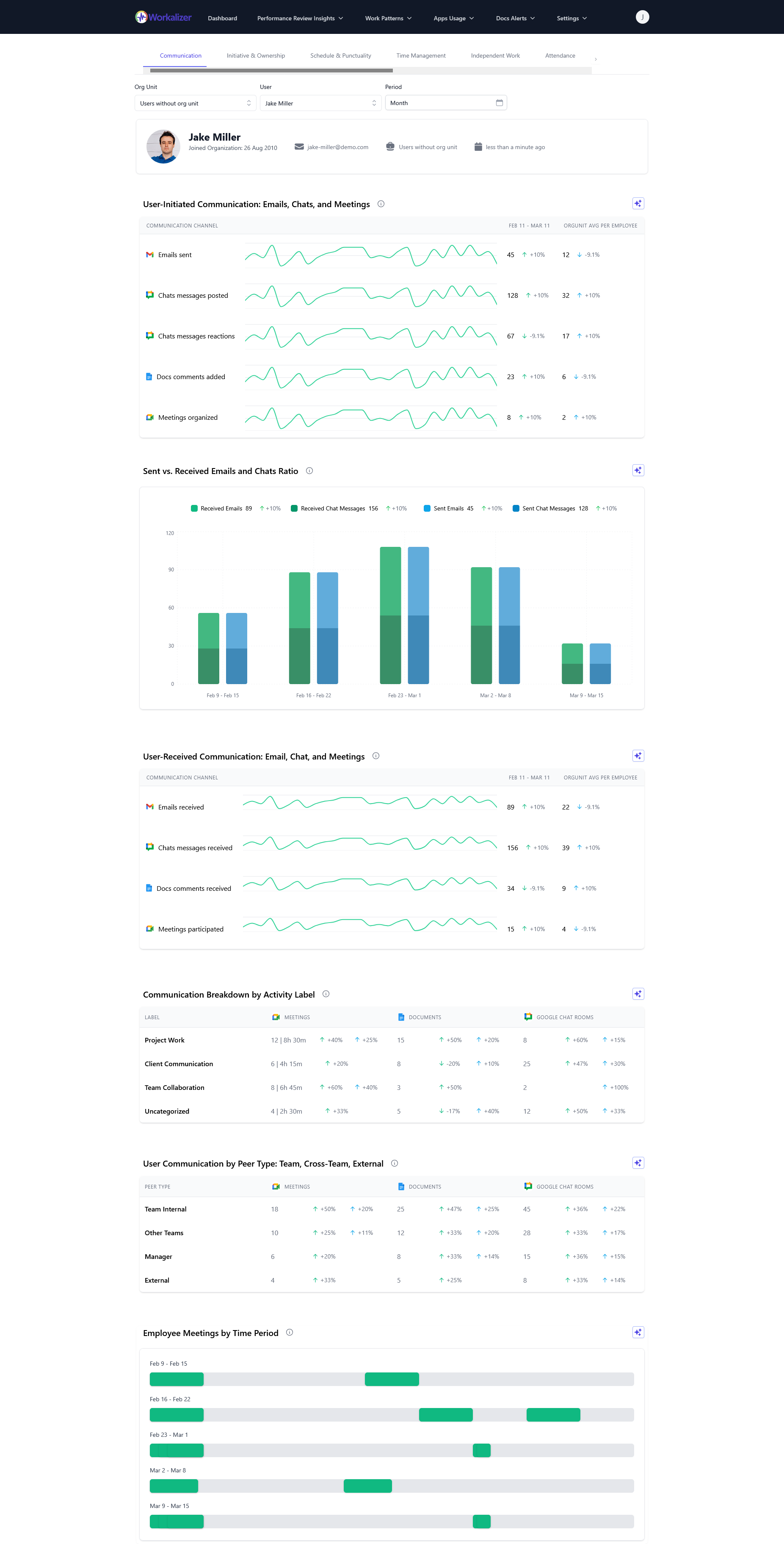
At Workalizer, we are at the forefront of understanding these changes, translating the complex signals from your Google Workspace usage into clear, actionable performance insights. We provide the data you need to navigate these transformations, ensuring your enterprise doesn't just adopt AI, but truly thrives because of it. The future of productivity is intelligent, adaptive, and deeply integrated into your daily workflow. Are you ready to lead the charge?