Boost Enterprise Productivity: Designing Systems to Overcome Distraction and Disengagement
Boost Enterprise Productivity: Designing Systems to Overcome Distraction and Disengagement
As we navigate the tail end of May 2026, a stark reality confronts HR leaders, engineering managers, and C-suite executives: the traditional battle for productivity is being lost. Despite an abundance of tools and methodologies, our collective ability to focus and engage is eroding at an alarming rate. This isn't just anecdotal; the data paints a concerning picture that demands a fundamental shift in our approach.
The Alarming State of Enterprise Productivity in 2026
Let's be blunt: the modern workplace is a minefield of interruptions. If your teams feel perpetually busy yet rarely productive, you’re not alone. The latest 2026 State of the Global Workplace report delivers a sobering statistic: global employee engagement has fallen for two consecutive years, now hovering at a mere 20%. This isn't just a morale issue; it's a direct threat to your bottom line and your organization's future. The report identifies declining manager engagement as a significant driver, with leaders themselves buried under 'back-to-back meetings, endless notifications, constant context switching, and rising expectations.'
It gets worse. Individual goal achievement, the bedrock of any successful project or strategy, is in crisis. Research indicates a staggering 80% of people who set goals abandon them by February. This isn't because they lack ambition; it's because they're adopting the wrong approach to achievement. We're asking individuals to perform heroics in environments designed for distraction, where the 'small stuff' consistently sidelines the 'big stuff.' Organizations are hemorrhaging potential, not due to a lack of effort, but due to systemic issues that fragment attention and stifle deep work.
Beyond Time Management: The Power of Attention Design
For too long, the narrative around productivity has centered on 'time management.' But as our world becomes increasingly saturated with digital pings and urgent requests, time isn't the primary resource under attack; it's attention. As one attendee at a recent 'Focus in a Distracted World' session aptly put it, 'I’m trying to make space to get more organised to be more productive.' This insight, shared just weeks ago on May 18, 2026, highlights a critical shift: we need to design for attention, not just manage schedules.
What does this look like in practice? It means creating 'protected focus' moments. Simple actions, like closing email for short periods, turning off notifications, or blocking focus time in your calendar, are no longer optional best practices but essential survival strategies. It also means alleviating the 'mental overload' that plagues many professionals. The stress of trying to remember everything – tasks, follow-ups, meeting notes – clogs cognitive bandwidth, leaving little room for creative problem-solving or strategic thinking.
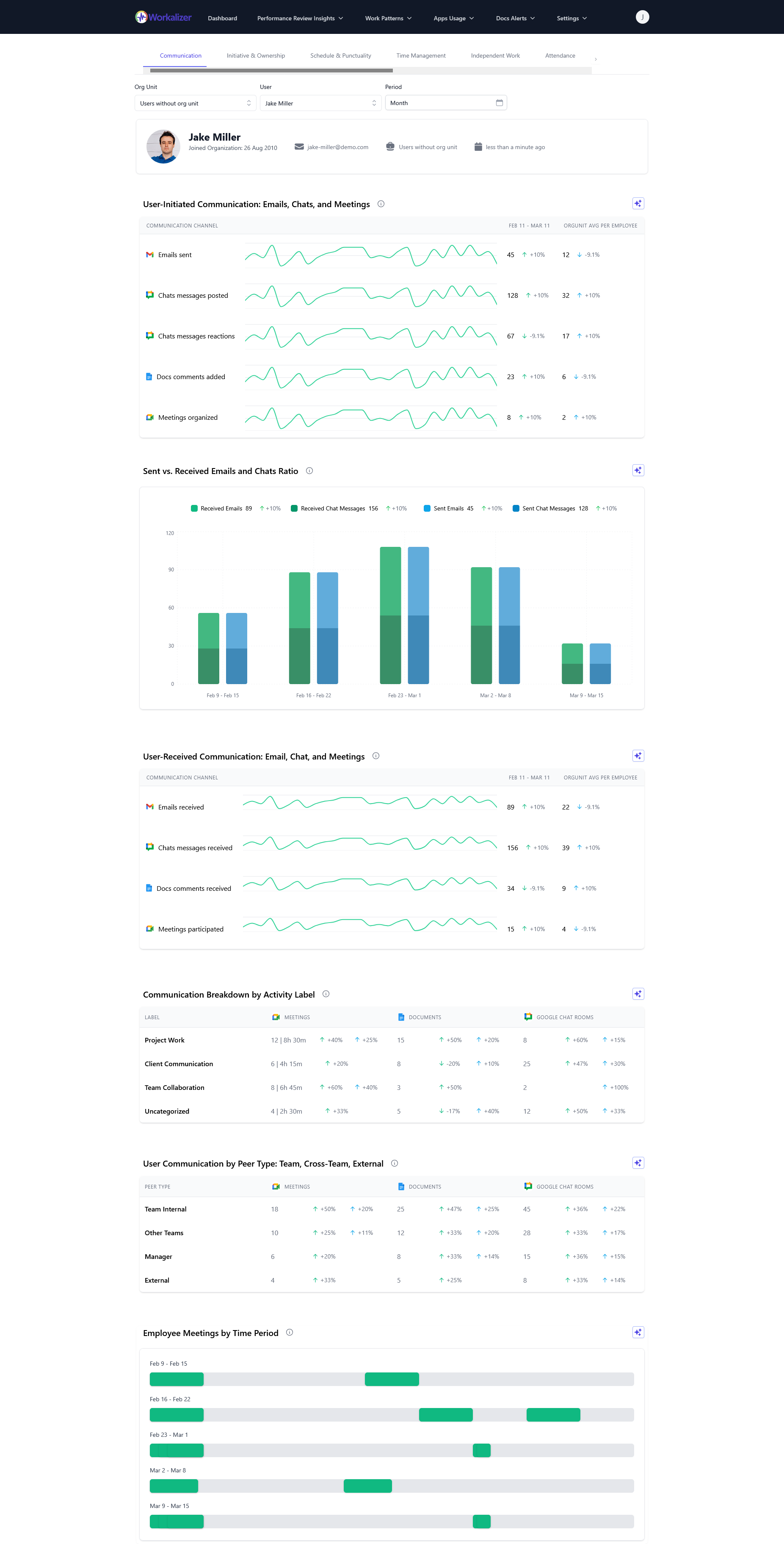
This is where Workalizer steps in. Our AI-powered platform analyzes signals from your Google Workspace usage – Gmail, Drive, Chat, Gemini, and Meet – to provide data-driven insights into where attention is truly being spent. We help you move beyond assumptions, revealing patterns of interruption and context-switching that undermine focus and identify the 'magic activities' that truly accelerate progress, as opposed to the myriad of tasks that merely fill the day. This data empowers leaders to understand not just how much work is done, but how effectively it's done.
Why Goals Fail: It's a Design Problem, Not a Discipline Problem
The failure of goals isn't a character flaw; it's a systemic one. The 80% abandonment rate isn't due to a lack of discipline, but a lack of a properly designed system for achievement. As Lifehack.org emphasizes, 'Goal achievement is a design problem, not a discipline problem.' Organizations often fall into the trap of thinking there's time for everything, leading to a sprawling list of tasks where the truly important often gets lost in the noise. Identifying your team’s natural rhythms and preferences, as highlighted by Get Organized Wizard, is a crucial step in designing an environment where individuals can thrive and contribute their best work.
By understanding individual and team work patterns, we can structure time and environment for maximum effectiveness. This isn't about micromanagement; it's about intelligent resource allocation and fostering an environment where deep work is possible. For a deeper dive into how AI is transforming these structures, explore our recent post: Unlock Unprecedented Efficiency: How AI's Rapid Evolution Reshapes Your Enterprise in 2026.
The AI Advantage: Sculpting a Productive Future
This is where AI isn't just a buzzword; it's the solution. Workalizer leverages AI to provide the missing link between activity and insight. Think of it as an intelligent assistant for your entire organization, one that can generate instant project summaries, recommend best practices, and automate workflows – as discussed in the context of AI Project Management. Our platform goes further, analyzing the subtle signals from your Google Workspace to reveal true productivity patterns.
For instance, by analyzing how teams utilize tools like Google Drive, Workalizer can identify efficiencies or bottlenecks in collaboration. Are critical documents being shared effectively? Is the process of 'google doc share' streamlined, or are there unnecessary delays? Understanding 'how to share my google docs' efficiently across teams can significantly impact project velocity and reduce redundant efforts. This isn't about surveillance; it's about providing anonymized, aggregated data that helps leaders make informed decisions, optimize resource allocation, and identify areas for targeted training or process improvement. AI helps you move from reactive problem-solving to proactive system design, ensuring that your organization isn't just busy, but truly effective.
Cultivating Engagement Through Clarity and Purpose
The 20% engagement statistic isn't just a number; it represents a profound human cost. People feel engaged not through more surveys or perks, but through psychological safety, trust, clarity, belonging, purpose, recognition, and critically, space to do meaningful work. When managers are in 'survival mode,' these foundational elements crumble. Workalizer's insights empower managers by giving them clarity on their team's workload and focus areas, freeing them from constant firefighting so they can actually lead, coach, and foster a healthy culture.
By shining a light on actual work patterns, Workalizer helps organizations identify and eliminate the hidden productivity drains that lead to burnout and disengagement. This data-driven clarity allows leaders to create environments where employees understand what truly matters, feel recognized for their contributions, and have the space to engage in work that brings purpose. This proactive approach to organizational health is crucial for long-term success. To understand the broader implications of AI on securing your enterprise, read our post: Securing Your Enterprise Future: Navigating AI's $965 Billion Boom for Peak Productivity.
Conclusion: Design Your Way to a More Productive Future
The challenges of distraction and disengagement in 2026 are profound, but they are not insurmountable. The solution isn't to work harder, but to work smarter – by designing systems that protect attention, prioritize meaningful work, and foster genuine engagement. Workalizer provides the intelligence to make this design possible. By transforming raw Google Workspace data into actionable insights, we empower HR leaders, engineering managers, and C-suite executives to build a workplace where productivity is not a constant struggle, but a natural outcome of intelligent design. Stop guessing, start designing, and reclaim your organization's potential today.