Beyond Spreadsheet Hell: Secure RIF Planning & How to See All Shared Files in Google Drive
Is RIF Planning Always This Chaotic? Escaping Spreadsheet Hell
The Reddit post resonated with many of us in People Ops: "Currently running a 150-person RIF entirely in Excel. Please tell me there's a better way." The author's vivid description of "spreadsheet hell" – juggling multiple files for employee lists, severance, WARN Act compliance, budget scenarios, and countless email threads – paints a picture of intense stress, high risk, and a desperate search for a more streamlined approach. The fear of "pulling the wrong numbers and names" is palpable.
If you've ever found yourself on "Final RIF Plan v2 Actual Final v11," you know this isn't just an inconvenience; it's a critical operational and legal vulnerability. While the Reddit user specifically asked if this manual chaos is standard, the answer is nuanced: it's common, but it doesn't have to be the standard. There are better workflows and tools to transform this nightmare into a manageable, secure process.
The Anatomy of RIF Planning Chaos
A Reduction in Force (RIF) is one of the most sensitive and complex tasks an HR team undertakes. It involves a confluence of critical factors:
- Sensitive Employee Data: Personal information, performance reviews, compensation, tenure.
- Complex Calculations: Severance packages, prorated bonuses, PTO payouts.
- Legal Compliance: WARN Act, discrimination laws, contract obligations.
- Financial Modeling: Budget impacts, cost savings scenarios.
- Cross-Functional Collaboration: Legal, Finance, Department Heads, Executive Leadership.
- Dynamic Scenarios: Constant "what-if" adjustments that ripple through all calculations and data points.
When these elements are managed across disparate spreadsheets, email chains, and manual updates, the risk of error skyrockets. Version control becomes a myth, data integrity is compromised, and the security of highly confidential information hangs by a thread.
Beyond Excel: Principles for a More Secure and Efficient RIF Workflow
While enterprise-grade RIF software exists, it's often out of reach for mid-sized companies. However, adopting strategic workflows and leveraging existing tools, especially within Google Workspace, can significantly improve the process.
1. Establish a Single Source of Truth (and its Secure Home)
Instead of multiple, disconnected spreadsheets, aim for a centralized data hub. This could still be a Google Sheet, but one that is meticulously structured and linked. All other documents (severance calculations, legal notes) should either be tabs within this master sheet or clearly linked documents within a dedicated, secure folder.
Actionable Tip: Create a dedicated Google Drive folder for RIF planning. Restrict access to only the absolute essential personnel. Implement a clear naming convention for all documents (e.g., "RIF_Plan_2026_v1.0_DRAFT"). This is crucial to prevent sensitive information from becoming a `google drive public file`.
2. Implement Robust Access Controls and Version Management
The "countless email threads" and "manual updates" described in the Reddit post are symptoms of poor version control and collaboration mechanisms. Google Sheets offers version history, which is a lifesaver for tracking changes and reverting if necessary. However, relying solely on this isn't enough.
- Strict Permissions: Assign "Viewer" access by default, granting "Editor" access only when absolutely necessary and for specific tasks.
- Designated Owners: Clearly assign ownership for each section or linked document to prevent conflicting edits.
- Change Log: Maintain a simple change log within your master document, noting major revisions, who made them, and why.
3. Automate Where Possible, Validate Always
While full automation might require custom scripting, you can automate parts of the process within Google Sheets using formulas for severance calculations, conditional formatting for WARN Act triggers, and data validation rules to prevent input errors.
Checklist for Data Integrity:
- Cross-reference: Ensure employee IDs, names, and key data points match across all linked documents.
- Formula Audits: Regularly review complex formulas to ensure accuracy.
- Scenario Modeling: Create separate tabs for "what-if" scenarios rather than constantly altering the master plan. This allows for quick comparisons without corrupting your primary data.
Where Workalizer Helps: Visibility and Security in Google Workspace
The chaos described in the Reddit post isn't just about calculation; it's fundamentally about data governance, security, and visibility within a collaborative environment. This is precisely where Workalizer, a productivity & operations analytics product for Google Workspace, can provide invaluable support.
Ensuring Data Security and Preventing Accidental Exposure
During a RIF, the last thing you need is a data leak. Ensuring that sensitive RIF documents aren't accidentally shared, or worse, become a `google drive public file`, is paramount. Workalizer provides the tools to monitor and manage this risk.
With Workalizer's Google Drive Shared Files Report, administrators can easily see `how to see all shared files in google drive` that are critical to your RIF process. This report allows you to quickly identify who has access to which documents, ensuring that permissions are appropriate and no sensitive RIF planning documents are inadvertently shared externally or made public.
Monitoring Activity and Detecting Anomalies
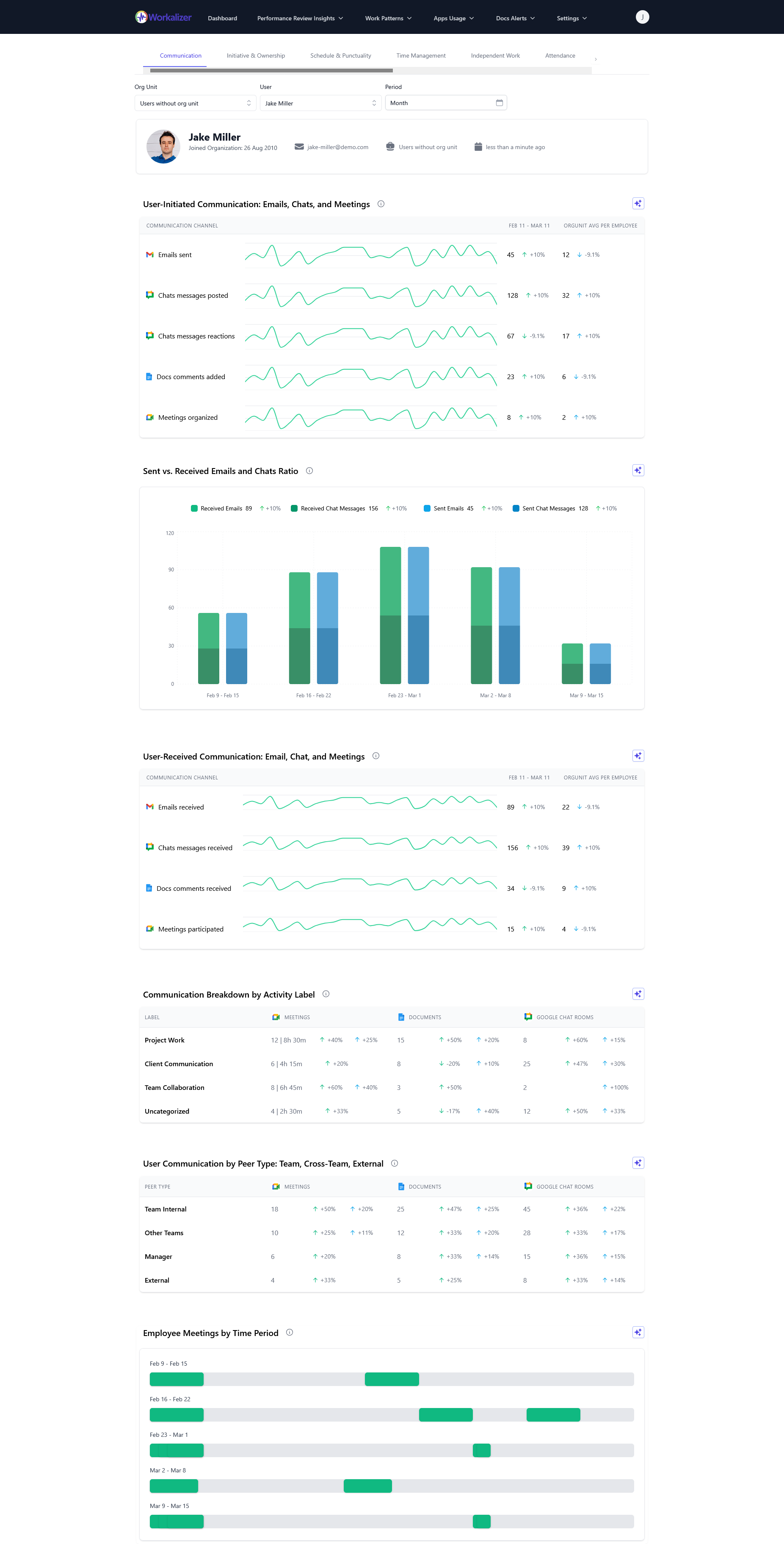
Workalizer provides a comprehensive `url https workspace google com dashboard` for administrators to oversee the environment where these critical decisions are being made. You can monitor activity on sensitive RIF documents, helping to ensure that only authorized personnel are accessing or modifying them.
- Document Alerts: Use How to Use Document Alerts in Workalizer to set up notifications for specific actions on your RIF planning documents, such as changes in sharing settings, external sharing, or unusual access patterns. This acts as an early warning system against potential breaches.
- Google Drive Usage Report: The How to Use the Google Drive Usage Report can give you an overview of how RIF-related documents are being utilized, helping to spot any anomalous behavior that might indicate a security risk or a deviation from your established workflow.
By providing clear visibility into file sharing and activity, Workalizer helps HR and People Ops teams maintain control and security over the highly sensitive data involved in RIF planning, mitigating the risks associated with manual, chaotic processes.
RIF Planning Best Practices Checklist
- Dedicated Secure Folder: Create a highly restricted Google Drive folder for all RIF-related documents.
- Access Matrix: Document who has access to which specific files and why. Review and update regularly.
- Master Data Sheet: Designate one primary Google Sheet as the "source of truth" for employee data, linking to other sheets for specific calculations.
- Version Control Protocol: Establish clear guidelines for saving versions, using version history, and communicating major changes.
- Legal Review Integration: Schedule regular check-ins with legal counsel to review plans, selection criteria, and severance calculations.
- Financial Partnership: Work closely with finance to model budget scenarios and validate cost savings.
- Communication Plan: Develop a comprehensive internal and external communication strategy well in advance.
- Data Validation: Implement formulas and manual checks to ensure data accuracy across all documents.
- Audit Trail: Ensure all decisions, changes, and approvals are documented and auditable.
- Workalizer for Oversight: Leverage Workalizer to monitor shared files, track document activity, and set alerts for sensitive RIF documents.
While RIFs will always be challenging, moving beyond a purely manual, spreadsheet-driven approach is not only possible but essential for minimizing risk, maintaining data integrity, and protecting your organization and its people. By implementing structured workflows and leveraging tools like Workalizer for oversight, you can navigate these complex situations with greater confidence and control.
Disclaimer: This article provides general information and best practices for RIF planning workflows and data management. It is not legal advice. Always consult with qualified legal counsel regarding specific RIF decisions and compliance requirements in your jurisdiction.