The Future of Productivity Tools: Unlocking Google Workspace's Full Potential in 2027
As a Senior Tech Writer at Workalizer, I've seen countless trends come and go, but one constant remains: the relentless pursuit of efficiency. In the dynamic landscape of June 2026, where AI is no longer a novelty but an embedded operational layer, the tools we use—and critically, how we use them—are defining organizational success. For HR leaders, engineering managers, and C-suite executives, understanding the future trajectory of productivity tools, especially within the Google Workspace ecosystem, isn't just strategic; it's existential.
The promise of a hyper-efficient, data-driven workforce is within reach, but only if we move beyond superficial adoption and embrace deep integration and intelligent utilization. Let's look ahead to what 2027 holds for maximizing our digital potential.
The Evolving Digital Workspace: Precision Over Proliferation
The sheer volume of digital data and the expanding suite of applications can often feel overwhelming. It's a paradox: more tools, more data, but not always more clarity. This year, we're seeing a critical shift from simply having tools to mastering their precision. Our goal isn't just to complete tasks, but to complete them optimally, and with clear, actionable insights.
Consider the humble spreadsheet. While powerful, its default visualizations can be a barrier to understanding. As How-To Geek highlighted recently, many Excel charts are inherently hard to read. This isn't just an aesthetic issue; it's a productivity bottleneck. If your team spends precious minutes deciphering a cluttered chart, that's a direct hit to efficiency. In 2027, the emphasis will be on optimizing Google Drive file sharing permissions and ensuring that data, once shared, is immediately consumable and impactful. The ability to quickly and clearly present information—whether you're wondering "how do I share an excel spreadsheet in google drive" or a complex data model—will be a cornerstone of effective communication and decision-making.
Actionable Insight: Streamlining Data Visualization
For HR and engineering leaders, this means demanding clarity. Encourage teams to invest a few minutes to clean up charts and graphs. Tools that integrate directly with Google Workspace, like Workalizer, can help identify where data is being shared and how effectively it's being consumed, providing an invaluable feedback loop on information clarity.
Unlocking Google Workspace's Hidden Productivity Levers
Google Workspace is more than just a collection of apps; it's an ecosystem designed for collaboration. Yet, many organizations only scratch the surface of its capabilities. The true productivity gains in 2027 will come from leveraging its deeper functionalities, particularly in search and file management.
On other platforms, power users swear by tools like Raycast for instant app launching and file searching across local and cloud services. As Android Police noted, Android's native search often falls short of this Mac-like seamlessness. However, within Google Workspace, the power of Google Drive search is often underrated. It's not just about finding a file; it's about finding the right file, at the right moment, across all your linked cloud services.
This seamless access is critical for managers who frequently ask, "how do I share my google drive files with others?" The answer isn't just a technical instruction; it's about establishing a culture of organized, accessible information. Workalizer's analytics can reveal bottlenecks in file access and sharing patterns, helping to pinpoint teams or individuals who might be struggling with effective information dissemination.
Actionable Insight: Mastering Google Drive Search and Sharing
Invest in training your teams on advanced Google Drive search operators and best practices for folder structures. Ensure everyone understands how to efficiently share documents and spreadsheets, not just for individual tasks, but for collective project success. This proactive approach minimizes time wasted searching for information, freeing up valuable cognitive load for more strategic work.
Optimizing Digital Assets: Beyond the Obvious Storage Hacks
While cloud storage seems infinite, local device storage and the sheer volume of digital assets still impact performance. Cluttered devices and disorganized cloud drives create friction that slows down workflows. A recent How-To Geek article highlighted a simple trick to free up 19GB of storage on a Samsung Galaxy phone by deleting 'pre-edit' versions of photos. This isn't just a phone hack; it's a metaphor for organizational digital hygiene.
Every unused draft, every redundant file, every forgotten shared document contributes to digital clutter. This clutter, while not always immediately visible, impacts search efficiency, backup times, and overall system responsiveness. In 2027, intelligent storage management will be about more than just freeing up space; it will be about optimizing the entire digital asset lifecycle. Our recent post on Google Storage Tips delves deeper into this, particularly in the context of Gemini and other resource-intensive applications.
Actionable Insight: Proactive Digital Asset Management
Implement clear policies for document retention, version control, and archiving within Google Drive. Encourage regular clean-ups of personal and shared drives. Leverage Workalizer to identify large, infrequently accessed files or redundant documents that could be archived or deleted, improving overall system performance and reducing digital overhead.
The Human Element: When Tools Excel (or Fail)
Even the most sophisticated tools are only as good as their users and their integration. We've all experienced the frustration of a critical app failing, like the widely reported Android Auto Spotify bug that left users fed up, as Android Police documented. While this specific bug might seem peripheral to Google Workspace, it underscores a fundamental truth: app reliability and user experience are paramount for sustained productivity.
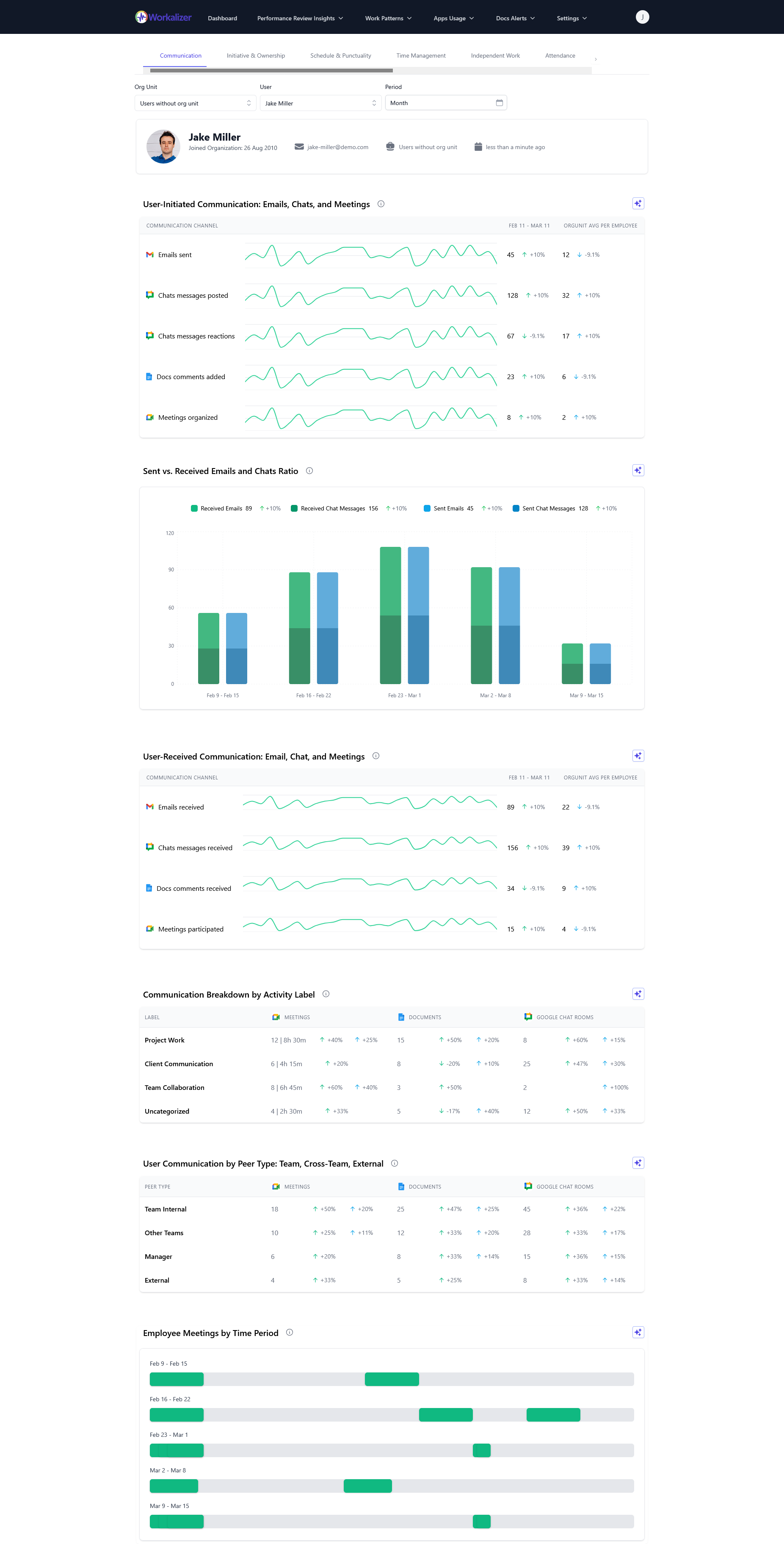
Workalizer's mission is to bridge this gap by providing data-driven, unbiased productivity analytics from your company's usage of Google Workspace. We analyze signals from Gmail, Drive, Chat, Gemini, and Meet to reveal how your teams are actually engaging with these tools. Are certain collaboration features underutilized? Are teams struggling with file sharing permissions? Are meeting tools being used effectively?
By understanding these patterns, HR leaders and C-suite executives can move beyond anecdotal evidence and make informed decisions about training, tool adoption, and process optimization. This isn't about surveillance; it's about empowerment—empowering teams to work smarter, not just harder, and empowering leaders to foster an environment where tools truly facilitate performance.
Conclusion: Embracing Intelligent Tools for a Productive 2027
The future of productivity tools in 2027 isn't about chasing the next shiny object; it's about intelligently harnessing the power of our existing ecosystems, particularly Google Workspace. It's about precision in data visualization, mastery in file management and search, and proactive digital asset optimization. Most importantly, it's about understanding the human element of tool usage through robust analytics.
Workalizer provides the insights you need to navigate this evolving landscape, transforming raw usage data into actionable strategies for peak organizational efficiency. By focusing on how your teams interact with Google Workspace, you can unlock unparalleled productivity, foster a culture of clarity, and ensure your organization is not just keeping pace, but leading the charge into a more productive future.