Navigating Role Conflict: Preparing for a Crucial Meeting & Optimizing Google Drive File Sharing Permissions
In the dynamic world of work, misunderstandings can escalate, especially when they touch upon the very definition of one's role. A recent Reddit post from an employee in the UK perfectly encapsulates this challenge: a crucial meeting with their boss and the VP after months of conflict over role expectations. This isn't just about one individual; it's a common scenario that People Ops professionals frequently encounter, highlighting the critical need for clear communication, documented processes, and effective conflict resolution strategies.
The employee, a unique expert in their company with undocumented processes, reached out to their VP after being contacted by a recruiter. The VP's empathetic response and proactive move to mediate a three-way conversation present a golden opportunity for resolution. But how do you prepare for such a high-stakes discussion without damaging existing relationships?
The High-Stakes Meeting: Why Preparation is Key
When you're walking into a meeting with your direct manager and their superior, especially after a period of tension, preparation isn't just advisable; it's essential. This isn't a blame game; it's an opportunity to reset, clarify, and build a stronger foundation for your role and your relationship with your manager. The VP's request for each party to come prepared with their 'biggest priorities for my role' is a clear signal: focus on solutions and shared understanding.
Understanding the Core Conflict: Role Definition
The Reddit user identifies the core issue as "a conflict in our fundamental understanding of what my role is, her expectations versus what's outlined in my job description." This is a classic misalignment that can lead to frustration, underperformance, and ultimately, employee churn. Before the meeting, take time to:
- Review Your Job Description: What was originally agreed upon? Highlight key responsibilities and expectations.
- Document Your Current Activities: What do you actually do day-to-day, week-to-week? How does this align (or diverge) from your JD?
- Identify Discrepancies: Where are the clear differences between your manager's expectations, your JD, and your actual work?
Crafting Your Narrative: Data and Diplomacy
Your goal is to present a clear, objective picture of your role, your contributions, and the points of friction, all while maintaining a professional and solution-oriented demeanor. Avoid accusatory language. Focus on facts, impact, and proposed solutions.
Documenting Your Impact and Processes
The Reddit user's statement about "zero documentation of what I do" is a critical insight. This lack of documentation not only creates ambiguity but also poses a significant business risk. For People Ops, ensuring knowledge transfer and process clarity is paramount. For the employee, it's an opportunity to showcase their unique value.
- Quantify Your Achievements: List specific projects, initiatives, and outcomes. Use numbers where possible (e.g., "reduced X by Y%", "managed Z projects worth $A").
- Outline Key Processes: Detail the unique processes you manage. How do they contribute to the company's success?
- Propose Documentation Solutions: Suggest ways to formalize these processes. This demonstrates initiative and a commitment to the company's long-term health.
Addressing Friction Points Without Blame
This is perhaps the trickiest part. Instead of saying "my manager constantly undermines me," frame it as "there appears to be a disconnect in how certain decisions are made regarding my projects, leading to inefficiencies."
- Focus on Outcomes: "When X happens, it results in Y (negative outcome for the company)."
- Use "I" Statements: "I feel that my contributions are not always aligned with the immediate priorities, which impacts my ability to deliver effectively."
- Propose Collaborative Solutions: "I believe a clearer weekly check-in on priorities would help us ensure alignment and prevent rework."
Leveraging Workalizer for Role Clarity and Conflict Resolution
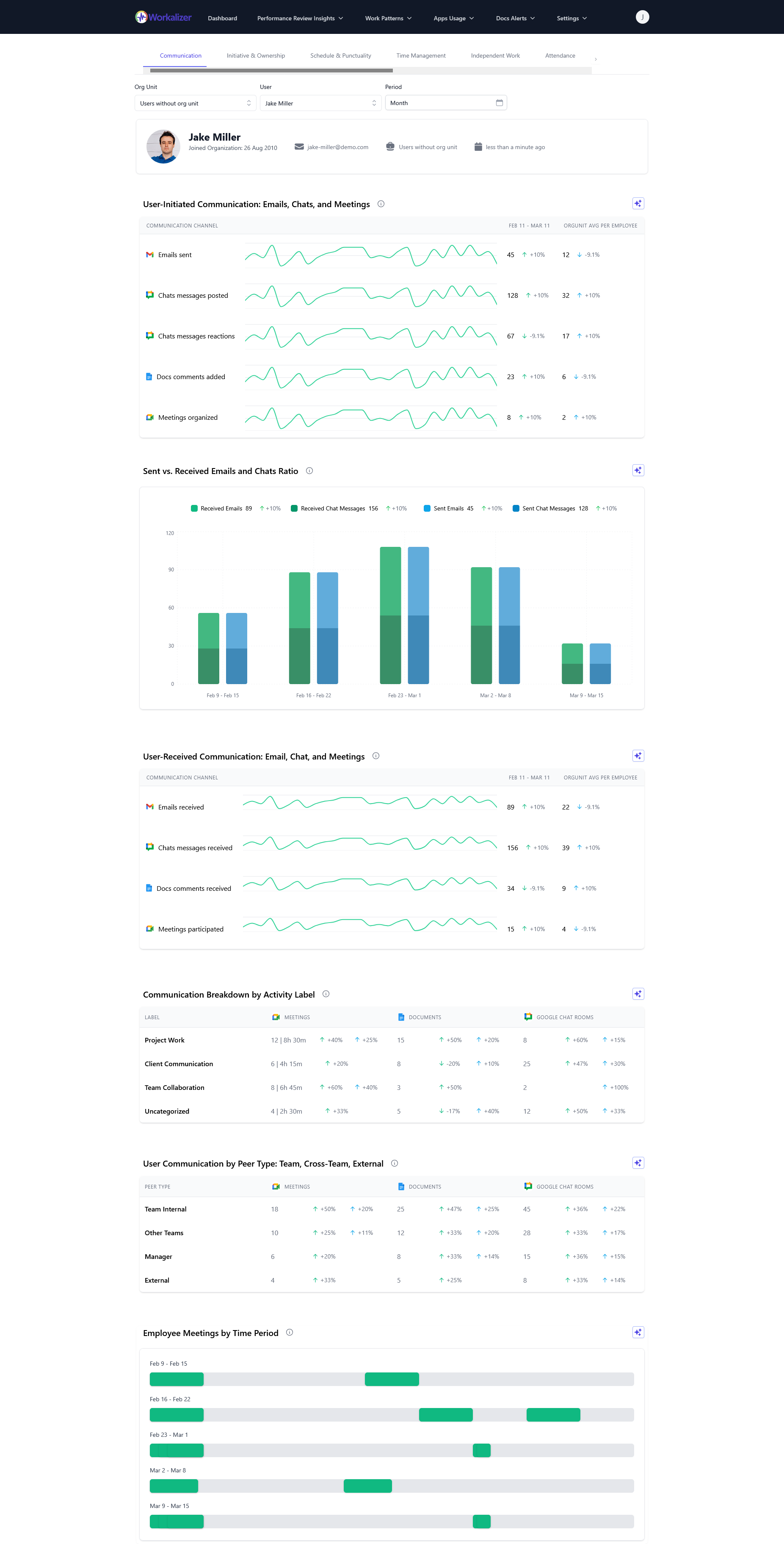
Workalizer, as a B2B productivity and operations analytics product for Google Workspace, can provide invaluable data to support your narrative and help People Ops teams prevent such conflicts from escalating. Data-driven insights can turn subjective disagreements into objective discussions.
Where Workalizer Helps:
- Documenting and Sharing Knowledge: The issue of "zero documentation" is a prime area for Workalizer. By monitoring google drive file sharing permissions and usage, you can identify if critical documents are being created, shared appropriately, and accessed by the right people. For People Ops, understanding how knowledge is shared (or not shared) is crucial for business continuity and role clarity. See also: How to Use the Google Drive Shared Files Report and How to Use the Activity Dashboard for Google Drive.
- Understanding Actual Work Patterns: The Google Workspace Dashboard can provide an overview of activity, showing where time and effort are truly being spent. This data can help both the employee and manager understand the actual scope of the role versus perceived expectations.
- Performance Reviews and Role Definition: Workalizer's insights can inform structured performance discussions. Data on activity, collaboration, and project involvement can be used in Performance Review for Employee and Performance Review for Manager to align on responsibilities and set clear, measurable goals. Activity Labels can further categorize work to provide granular insights into specific tasks and projects.
- Identifying Communication Gaps: While the core issue isn't directly about meeting duration, understanding communication patterns (e.g., through Google Meet Usage Report) can sometimes highlight where collaboration might be lacking or where too much time is spent in unproductive meetings, contributing to role ambiguity.
Navigating the External Opportunity
The Reddit user mentioned an external opportunity that is "a pretty significant step up." How should this be handled?
- Focus on Internal Resolution First: The VP's request to hold off on the interview signals a desire to retain you. Prioritize the internal conversation. Your goal should be to genuinely explore if the current role can be shaped to meet your career aspirations and the company's needs.
- Be Prepared to Discuss Aspirations: If the conversation naturally moves towards your career path, you can express your desire for growth and more responsibility. This shows ambition, which is generally positive.
- Use as Leverage (Cautiously): While the external offer gives you leverage, explicitly mentioning it can be perceived as an ultimatum. It's often more effective to convey your value and potential, and let the company realize the risk of losing you. If, after the meeting, a satisfactory resolution isn't found, then you can revisit the external opportunity with a clearer conscience.
A Checklist for Your Meeting Preparation
Use this checklist to ensure you're fully prepared:
- Understand Your Role:
- Review job description, highlighting key responsibilities.
- List your current tasks and projects, noting discrepancies.
- Identify your unique contributions and knowledge areas.
- Document Your Impact:
- Gather quantifiable achievements and successes.
- Outline key processes you manage.
- Have a plan for documenting these processes (e.g., using shared Google Drive folders with clear google drive file sharing permissions).
- Identify Friction Points (Objectively):
- List specific instances of misalignment or conflict.
- Frame issues around process, communication, or priorities, not personal attacks.
- Focus on the negative business impact of these friction points.
- Propose Solutions:
- Suggest concrete steps for better alignment (e.g., regular check-ins, revised responsibilities, clearer communication protocols).
- Be open to compromise and collaboration.
- Anticipate Questions:
- How do you see your role evolving?
- What support do you need to succeed?
- What are your biggest frustrations?
- Maintain Professionalism:
- Practice active listening.
- Stay calm and composed.
- Focus on a positive outcome for both you and the company.
Conclusion: Towards a Resolution
A meeting like this is a pivotal moment. It’s an opportunity to transform conflict into clarity and strengthen your position within the company. By preparing thoroughly, focusing on objective data, and proposing constructive solutions, you can navigate this conversation successfully. Remember, the goal is a resolution that benefits both you and the organization, fostering a more productive and aligned work environment.
For People Ops teams, this scenario underscores the importance of proactive role definition, clear documentation, and leveraging tools like Workalizer to gain insights into how work is truly being done. This data can be instrumental in identifying potential conflicts early and facilitating effective resolutions, ensuring talent retention and operational efficiency.
Disclaimer: This blog post provides general information and guidance. It is not intended as legal advice. Always consult with qualified HR professionals or legal counsel for specific situations.