The Future of Enterprise Productivity: Beyond Apps and Into the AI-Driven Era of 2027
Forget what you thought you knew about productivity. As we stand in March 2026, the digital landscape is undergoing a tectonic shift, one that promises to redefine how work gets done in the enterprise. The era of discrete applications, the very foundation of our digital lives for decades, is quietly drawing to a close. This isn't hyperbole; it's the inevitable march of progress, powered by increasingly sophisticated AI.
For HR leaders, engineering managers, and C-suite executives, this isn't just a technical curiosity; it's a strategic imperative. The organizations that understand and adapt to this new reality—where AI moves beyond mere tools to become an ambient, intelligent layer—will be the ones that thrive in 2027 and beyond. The question isn't whether AI will transform your business, but how quickly you'll embrace the change and manage its inherent complexities.
The Dawn of the Post-App Era: A Paradigm Shift
It sounds radical, doesn't it? The idea that the 'app era' is ending. Yet, industry visionaries like Carl Pei, co-founder of Nothing, have been vocal about this shift, stating that we're moving towards a future where interactions are more fluid, contextual, and less tethered to opening specific applications. (Source: Android Central)
From App-Centric to AI-Driven Workflows
What does this mean for enterprise productivity? Imagine a world where your Google Workspace doesn't require you to manually switch between Gmail, Drive, Chat, Gemini, and Meet for every task. Instead, AI anticipates your needs, summarizes conversations, drafts responses, schedules meetings, and fetches relevant documents almost before you realize you need them. This isn't science fiction; it's the trajectory we're on, with Google's Gemini leading the charge in integrating AI directly into the fabric of our work.
This evolving paradigm points towards what we at Workalizer call the 'agentic AI' future – where AI doesn't just assist but takes initiative. We explored this in depth in a recent post, The Future of Agentic AI: What to Expect for Enterprise Productivity in 2026, highlighting how these intelligent agents will become indispensable.
In this post-app world, productivity isn't measured by how many apps you use, but by the seamless flow of information and the intelligent automation of routine and even complex tasks. It's about reducing cognitive load and empowering employees to focus on high-value, creative work. For instance, imagine AI automatically pulling key action items from a Meet recording, drafting an email summary, and creating follow-up tasks in a shared Google Doc, all without explicit app switching.
The Double-Edged Sword: Innovation Meets Responsibility
While the promise of AI-driven productivity is immense, it's crucial for enterprise leaders to recognize that this transformation comes with significant responsibilities. The rapid advancement of AI has brought to the forefront critical discussions around ethics, authenticity, and regulation.
Navigating the Ethical Minefield of AI
The dark side of unchecked AI usage is already making headlines. Just this year, we saw a book become the first to be publicly 'canceled' due to concerns over its AI-generated content. (Source: CNET) This incident serves as a stark warning for enterprises: the output of AI tools must be scrutinized for accuracy, originality, and potential biases.
For organizations leveraging AI in content creation, data analysis, or customer interactions, the implications are profound. Bias in training data, hallucinations, and the sheer difficulty in discerning human-generated from AI-generated content can lead to reputational damage, legal challenges, and a breakdown of trust. HR leaders, in particular, must develop clear guidelines for AI usage, ensuring transparency and accountability.
The Inevitable Hand of Regulation
Governments worldwide are scrambling to keep pace with AI's rapid evolution. In a significant development this March 2026, former President Trump outlined a new national AI regulation plan, highlighting the growing consensus that a structured framework is necessary. (Source: CNET) While the specifics are still being debated, the message is clear: AI will be regulated, and enterprises must prepare for compliance.
This forthcoming regulatory landscape will impact everything from data privacy and security to algorithmic transparency and the ethical deployment of AI systems. Companies will need robust internal policies, audit trails for AI-driven decisions, and a clear understanding of how their AI tools interact with sensitive data. This includes meticulously managing access and permissions for shared resources. For instance, understanding and controlling google docs sharing permissions will become even more critical when AI agents are automatically generating and distributing content.
Workalizer's Role: Unlocking Unbiased Productivity in the AI Age
In this complex, rapidly evolving environment, how do you truly measure productivity? How do you ensure that the promises of AI translate into tangible, unbiased performance improvements, rather than just increased activity or, worse, ethical pitfalls?
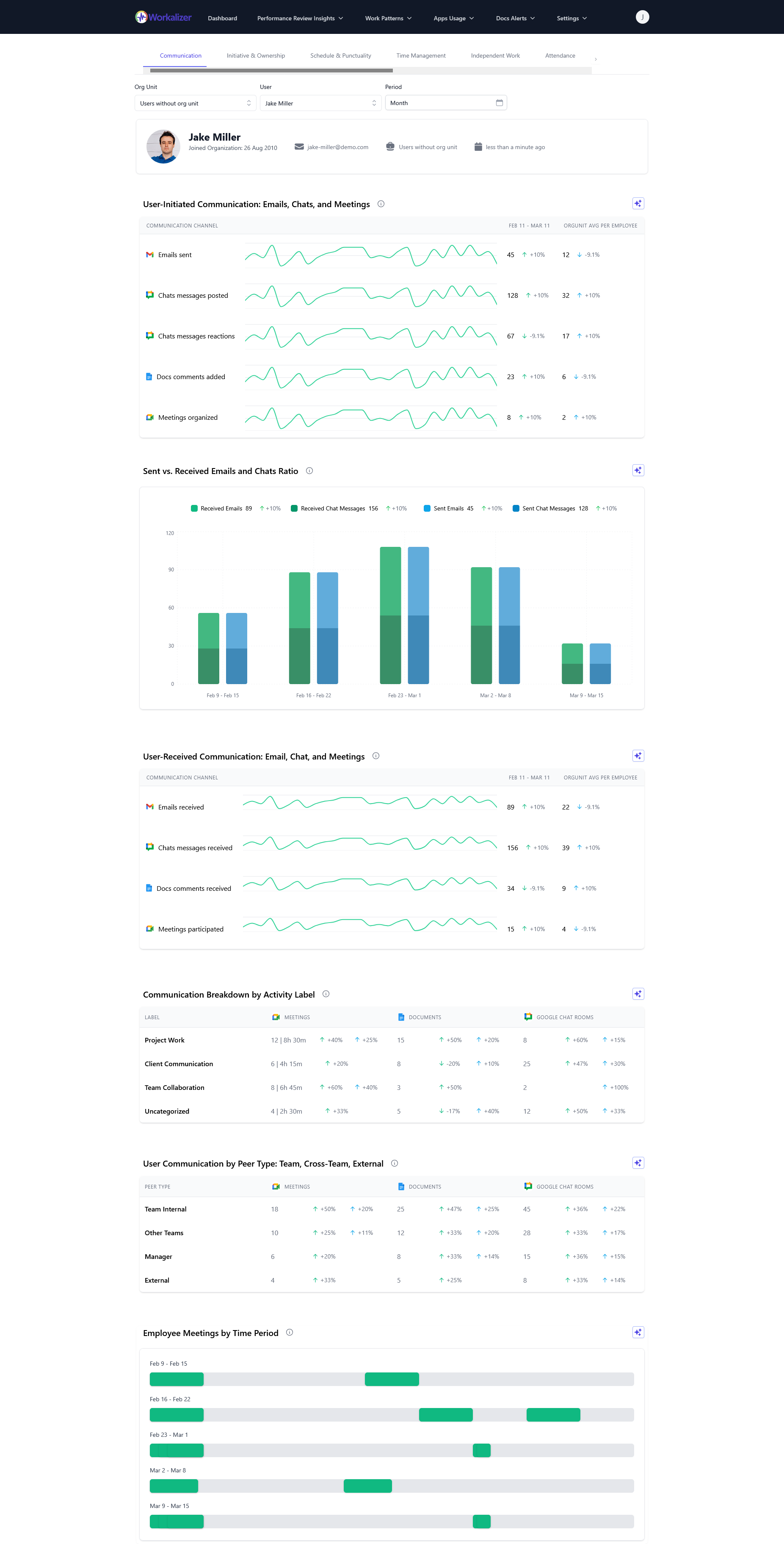
This is precisely where Workalizer.com steps in. We are an AI-powered platform designed to provide data-driven, unbiased performance review insights by analyzing signals from your company's Google Workspace usage. From Gmail activity to Drive collaboration, Chat interactions, Gemini prompts, and Meet attendance, we provide a holistic view of productivity that cuts through the noise.
Our platform helps HR leaders and managers understand the real impact of AI adoption on their teams. Are your new AI tools genuinely enhancing collaboration and output, or are they creating new silos or inefficiencies? Workalizer offers the objective data needed to answer these questions, allowing you to optimize your AI strategy and ensure responsible usage.
Furthermore, as organizations increasingly rely on AI to manage workflows and generate content, the importance of robust oversight cannot be overstated. IT and HR teams need clear ways to monitor and manage user interactions with these powerful tools. This is where a comprehensive approach to managing your digital ecosystem, perhaps starting with a centralized google dashboard manage your google account, becomes paramount. It's about maintaining control and visibility in an increasingly automated world.
We provide the insights to identify top performers, understand collaboration patterns, and pinpoint areas where AI integration can be further optimized, such as streamlining processes for supercharging your agile daily standup with AI and Google Workspace. Our analytics reveal the true picture, helping you make informed decisions that drive real business value.
Preparing for 2027: Actionable Steps for Enterprise Leaders
The future of work is not a distant concept; it's unfolding right now. To lead your organization successfully into the AI-driven era of 2027, consider these actionable steps:
- Embrace AI Literacy: Educate your teams, from the C-suite down, on the capabilities, limitations, and ethical considerations of AI. Foster a culture of responsible AI experimentation.
- Develop Clear Ethical AI Guidelines: Establish internal policies for AI usage, content generation, data handling, and bias mitigation. Transparency and accountability should be at the core.
- Prioritize Data Governance and Security: With AI interacting with vast amounts of company data, robust data governance frameworks are non-negotiable. Regularly review and enforce google docs sharing permissions and other access controls to prevent data leakage and misuse.
- Invest in Objective Performance Measurement: Tools like Workalizer are no longer optional. They provide the unbiased data needed to assess the true impact of AI on productivity, identify areas for improvement, and ensure equitable performance reviews.
- Stay Abreast of Regulatory Developments: Appoint a cross-functional team to monitor AI legislation and adapt internal policies proactively to ensure compliance.
The shift to an AI-driven, post-app era is more than just a technological upgrade; it's a fundamental reimagining of productivity. By proactively addressing both its immense potential and its inherent challenges, enterprise leaders can navigate this transformation with confidence, building more efficient, ethical, and ultimately, more successful organizations.