The Future of Digital Infrastructure: Navigating Scarcity, Security, and Sustainability in 2027
The year 2026 has been a watershed moment. For business leaders, it’s revealed a stark truth: the digital future isn't just about endless innovation; it's about resilient, sustainable, and secure infrastructure. The foundational elements of our digital economy—from cloud computing to AI’s burgeoning demands—are facing unprecedented pressures. As a Senior Tech Writer at Workalizer.com, I’ve been tracking these shifts, and what I’m seeing demands immediate attention from HR leaders, Engineering Managers, and C-Suite executives. The decisions made today, rooted in understanding these macro trends, will define organizational efficiency and competitive advantage in 2027 and beyond.
The AI Reality Check: Profitability Over Hype
For years, the narrative around AI has been one of boundless potential, often overlooking the practicalities of its immense resource demands and financial viability. This year, the market delivered a sobering dose of reality. Just last week, on June 4, 2026, S&P Dow Jones Indices rejected SpaceX’s bid for unusually swift entry into the S&P 500. This decision also effectively blocked leading AI firms like OpenAI and Anthropic from accelerated inclusion, despite their high profiles. Why does this matter?
It signals a critical shift: passive investment funds, representing billions in retirement savings, are increasingly prioritizing proven profitability over speculative growth, even in the hottest tech sectors. The S&P 500's refusal to bend its rules underscores a growing caution regarding the market risks associated with large, unprofitable AI ventures and their ambitious, often speculative, plans—such as SpaceX’s orbital data centers. For enterprise leaders, this is a clear message: the era of AI for AI’s sake is over. Investment in AI must now demonstrate a clear, data-driven return on investment, aligning with tangible business outcomes rather than just perceived innovation. This aligns with one of the 3 Uncomfortable Truths for Business Leaders in 2026 we recently discussed: the imperative for AI to deliver real value.
The Unseen Costs: Energy & Infrastructure Scarcity
Beyond the financial markets, the physical infrastructure supporting our digital world is under unprecedented strain. The dream of limitless cloud computing and AI processing power is colliding with the very real limitations of energy and natural resources.
Data Centers Under Siege: The Environmental Backlash
Consider the recent developments in Utah. What was planned as one of the world's largest data center projects—nearly three times the size of Manhattan—has been cut by 50% due to intense local protests. Residents of Box Elder County raised alarm over the project’s insatiable demand for water, specifically 1,900 acre-feet, which threatened the vulnerable Great Salt Lake. This isn't an isolated incident; communities globally are pushing back against the environmental impact of hyperscale data centers, citing concerns over rising electricity bills, air quality, and local wildlife. Kevin O’Leary, a prominent investor behind the project, admitted, "We really screwed it up," highlighting a lack of transparency and underestimating public blowback. This is a crucial lesson: the societal and environmental costs of digital infrastructure are no longer externalities; they are direct business risks that demand careful strategic planning.
The Global Energy Crunch and Its Ripple Effects
The global energy landscape is equally precarious. This summer travel season, for instance, has become a stark illustration of our vulnerabilities. The ongoing conflict in Iran, which saw the closure of the Strait of Hormuz—a crucial waterway through which nearly 20% of the world’s oil supply flows—sent jet fuel stockpiles plummeting in Europe and the US. Airlines like American have already suspended several domestic routes in August and September due to soaring jet fuel prices. This crisis has propelled Sustainable Aviation Fuel (SAF) into the spotlight, despite costing two to five times the price of regular jet fuel.
While SAF is a critical step towards decarbonization, its current cost and limited availability highlight a broader truth: reliable, affordable energy is becoming a premium. For businesses, this translates into higher operational costs for everything from supply chains to cloud services, which are, after all, powered by massive energy consumption. The promising news, however, comes from innovation in energy production. Just yesterday, June 5, 2026, a startup called Antares announced its small modular nuclear reactor reached criticality in its first test at the Idaho National Laboratory. While not yet generating power, this marks a significant step towards a more stable, cleaner energy future, but one that is still years away from widespread impact.
The Ever-Present Threat: Cybersecurity's Expanding Surface
As our digital footprint expands, so does the attack surface. The headlines often focus on major breaches, but the subtle, insidious vulnerabilities are just as dangerous, especially for a distributed workforce. Take the recent discovery regarding the Sound Blaster Katana V2X speaker, a widely acclaimed device selling for $283. Researchers found it could be hacked over the air via Bluetooth to infect connected PCs, even without prior pairing or authentication. This means a seemingly innocuous device, highly reviewed for its performance, can act as an unauthorized gateway into an organization’s network if connected to an employee’s machine.
This incident is a stark reminder that every peripheral, every smart device, every endpoint in a hybrid work environment is a potential vulnerability. For HR and Engineering leaders, this necessitates a proactive and comprehensive approach to device security, employee education, and robust network monitoring. The increasing sophistication of these 'side-channel' attacks means that traditional perimeter defenses are no longer sufficient.
Implications for the Modern Enterprise: Building Resilient Productivity
So, what do these macro trends—the AI reality check, the energy and infrastructure scarcity, and the expanding cybersecurity threat—mean for your organization? They underscore an urgent need for strategic foresight and an unwavering focus on operational efficiency. In an environment where resources are constrained and threats are pervasive, every kilowatt-hour, every dollar, and every minute of employee productivity counts.
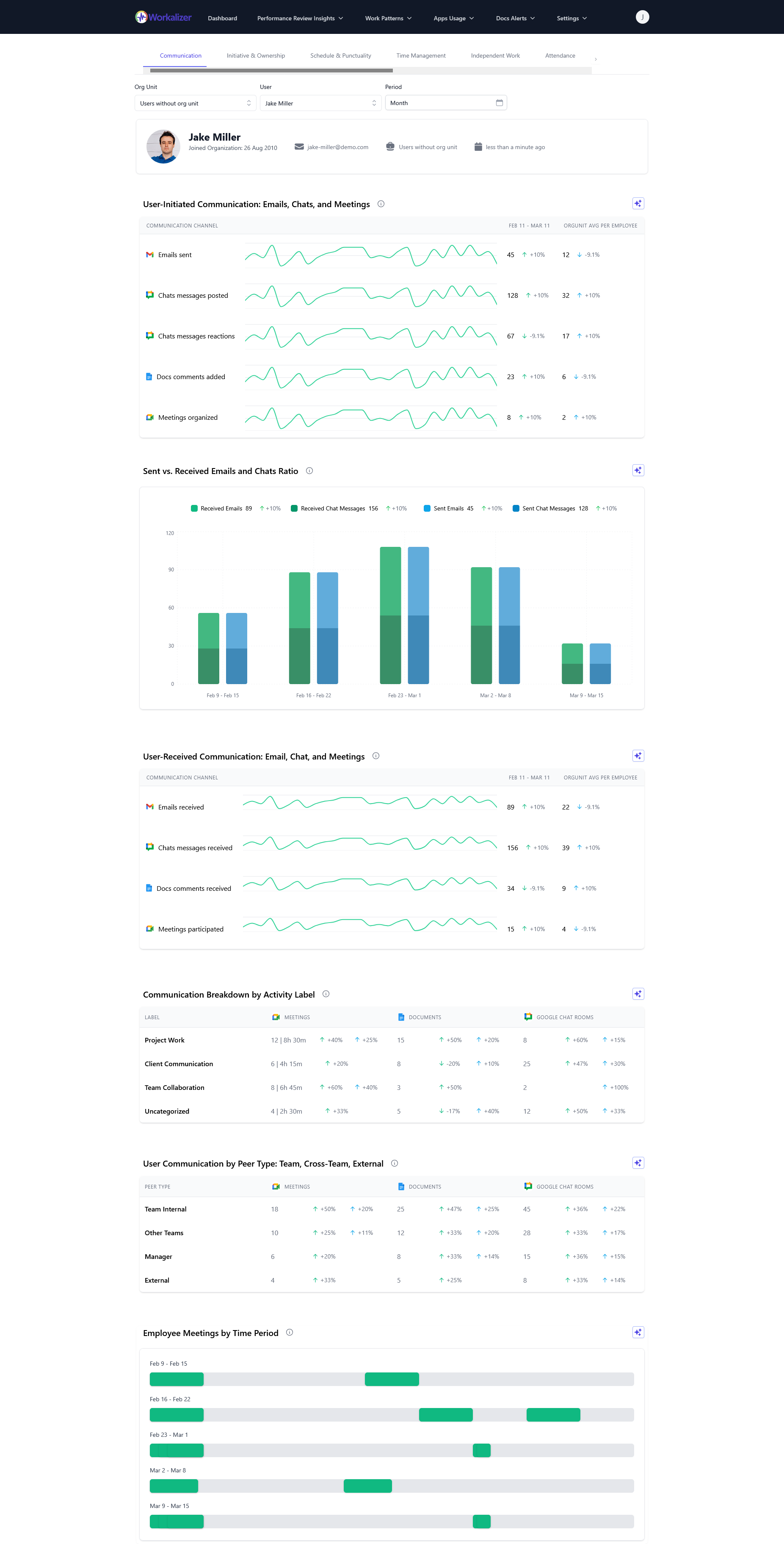
This is precisely where Workalizer.com becomes an indispensable partner. By analyzing usage signals from Google Workspace (Gmail, Drive, Chat, Gemini, Meet), we provide data-driven, unbiased productivity analytics. This allows HR Leaders, Engineering Managers, and C-Suite Executives to:
- Optimize Resource Allocation: Understand where your team’s digital energy is being spent and identify inefficiencies that can be streamlined.
- Enhance Collaboration & Security: Ensure your teams are leveraging tools effectively, from mastering The Future of Productivity Tools like Google Workspace for seamless operations, whether it's managing how to share files through drive securely or enabling robust google docs real time collaboration for critical projects.
- Drive Data-Driven Decisions: Move beyond anecdotal evidence to make informed choices about technology adoption, training, and workflow improvements.
In a world where foundational resources are increasingly scarce and digital threats are more subtle, maximizing the potential of your existing digital tools is paramount. Our insights help you uncover the true state of your organizational efficiency, allowing you to adapt to these evolving challenges with agility and confidence.
A Call to Action for Strategic Leaders
The digital future of 2027 isn't about chasing every shiny new object; it’s about building a robust, sustainable, and secure operational core. It's about making deliberate, data-backed decisions that insulate your organization from external shocks and optimize internal performance. The market is maturing, resources are tightening, and threats are evolving. Your strategy must reflect these realities.
Don't just react to the headlines. Understand the underlying currents shaping our world and proactively build an enterprise that thrives on efficiency, resilience, and intelligent resource management. Workalizer.com is here to provide the insights you need to lead the way.