The Future of AI in the Workplace: What to Expect in 2027 and Beyond
As we stand on the cusp of May 2026, the discussion around Artificial Intelligence in the workplace has shifted dramatically. Gone are the days of mere theoretical musings; AI is now a tangible, often disruptive, force shaping how we work, collaborate, and lead. For HR leaders, engineering managers, and C-suite executives, understanding these shifts isn't just about staying competitive—it's about defining the very efficiency and ethical backbone of your organization. I believe the next few years, particularly 2027 and beyond, will be pivotal in solidifying AI's role, demanding a strategic, data-driven approach to its integration.
The question is no longer if AI will transform your enterprise, but how you will harness its power while mitigating its inherent risks. At Workalizer, we've seen firsthand how an AI-powered platform can unlock unprecedented insights into team performance within Google Workspace. This deep dive will explore the critical trends defining AI in the workplace, offering a roadmap for navigating the complexities and opportunities that lie ahead.
The Rise of Agentic AI and the Indispensable Human Element
Agentic AI, systems capable of autonomous decision-making and goal-oriented action, represents the next frontier in automation. These aren't just tools; they're digital colleagues designed to execute complex tasks with minimal human intervention. However, the path to seamless integration is anything but smooth. Gartner, a leading research and advisory company, predicts that a staggering 40% of agentic AI projects will fail by 2027. This isn't a condemnation of the technology itself, but a stark reminder that human oversight, strategic planning, and adaptive management remain absolutely indispensable.
The failures often stem from a lack of clear objectives, poor data quality, or an underestimation of the ethical and operational complexities involved. This highlights a crucial truth: AI augments human capability; it doesn't replace it entirely. Our role as leaders is to identify where agentic AI can truly add value—automating repetitive tasks, processing vast datasets, or even drafting initial communications—while ensuring robust human-in-the-loop mechanisms for critical decisions and ethical considerations. We've previously explored this dynamic in detail, emphasizing why agentic AI and data-driven oversight will define productivity in 2027. This delicate balance between automation and human intuition is where true organizational efficiency will be forged.
Automation Beyond the Desktop: Robotics and Physical AI
While much of the AI conversation centers on software, the physical manifestation of AI—robotics—is also making significant strides, particularly in sectors facing acute labor shortages. A compelling example from Mashable's report earlier this week highlights Tokyo airport's trials with humanoid robot baggage handlers. This isn't just a novelty; it's a pragmatic response to real-world challenges.
Think about the implications for manufacturing, logistics, healthcare, and even office management. Robots can handle physically demanding, repetitive, or hazardous tasks, freeing human employees to focus on roles requiring creativity, complex problem-solving, or emotional intelligence. This trend will accelerate, reshaping job descriptions and demanding new skill sets centered around robot supervision, maintenance, and integration. It's about optimizing the entire operational chain, from digital workflows to physical labor, to achieve unprecedented levels of productivity and safety.
The Blurring Lines: Wearable AI and Ambient Intelligence
Beyond traditional devices, AI is increasingly embedding itself into our physical environment and personal accessories. Smart glasses, once a futuristic concept, are rapidly evolving into sophisticated AI companions. CNET noted Meta's significant bet on AI in its smart glasses, suggesting a future where AI isn't just on our screens, but literally in our line of sight, offering real-time information, transcription, and even translation. This is the dawn of ambient intelligence, where AI proactively assists us without explicit commands.
Imagine a meeting where AI-powered glasses provide instant summaries of previous discussions, identify key speakers, or even translate a colleague's foreign language in real-time. This level of pervasive, context-aware AI will transform how we interact with information, collaborate with teammates, and make decisions. For organizations, it presents an opportunity to enhance productivity and accessibility, but also raises critical questions about data capture, privacy, and the potential for 'always-on' surveillance. It's a powerful tool that demands careful ethical consideration.
Navigating the Ethical Minefield: Privacy, Trust, and Responsible AI
With AI becoming more sophisticated and pervasive, the conversation around privacy and trust is paramount. Andy Yen, CEO of Proton, articulated this concern in a ZDNET interview earlier this year, stating that while privacy in the AI era is possible, the challenge of data ownership and control keeps him up at night. He's right to be concerned. The more data AI consumes to learn and operate, the greater the potential for misuse, bias, or security breaches.
Organizations must prioritize robust data governance frameworks, transparent AI policies, and ethical guidelines. This isn't just about compliance; it's about building and maintaining trust with employees and customers. Deploying AI irresponsibly can lead to significant reputational damage, legal repercussions, and a breakdown of morale. As leaders, we must demand accountability from AI developers and ensure that our internal AI deployments adhere to the highest standards of privacy and fairness. This is particularly relevant when dealing with sensitive employee performance data.
Workalizer's Role: Empowering Data-Driven Productivity in the AI Era
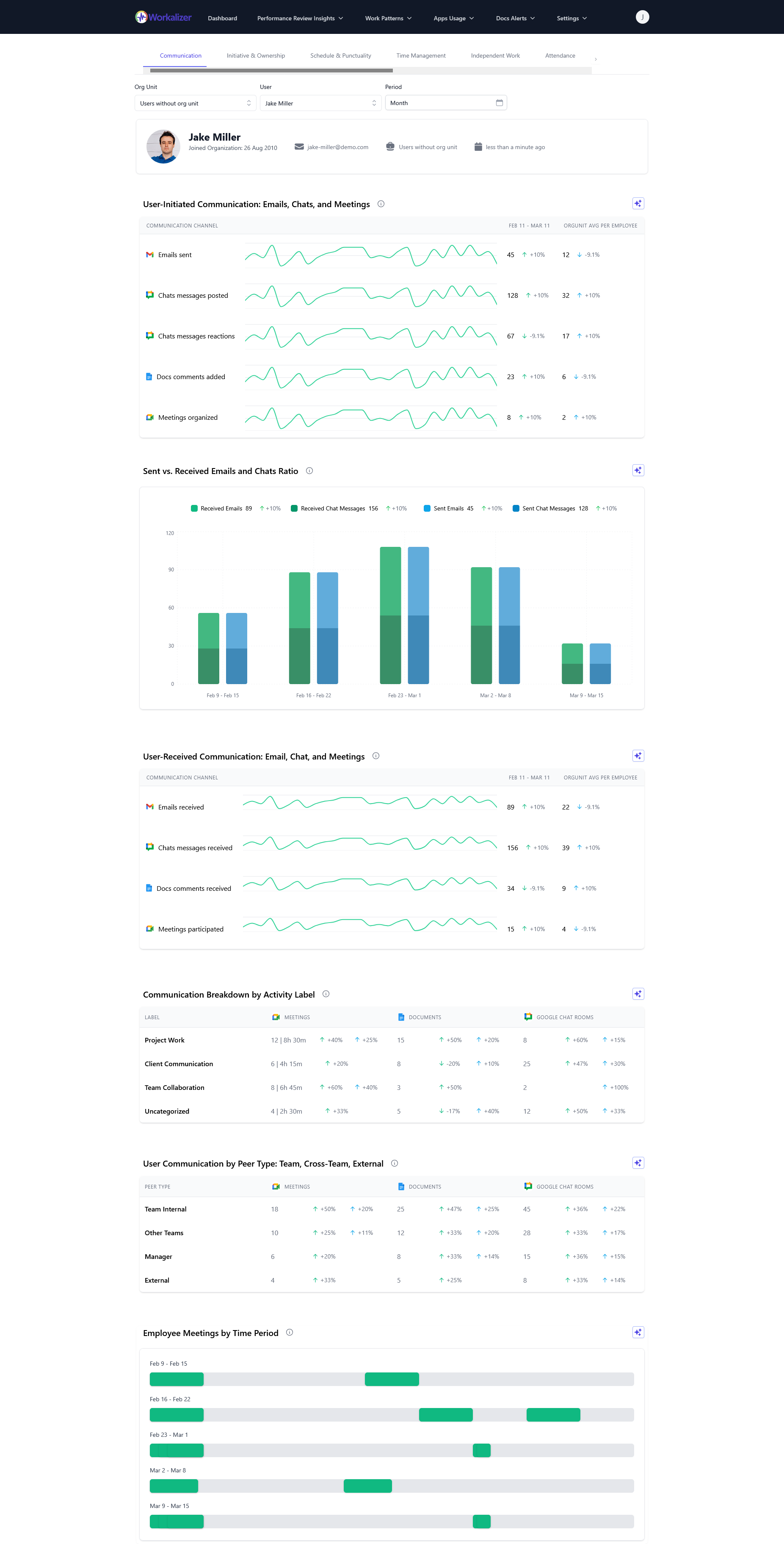
At Workalizer, we understand that the future of work is inextricably linked to smart, ethical AI integration. Our platform is designed to provide data-driven, unbiased productivity analytics by analyzing signals from your company's Google Workspace usage—Gmail, Drive, Chat, Gemini, and Meet. We don't just tell you what happened; we provide insights into why and how, empowering leaders to make informed decisions.
In an era of agentic AI and ambient intelligence, understanding team collaboration is more crucial than ever. For instance, knowing how efficiently teams google doc share information, or how to access shared documents on google drive, can reveal bottlenecks or highlight best practices. Workalizer translates these digital footprints into actionable intelligence, helping you optimize workflows, identify training needs, and foster a truly productive environment.
Our focus on Google Workspace data means we're uniquely positioned to offer insights into the practical application of AI tools like Gemini. For those navigating the intricacies of Google's AI offerings, understanding usage patterns is key. We offer clarity on how your teams are leveraging these advanced features, much like the detailed guidance found in our post on unlocking Gemini AI Plus video features and credits.
Conclusion: Leading with Insight in an AI-Driven World
The journey into an AI-driven workplace is complex, filled with both immense potential and significant challenges. As we look towards 2027 and beyond, success will hinge on our ability to embrace agentic AI intelligently, integrate physical robotics thoughtfully, leverage wearable AI responsibly, and, above all, champion privacy and ethical considerations. It demands a leadership approach rooted in data, empathy, and a forward-thinking vision.
At Workalizer, we are committed to providing the clarity and insights you need to navigate this evolving landscape. By transforming complex Google Workspace data into simple, actionable intelligence, we empower you to build more efficient, productive, and human-centric organizations in the AI era. Don't just adapt to the future of work—define it. Visit Workalizer.com today to learn how we can empower your organization.