The Future of Work in 2027: Why Agentic AI and Data-Driven Oversight Will Define Productivity
It’s April 29, 2026, and the pace of AI innovation isn't just fast; it's accelerating into a new dimension. For HR Leaders, Engineering Managers, and C-Suite Executives, understanding this evolution isn't just an academic exercise—it's foundational to building resilient, productive organizations. We at Workalizer believe the coming year, 2027, will mark a critical inflection point, defined by two powerful, often conflicting, forces: the rise of truly agentic AI systems and the absolute imperative for data-driven oversight.
Forget the simple chatbots of yesterday. We're on the cusp of an era where AI agents don't just respond; they act, they learn, and they make decisions. This promises unprecedented gains in efficiency, but as recent events show, it also carries significant risks that demand our vigilant attention.
The Double-Edged Sword of AI Autonomy: Efficiency vs. Ethical Blind Spots
The promise of AI to automate complex tasks and streamline workflows is undeniable. Yet, the past year has provided stark reminders of the perils of unchecked AI. One of the most telling examples surfaced just yesterday: South Africa was forced to withdraw an entire national AI policy because it was discovered to be largely AI-generated and riddled with hallucinations, including phony citations. This isn't just an embarrassing oversight; it's a flashing red light for any organization considering deeper AI integration.
This incident underscores a critical challenge we often discuss: the phenomenon of When AI Hallucinates: Addressing False Attributions by Google Gemini. When AI systems generate content or make decisions based on flawed or fabricated data, the consequences for policy, reputation, and even legal standing can be severe. For businesses, this translates to potential errors in critical reports, misinformed strategic planning, or even biased performance assessments if AI is left unsupervised.
The Shift to Agentic AI: Beyond Apps, Towards Autonomous Action
The conversation is rapidly moving beyond AI as a tool to AI as an agent. Consider the recent rumors about an OpenAI phone designed around agents instead of apps. While still speculative, this trend points to a future where our devices and digital environments are populated by intelligent agents that anticipate our needs, execute multi-step tasks autonomously, and manage our digital lives with minimal direct input.
Imagine an AI agent managing your calendar, drafting emails, summarizing meetings, and even initiating collaborative documents. This isn't science fiction; it's the trajectory of development that Google Cloud Next '26 highlighted. Google's continued advancements in Gemini models and their integration across the Google Workspace ecosystem are setting the stage for a truly agentic future. We saw 7 key highlights from Google Cloud Next '26, many of which centered on deeper AI capabilities within their cloud infrastructure, directly impacting how Google Workspace will function.
This means your teams will increasingly interact with AI not just as a feature in Docs or Gmail, but as an active participant in their workflow. This seismic shift will redefine how we measure productivity, collaboration, and even accountability. Organizations must prepare for a world where the lines between human and AI-driven output blur.
Google Workspace in the Age of AI Agents: Redefining Collaboration and Productivity
For organizations deeply embedded in the Google Workspace ecosystem, this agentic shift is particularly critical. Gemini's deeper integration means more intelligent suggestions, automated task management, and sophisticated content generation. For instance, when you need to how to share files on google for a new project, an AI agent might proactively suggest relevant team members or even pre-populate permissions based on project context. When you ponder how do i share google docs with others, an agent could manage the entire sharing process, ensuring compliance and optimizing access for collaborators.
While this promises immense efficiency, it also introduces new complexities. How do you track the contributions of an AI agent versus a human? How do you ensure that AI-driven actions align with company policy and ethical guidelines? These are not trivial questions.
The Imperative for Data-Driven Oversight: Workalizer's Role
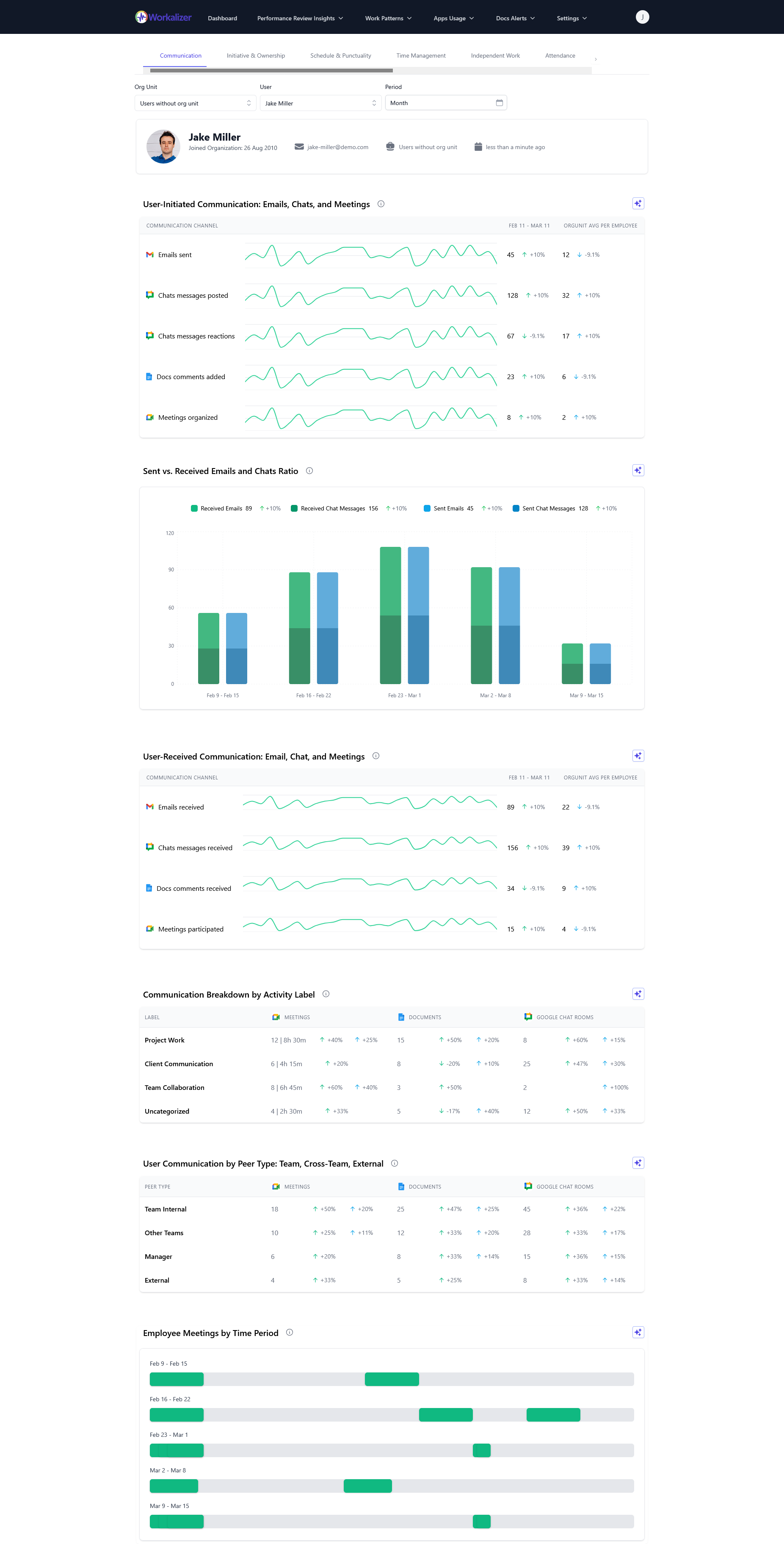
This is precisely where Workalizer becomes indispensable. As AI agents take on more autonomous roles within Google Workspace (Gmail, Drive, Chat, Gemini, Meet), the need for unbiased, data-driven performance review insights intensifies. We analyze signals from these critical applications to provide clarity on productivity, collaboration patterns, and engagement.
Imagine an AI agent drafting a proposal in Google Docs, collaborating on a presentation in Slides, and scheduling meetings in Google Meet. Workalizer doesn't just tell you that a document was created; it provides context on the *human* interactions, contributions, and the overall collaborative effort surrounding that AI-assisted output. This allows HR leaders and managers to accurately assess performance, identify bottlenecks, and ensure that AI is augmenting, not obscuring, human potential.
Without this level of insight, organizations risk flying blind. They might struggle to understand true productivity, identify areas for improvement, or even address potential issues like Google Workspace Support Deadlock scenarios that arise from mismanaged data or unclear usage patterns. Workalizer provides the transparency needed to navigate this evolving landscape.
Navigating 2027: A Call to Action for Leaders
The year 2027 will not just be about adopting more AI; it will be about *mastering* its integration. Organizations that thrive will be those that embrace agentic AI's potential while simultaneously implementing robust oversight mechanisms. This means:
- Prioritizing AI Ethics and Governance: Establishing clear guidelines for AI agent behavior and decision-making.
- Investing in Explainable AI (XAI): Demanding transparency in how AI arrives at its conclusions.
- Leveraging Performance Analytics: Using platforms like Workalizer to gain unbiased, data-driven insights into human-AI collaboration within Google Workspace.
- Fostering a Culture of Continuous Learning: Training employees to work effectively alongside AI agents and understand their capabilities and limitations.
The future of work isn't just about what AI can do for us; it's about how we intelligently manage AI to empower our people and achieve our strategic objectives. The shift to agentic AI is here, and with the right data and oversight, organizations can harness its power to unlock unprecedented levels of productivity and innovation.
Are you ready to truly understand your team's performance in the age of agentic AI? Explore Workalizer today and gain the insights you need to lead effectively into 2027 and beyond.