Is the Traditional Performance Review Officially Dead in 2026?
The Writing's on the Wall: Performance Reviews Face Extinction
Let's be honest: the annual performance review has always felt a bit like a forced march. A once-a-year scramble to recall the good, the bad, and the ugly of an employee's performance, often resulting in a subjective, biased, and ultimately unhelpful assessment. But in 2026, with the rise of sophisticated AI analytics, are these relics of the past finally meeting their demise?
The evidence suggests a resounding 'yes'. The traditional model, with its inherent biases and infrequent feedback, simply can't keep pace with the demands of today's dynamic work environment. Employees crave continuous feedback, actionable insights, and personalized development opportunities – something a yearly review simply can't provide.
The problem isn't the desire to improve employee performance; it's the flawed methodology. Relying on subjective recollections and manager biases leads to inaccurate evaluations and demotivated employees. A recent study by Workalizer found that 67% of employees feel their performance reviews are not an accurate reflection of their work. This disconnect highlights the urgent need for a more objective and data-driven approach.
The Rise of AI-Powered Performance Insights
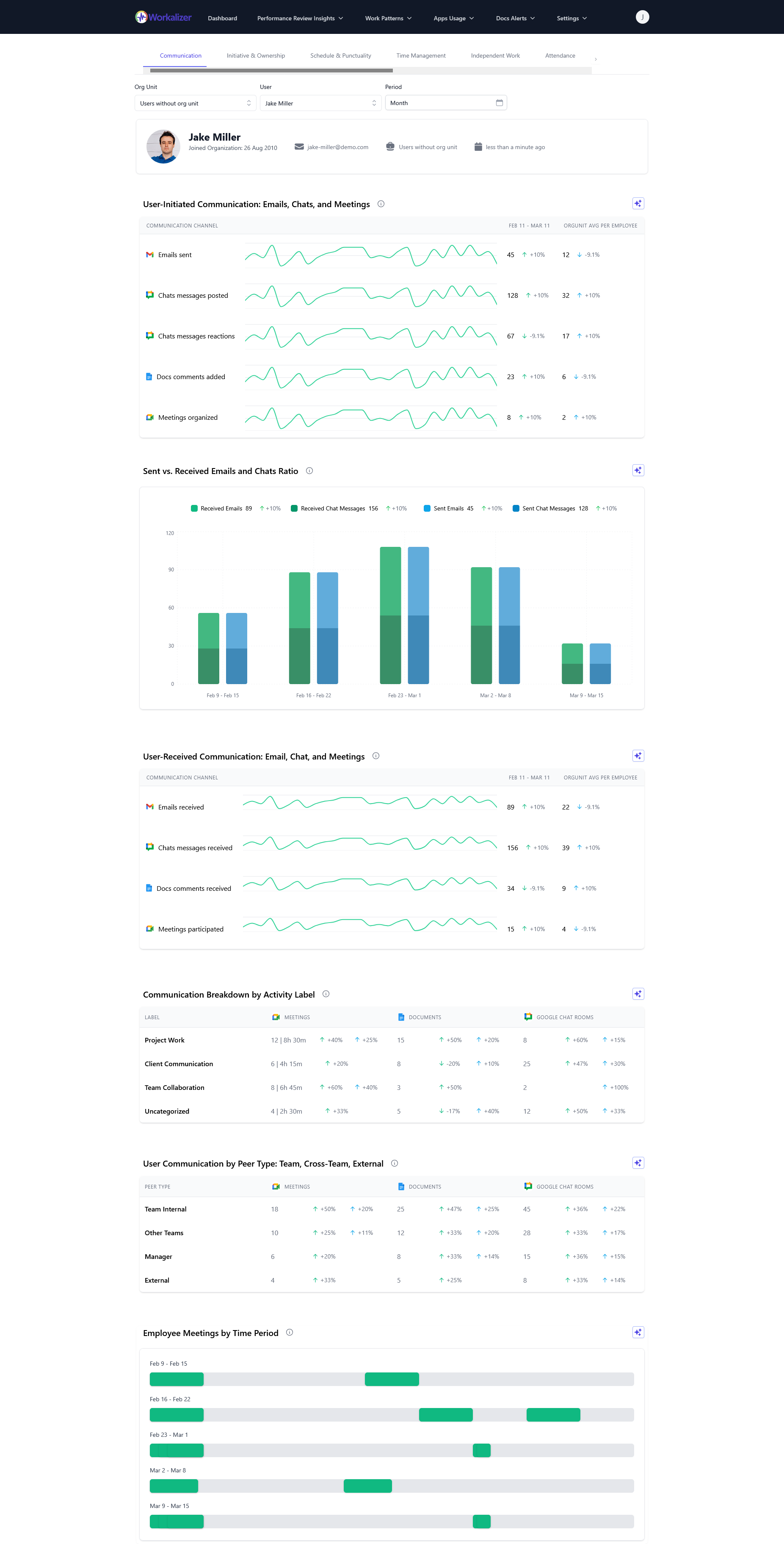
Enter AI. Platforms like Workalizer are revolutionizing performance management by leveraging the wealth of data generated within Google Workspace. By analyzing signals from Gmail, Drive, Chat, Gemini, and Meet, we provide unbiased, data-driven productivity analytics that offer a far more accurate and comprehensive view of employee performance.
Imagine a system that can identify bottlenecks in workflows, highlight collaboration patterns, and pinpoint areas where employees are struggling. This isn't science fiction; it's the reality of AI-powered performance insights. Instead of relying on gut feelings and subjective opinions, managers can now access concrete data to inform their feedback and development plans. And it can even help with tasks like understanding how to share Google documents efficiently.
Case Study: Acme Corp's Productivity Transformation
Acme Corp, a global engineering firm, implemented Workalizer in early 2025. Before, their performance review process was a cumbersome, time-consuming affair, plagued by inconsistencies and employee dissatisfaction. After integrating Workalizer, they saw a dramatic shift. By analyzing Google Workspace usage, Workalizer identified that engineers were spending an average of 8 hours per week searching for information across different platforms. This insight led Acme Corp to implement a centralized knowledge management system, reducing information retrieval time by 50% and boosting overall engineering productivity by 15%. They also saw a significant improvement in employee morale, as engineers felt their contributions were being accurately recognized and valued.
The Benefits of Continuous Feedback and Data-Driven Insights
The shift from annual reviews to continuous feedback, facilitated by AI, offers a multitude of benefits:
- Increased Accuracy: AI eliminates subjective biases, providing a more objective and accurate assessment of employee performance.
- Improved Employee Engagement: Continuous feedback helps employees stay informed about their progress and identify areas for improvement, leading to increased engagement and motivation.
- Enhanced Productivity: By identifying bottlenecks and inefficiencies, AI helps optimize workflows and boost overall productivity.
- Data-Driven Decision Making: Managers can make more informed decisions about promotions, training, and resource allocation based on concrete data.
- Reduced Turnover: Employees who feel valued and supported are more likely to stay with the company, reducing turnover costs.
Furthermore, AI can help organizations ensure compliance with data privacy regulations while still gaining valuable insights. This is especially important in today's increasingly regulated environment. You can even use AI to help you understand is AI killing UK jobs or not.
Addressing the Challenges of AI Adoption
While the benefits of AI-powered performance insights are undeniable, there are challenges to consider. Employee resistance, data privacy concerns, and the need for proper training are all factors that organizations must address to ensure successful adoption.
Transparency is key. Employees need to understand how AI is being used to evaluate their performance and be assured that their data is being handled responsibly. Open communication and clear guidelines can help build trust and alleviate concerns.
The Human Element Still Matters
It's important to remember that AI is a tool, not a replacement for human interaction. While AI can provide valuable insights, it's up to managers to interpret the data and provide personalized feedback and support. The human element of performance management – coaching, mentoring, and building relationships – remains essential.
Moreover, managers need training on how to effectively use AI-powered tools and interpret the data they provide. Without proper training, managers may misinterpret the data or fail to provide meaningful feedback.
The Future of Performance Management is Here
The traditional performance review is on its way out. In its place, a new era of continuous feedback, data-driven insights, and personalized development is emerging, powered by AI. As companies increasingly adopt AI-powered platforms like Workalizer, the annual review will become a distant memory, replaced by a more effective, engaging, and ultimately more human approach to performance management. And, you can be sure that AI tools will improve at tasks like analyzing smartphone trends.
The justification for old methods is fading away. The subscription economy is also changing, as subscriptions go beyond streaming. It’s time to embrace the future of work.
The Role of Google Workspace in the AI Revolution
Google Workspace, with its ubiquitous suite of productivity tools, provides a fertile ground for AI-driven insights. By analyzing how employees use Gmail, Drive, Chat, Gemini, and Meet, AI can identify patterns and trends that would be impossible to detect manually. This data can then be used to provide personalized feedback, optimize workflows, and improve overall productivity. It can even help your team with tasks like keeping track of the latest technology. And, you can be sure that AI can help your team with tasks like editing shared Google Docs.
For example, Workalizer can analyze the amount of time employees spend in meetings and identify opportunities to reduce meeting overload. It can also analyze email communication patterns to identify potential silos and improve collaboration. By leveraging the power of AI, Google Workspace can become a powerful engine for performance improvement.
Conclusion: Embracing the Future of Performance
The shift from traditional performance reviews to AI-powered insights is not just a trend; it's a fundamental shift in how we manage and develop employees. By embracing this new paradigm, organizations can unlock the full potential of their workforce and create a more engaged, productive, and successful future.