Unlock Google Workspace Efficiency: Sharing Docs Without the Chaos
Stop Google Workspace Sharing Headaches: A 2026 Guide
Let's face it: Google Workspace, while powerful, can become a tangled mess of permissions and shared files if not managed correctly. In 2026, with remote workforces increasingly reliant on digital collaboration, mastering document sharing is no longer optional – it's a business imperative. Are you losing valuable time wrestling with sharing settings, tracking versions, and ensuring the right people have access (and the *wrong* people don't)? You're not alone. This deep dive will give you the strategies to take control and transform Google Workspace from a source of frustration to a productivity powerhouse.
The High Cost of Inefficient Sharing
Before diving into solutions, let's quantify the problem. Imagine a scenario: a marketing team collaborating on a crucial product launch presentation. Inefficient sharing practices lead to duplicated files, conflicting edits, and wasted time searching for the latest version. This isn't just an inconvenience; it impacts the bottom line. Studies this year show that employees spend an average of 18% of their workday – nearly one day a week – searching for information (Unlock Peak Team Performance: How AI-Driven Analytics Boost Productivity in 2026 can help you identify this problem in your organization). If even a fraction of that time is due to document sharing issues, the cost adds up quickly.
Furthermore, lax sharing practices can expose sensitive data. A 2025 report by Cybersecurity Ventures estimated that data breaches cost companies an average of $4.24 million. While not all breaches stem from document sharing errors, it's a significant vulnerability point. We need to treat sharing documents in Google Drive with the same care we treat network security.
Optimizing Sharing for Maximum Productivity
So, how do you untangle the chaos and establish a streamlined, secure sharing system? Here's a step-by-step approach:
1. Embrace Granular Permissions
The key is understanding and utilizing Google Workspace's granular permission levels. "Anyone with the link" access is convenient but risky. Instead, opt for specific user or group access whenever possible. Designate clear roles (e.g., viewer, commenter, editor) and assign permissions accordingly. Regularly review and update permissions as project teams evolve.
For example, instead of broadly sharing a financial report, grant view-only access to specific stakeholders. For collaborative documents, restrict editing access to designated team members to prevent accidental overwrites or unauthorized changes. This precise control is crucial for maintaining data integrity and security.
2. Leverage Shared Drives for Team Collaboration
Shared Drives (formerly Team Drives) offer a centralized, organized space for team files. Unlike My Drive, where ownership resides with an individual, Shared Drive ownership belongs to the team. This ensures continuity even if team members leave the organization. Implement a clear folder structure within Shared Drives to maintain order and facilitate easy file retrieval. Consider naming conventions that clearly indicate the document's purpose, status, and version.
3. Master the Art of Link Sharing (Safely)
Sometimes, sharing with external partners or clients is unavoidable. In these cases, use link sharing with caution. Set expiration dates on shared links to limit access duration. Require sign-in for access to track who is viewing the document. Consider watermarking sensitive documents to deter unauthorized distribution. Also, avoid sharing links publicly on websites or social media platforms. If you are sharing something on Google Docs that you do not want the world to see, double check the link before posting it.
4. Version Control: Your Safety Net
Google Workspace automatically tracks version history, but it's essential to understand how it works. Encourage users to add descriptive names to significant versions to easily identify and revert to previous iterations. For critical documents, consider implementing a formal version control process with designated approvers.
5. AI-Powered Productivity Analysis with Workalizer
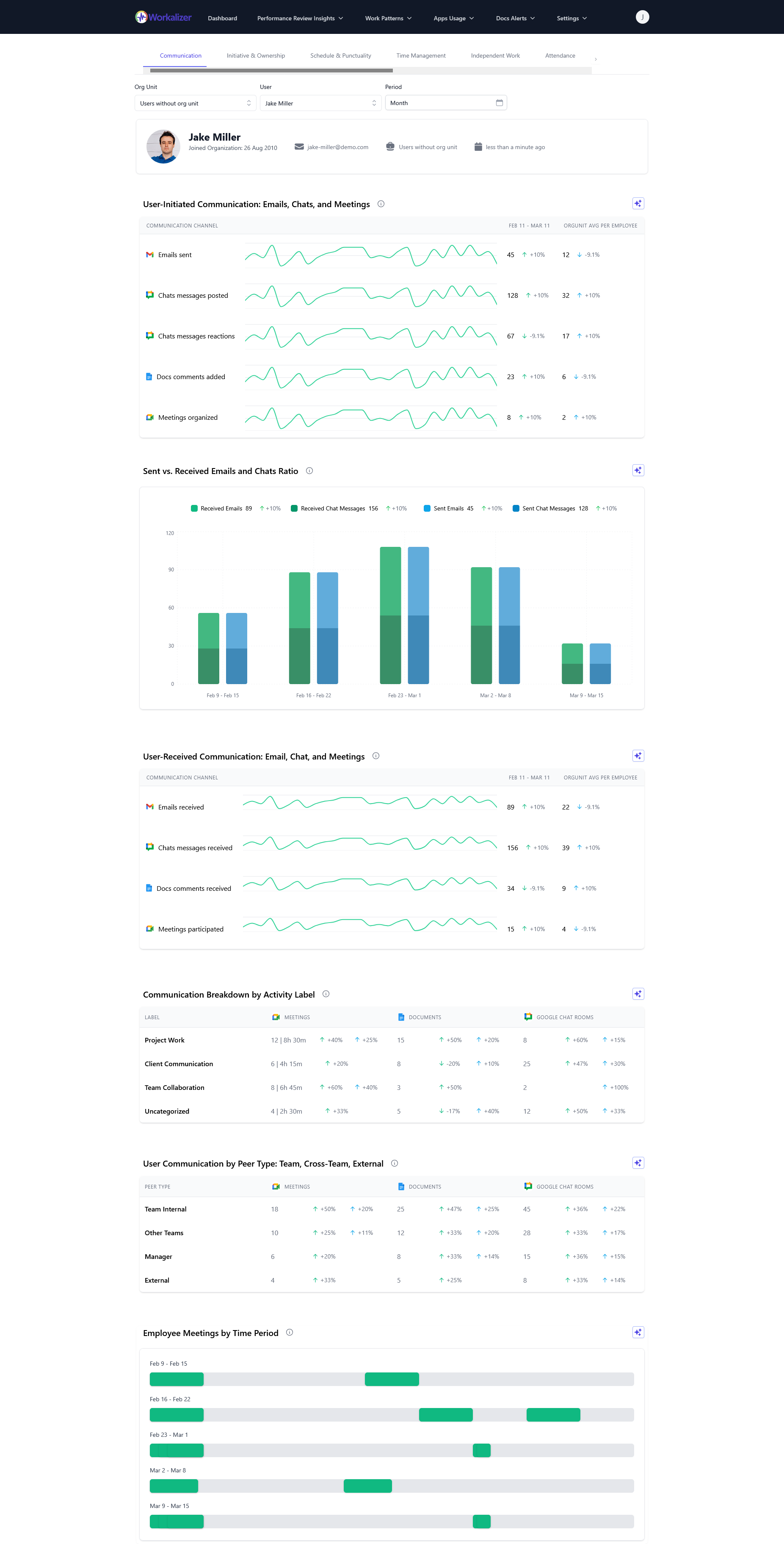
While best practices are essential, truly optimizing document sharing requires data-driven insights. Workalizer analyzes your organization's Google Workspace usage patterns to identify sharing inefficiencies, potential security risks, and areas for improvement.
For instance, Workalizer can flag documents with overly permissive sharing settings, highlight users who consistently grant excessive access, and identify teams struggling with version control. By visualizing these insights, you can proactively address issues and fine-tune your sharing strategy. This is especially useful if an employee is about to leave the company, and you need to ensure all their **google drive shared files deleted** are still accessible to the team.
Real-World Examples: Sharing Success Stories
Let's look at how organizations are successfully streamlining their document sharing practices:
- Case Study: Acme Corporation: A global marketing firm reduced document-related search time by 30% by implementing a standardized folder structure in Shared Drives and enforcing granular permission settings. This translated to significant time savings and improved team collaboration.
- Case Study: BetaTech Solutions: A software development company mitigated the risk of data breaches by implementing link expiration dates and requiring sign-in for external sharing. This provided greater control over sensitive client data.
- Benchmark: Companies that actively monitor Google Workspace usage with AI-powered analytics tools like Workalizer experience a 15-20% increase in overall productivity related to document management.
The Future of Document Sharing: AI and Automation
The future of document sharing is intertwined with AI and automation. Imagine AI-powered tools that automatically suggest optimal sharing settings based on document content and user roles. Or systems that proactively identify and remediate potential security vulnerabilities in real-time. These advancements are already on the horizon.
Furthermore, AI can automate version control processes, ensuring that the latest approved version is always readily available. It can also generate summaries of document changes, making it easier to track progress and identify potential conflicts. In fact, you can already use Gemini to do this.
Take Control of Your Google Workspace Today
Don't let inefficient document sharing hinder your organization's productivity and security. By implementing the strategies outlined above and embracing AI-powered analytics, you can transform Google Workspace into a collaborative powerhouse. Start by assessing your current sharing practices, identifying areas for improvement, and implementing a phased rollout of new policies and tools.
Remember, mastering document sharing is an ongoing process. Regularly review and update your policies, train your users, and leverage data-driven insights to continuously optimize your approach. In today's digital landscape, it's an investment that will pay dividends in increased efficiency, reduced risk, and a more collaborative workforce.
To further improve your Google Workspace security, consider reading Stop App Leaks: How to Secure Your Google Workspace Audio in 2026.
Conclusion
By taking a proactive, data-driven approach to Google Workspace document sharing, you can unlock significant productivity gains and mitigate potential security risks. The tools and strategies are available; it's time to take control and transform your organization's collaborative landscape. Don't let sharing become a source of chaos – make it a catalyst for success.