AI Hype vs. Reality: 3 Unignorable Trends for Enterprise Leaders in 2026
Remember the fervent 'tokenmaxxing' days of 2023-2024? The unbridled enthusiasm for AI, often prioritized over practical application, now feels like a distant memory. As we stand in June 2026, the AI landscape has undergone a significant 'vibe shift,' moving from breathless hype to a more pragmatic, and at times, cautious reality. For HR leaders, engineering managers, and C-suite executives, this isn't just a philosophical debate; it's reshaping organizational efficiency, resource allocation, and talent strategy.
At Workalizer, where we provide unbiased performance review insights powered by Google Workspace data, we're seeing these macro trends play out in the microscopic behaviors of teams. The question is no longer if AI will transform work, but how its evolving reality will impact your enterprise's strategic trajectory this year and beyond. Let's dive into three critical shifts that demand your immediate attention.
1. The Rise of Regulatory Scrutiny and the AI Backlash
The honeymoon period for AI is officially over. What Mashable aptly termed 'the AI vibe shift' is unequivocally real, signaling a growing public and governmental backlash against unchecked AI development. Remember the initial rush to implement AI everywhere? Now, Silicon Valley itself is having second thoughts, as described in 'The AI vibe shift is real: Why the backlash is growing.' This isn't just about ethical concerns; it's about tangible policy.
We're witnessing a global scramble for governance. Just this month, OpenAI released its policy paper, 'Democratic Governance of Frontier AI: A blueprint for a federal framework,' outlining its vision for regulation focusing on transparency and protection. Yet, this vision is already clashing with the White House's differing perspectives, highlighting the contentious path ahead for comprehensive AI oversight, as reported by Mashable on competing regulatory visions. For enterprise leaders, this means a rapidly evolving compliance landscape. Organizations that embraced early AI adoption without robust governance models are now facing a reckoning, balancing innovation with accountability. Workalizer's role here is crucial: by offering data-driven insights into how AI tools like Gemini are actually being utilized within Google Workspace, we empower leaders to build responsible AI strategies grounded in real usage patterns, not just theoretical promises.
2. Infrastructure Strain and the Scarcity of Digital Resources
The sheer computational demands of modern AI models are pushing our digital infrastructure to its limits. Forget abstract discussions about data centers; we're now seeing concrete legislative action. In a landmark move, New York legislators have passed a one-year moratorium on new data center construction, a critical component for AI infrastructure, as reported by Mashable just yesterday, June 6, 2026. While Governor Kathy Hochul has yet to sign the bill, the message is clear: the energy and environmental footprint of AI is no longer ignorable.
This legislative pause, the first statewide ban of its kind, underscores a looming challenge: the scarcity of digital infrastructure. As we discussed in our recent post, The Future of Digital Infrastructure: Navigating Scarcity, Security, and Sustainability in 2027, the days of unlimited computational resources are waning. For organizations planning significant AI investments, this translates into higher operational costs, potential delays, and the urgent need for efficiency. Maximizing existing resources and optimizing AI workloads becomes paramount. Understanding actual usage patterns, rather than relying on projected needs, is key to intelligent resource allocation.
3. The Blurring Lines: Human-AI Collaboration and the Bot Takeover
The nature of online interaction is undergoing a profound transformation. Cloudflare's latest data, released on June 5, 2026, reveals a startling truth: bots now account for a staggering 57% of all webpage requests. This isn't just about web traffic; it reflects a broader shift in how digital ecosystems function and how work gets done.
Simultaneously, users are increasingly 'outsourcing decisions to AI,' a phenomenon dubbed 'delegation search' by Search Engine Land. Whether it's drafting emails, summarizing documents, or even making complex strategic recommendations, AI is deeply embedded in the decision-making process. For enterprise leaders, this raises critical questions about productivity measurement, accountability, and the very definition of 'contribution.' How do you accurately assess a team's output when a significant portion of the work, or the decision-making leading to it, is AI-generated?
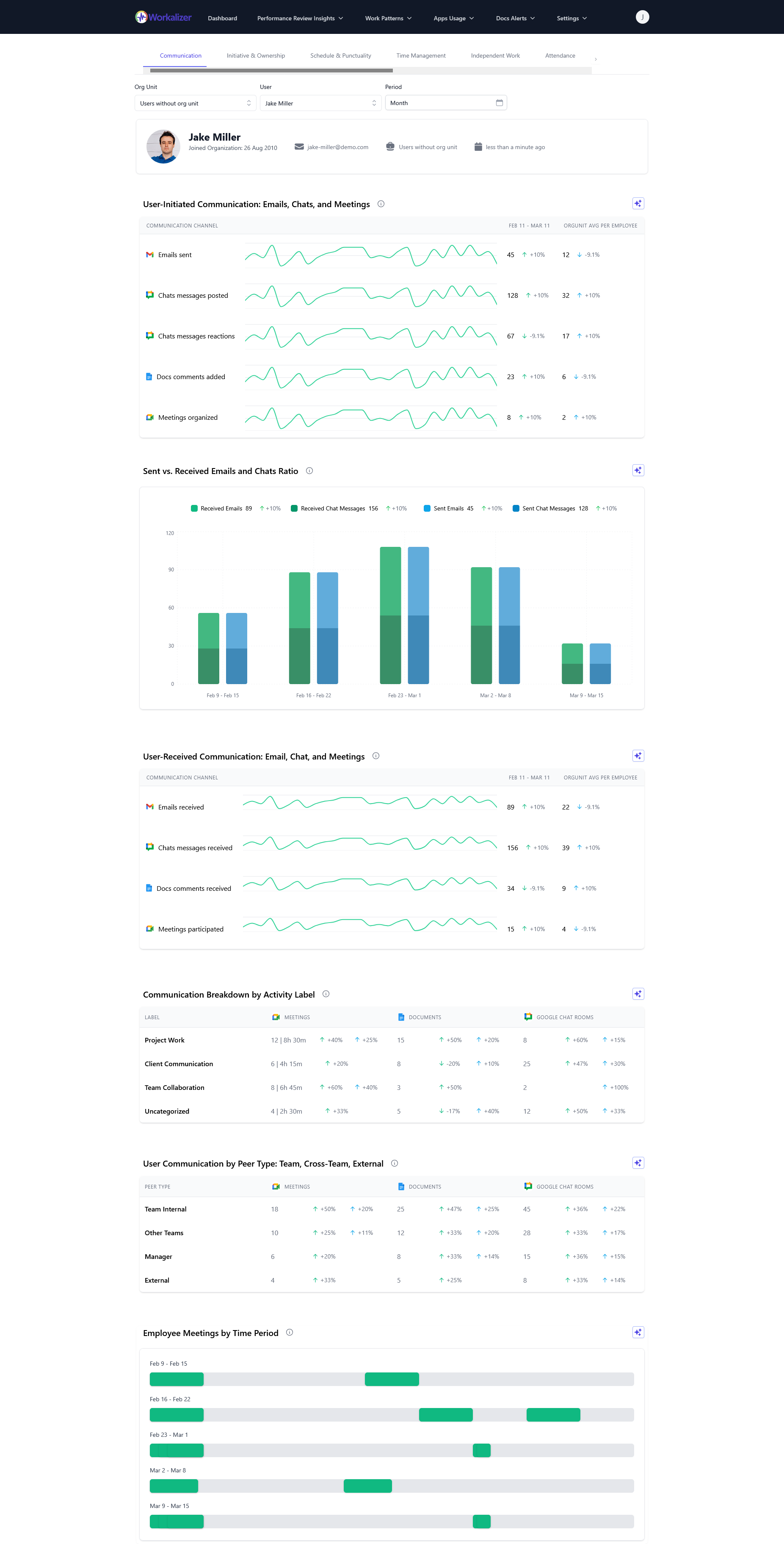
This is where Workalizer shines. Our platform analyzes signals from Gmail, Drive, Chat, Gemini, and Meet, allowing you to differentiate between genuine human collaboration and AI-assisted activities. For instance, understanding how do you share google drive files and google share docs online can reveal patterns of collaboration – but Workalizer helps you see if those shares are being initiated by humans, or if AI assistants are playing an intermediary role, influencing the flow of information. Are your teams truly collaborating, or are they merely delegating tasks to AI without critical oversight? This distinction is vital for accurate performance reviews and for ensuring that AI enhances, rather than dilutes, human ingenuity. For more on optimizing human-AI workflows, consider our insights on 5 Data-Driven Strategies to Bridge the Strategy-Execution Gap in 2026.
Workalizer: Your Compass in the Evolving AI Landscape
These three shifts—regulatory pressure, infrastructure constraints, and the changing nature of human-AI interaction—are not challenges to be ignored. They are the new reality for any organization leveraging Google Workspace. Without clear, unbiased data, navigating this complex environment is akin to flying blind. Workalizer provides the data-driven insights you need to understand true productivity, identify bottlenecks, and make informed decisions about your AI strategy. We help you move beyond the hype, focusing on measurable impact and responsible innovation.
Conclusion
2026 is proving to be a pivotal year for AI. The initial gold rush has given way to a more mature, but also more complex, phase. For HR leaders, engineering managers, and C-suite executives, understanding these underlying shifts is paramount to maintaining a competitive edge and fostering a truly productive, ethically sound, and resource-efficient organization. Don't let the evolving AI narrative catch you off guard. Empower your enterprise with the clarity only data can provide.