3 Strategic Pillars for Enterprise AI Agent Integration in 2026
As a Senior Tech Writer at Workalizer.com, I’ve had a front-row seat to the seismic shifts in enterprise productivity. Today, April 15, 2026, we stand at a critical juncture where AI isn't just a tool; it's an autonomous, agentic partner. The question for HR leaders, engineering managers, and C-suite executives is no longer 'if' but 'how' to integrate these powerful AI agents strategically to unlock unprecedented organizational efficiency.
The hype cycle for AI has passed its peak. We're well beyond the 'cool demo' phase of simply chatting with an LLM. What we’re seeing now is a relentless drive towards rigorous agentic engineering, where AI agents don't just follow instructions but generate new expertise, plan multi-step actions, and operate autonomously. This isn't just about automating tasks; it's about fundamentally transforming how work gets done within your Google Workspace ecosystem. At Workalizer, we're tracking these developments, providing the data-driven insights you need to navigate this new frontier. To thrive in this agentic era, enterprises must focus on three strategic pillars for integration.
1. Architecting for Autonomy: Beyond Prompt Engineering
The notion that effective AI integration is merely about crafting the perfect prompt is, frankly, outdated. Last year's Google Cloud AI Agent Bake-Off unequivocally demonstrated that the true challenge lies in 'rigorous agentic engineering.' Teams tackled real-world problems like e-commerce returns and modernizing legacy banking systems, revealing that success hinges on mastering multi-agent architecture, state management, and deterministic guardrails. This means moving from simple instruction-following to building systems where agents can reason, adapt, and even self-extend.
A key enabler in this shift is the Agent Development Kit (ADK)'s SkillToolset, which empowers agents to load and even generate domain expertise on demand. Released just this month, on April 1, 2026, the ADK's progressive disclosure architecture prevents monolithic system prompts by allowing agents to pull in context precisely when needed. Whether it’s generating a security review checklist or a compliance audit, the workflow is now straightforward: generate it, load it, and use it. This capability is particularly transformative, allowing agents to write new skills at runtime, essentially becoming self-improving entities. This level of dynamic adaptability is crucial for enterprises looking to scale their AI initiatives beyond isolated use cases.
The Enterprise Imperative for Adaptive Agents
For HR leaders, this translates to AI agents that can dynamically adapt to evolving policy changes or compliance requirements, automating complex workflows without constant human retraining. Engineering managers will appreciate agents that can generate new code snippets or troubleshooting guides based on real-time system diagnostics. The emphasis is on building AI that is not just smart, but truly autonomous and capable of self-directed problem-solving within defined boundaries. For a broader view of what's ahead, I highly recommend reviewing Workalizer's insights on 5 Unignorable AI Trends for Enterprise Leaders in 2026.
2. Powering the Edge and Cloud: Infrastructure for Scale
Autonomous AI agents, especially those capable of multi-step planning and advanced processing, demand serious computational horsepower. The modern frontier of machine learning requires leveraging distributed systems that span thousands of accelerators. Google's Tensor Processing Units (TPUs), for instance, are foundational to their supercomputing infrastructure, powering platforms like Gemini and Veo.
As models scale to run on clusters of O(100,000) chips, the software powering them must meet new demands for performance, hardware portability, and reliability. This is where innovations like TorchTPU, which enables PyTorch to run natively and efficiently on TPUs at Google scale, become critical. Announced on April 7, 2026, TorchTPU ensures that the entire AI community can easily access the full capabilities of these high-performance accelerators, pushing the boundaries of what's possible in large-scale AI deployment. You can learn more about this integration by visiting the Google Developers Blog on TorchTPU.
Bringing AI to the Edge with Gemma 4
Equally significant is the push towards on-device AI. Google DeepMind’s launch of Gemma 4 on April 2, 2026, redefines what's possible on your own hardware. Available under the Apache 2.0 license, Gemma 4 is a family of open models enabling developers to build agents and autonomous AI use cases running directly on-device. This means multi-step planning, autonomous action, offline code generation, and even audio-visual processing can happen without specialized fine-tuning, supporting over 140 languages globally. You can explore Gemma 4's capabilities and access the AICore Developer Preview via the Google AI Edge Team's announcement. For enterprise, this opens doors for robust, secure, and low-latency AI applications at the edge, reducing reliance on constant cloud connectivity and enhancing data privacy.
3. Human-Agent Collaboration: The Future of Workspace Productivity
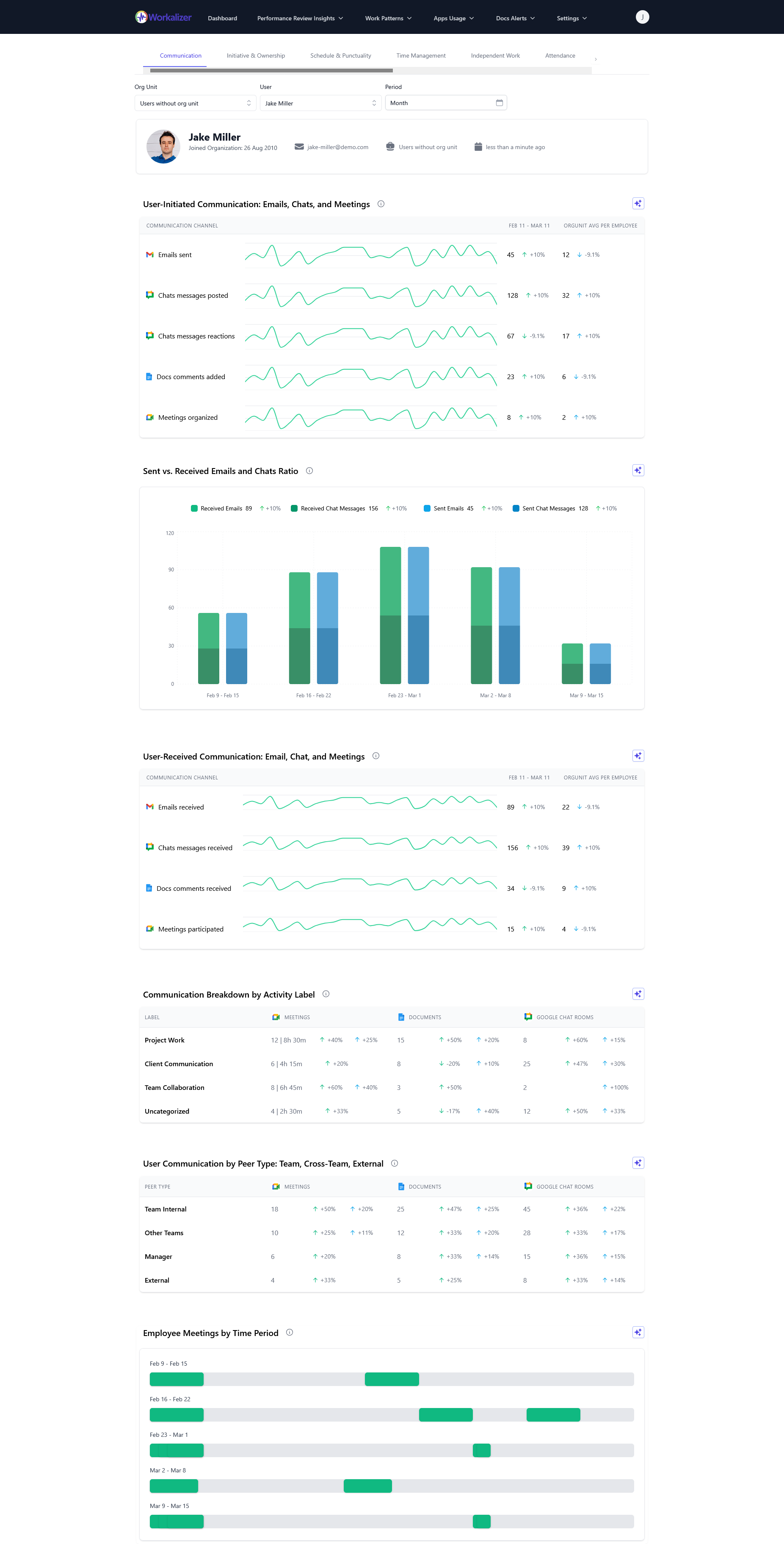
Workalizer's core mission is to provide performance review insights based on Google Workspace usage. The integration of agentic AI profoundly impacts this. At Google I/O, scheduled for May 19–20, 2026, Google will unveil major updates across AI, Android, Chrome, and Cloud, focusing on 'agentic coding' and developer tools that 'transform the way you write software.' The promise is for AI to handle the heavy lifting, allowing humans to focus on the big picture. This isn't just about individual productivity; it's about optimizing team collaboration and organizational output.
Imagine an AI agent that, after a team sync, can automatically draft meeting minutes, summarize action items, and even proactively suggest how to create and share google doc of key insights with relevant stakeholders. For engineering teams, an agent could monitor project progress in Drive, flag potential blockers, and even suggest resource reallocations based on real-time data from Chat and Meet. Furthermore, for teams on the go, agents could streamline the process of preparing and how to share files in google drive android from a recent project, ensuring everyone has access to the latest versions, regardless of device.
Measuring the Impact of Agentic Workflows
This is where Workalizer becomes indispensable. As AI agents become more integrated into daily Google Workspace operations—from drafting emails in Gmail to managing files in Drive, facilitating discussions in Chat, or assisting with research in Gemini—the 'signals' they generate become part of the organizational productivity tapestry. We analyze these interactions to provide data-driven, unbiased productivity analytics, helping HR leaders understand the true impact of AI integration on team performance and individual contributions. Understanding how agents interact with human workflows, and identifying potential bottlenecks or areas where AI might be 'generating too fast' and exceeding rate limits, is crucial. For instance, our guide on Navigating Gemini's 'Generating Too Fast' Error offers practical insights into managing these challenges.
The agentic era of development is here, and it's set to revolutionize enterprise operations. By focusing on architecting for true autonomy, investing in scalable infrastructure, and fostering seamless human-agent collaboration within your Google Workspace, your organization can move beyond merely adopting AI to truly mastering it. Workalizer is here to provide the insights to ensure these integrations drive measurable, positive outcomes for your business.