Are Your Enterprise Productivity Tools Just Expensive Shelfware in 2026?
Are Your Enterprise Productivity Tools Just Expensive Shelfware in 2026?
Let's be honest, C-suite. You’ve invested heavily in cutting-edge productivity software. You’ve rolled out Google Workspace, subscribed to the latest AI tools, and probably even upgraded hardware. But here’s the provocative question: Are your teams truly leveraging these powerful resources, or are they merely scratching the surface, treating advanced applications like glorified notepads? As a Senior Tech Writer at Workalizer, I'd argue that for many organizations in 2026, the answer leans towards the latter, creating a hidden drain on efficiency and ROI that far too few leaders are addressing.
The truth is, simply *having* the tools isn't enough. The real competitive edge comes from deep utilization, from understanding the nuanced capabilities that transform a basic function into a strategic advantage. It’s about moving beyond “good enough” to truly optimized workflows. If your organization is still operating with a 2024 mindset in 2026, you’re not just missing out on incremental gains; you’re ceding ground to more agile competitors.
The Illusion of “Up-to-Date”: Are Your Tools Gathering Digital Dust?
It’s easy to feel confident when your tech stack features all the latest logos. But beneath the surface, a subtle form of digital entropy often takes hold. Teams revert to familiar, often less efficient, habits. The new AI co-pilot becomes a glorified spell-checker, the collaborative platform a simple file repository. This isn't a failure of the technology; it's a failure of adoption and education.
This year, the pace of innovation has been relentless. From adaptive interfaces to intelligent AI assistants, the tools at our disposal are more powerful than ever. Yet, many organizations struggle to translate these advancements into tangible productivity boosts. This gap between potential and actual usage represents a significant, often unmeasured, cost. It's the cost of licenses paid for features never used, of employee hours lost to inefficient processes, and of missed opportunities for innovation.
Beyond Basic Search: Unlocking AI's True Potential with Google Illuminate and Gemini
One of the most profound shifts in 2026 is the maturation of AI as a genuine productivity partner, not just a novelty. Take Google Illuminate, for instance. This quiet powerhouse is revolutionizing how we consume information. Imagine feeding dense academic papers or complex technical reports into an AI that then converts them into podcast-style audio conversations. As one user noted, after hearing an AI-generated podcast version of an academic paper, “something clicked.” What once felt like insurmountable homework becomes digestible knowledge, freeing up valuable cognitive load and time for your high-performing teams.
Then there's Gemini. Many still mistakenly use Gemini as a souped-up Google Assistant. However, as How-To Geek recently highlighted, this approach means you’re “missing out on one of Gemini’s best features” – its “Connected Apps” functionality. This allows Gemini to integrate deeply with your other applications, transforming it into a powerful orchestrator of tasks and information across your digital ecosystem. If your employees are still treating Gemini like a simple query bot, they're missing out on capabilities that could streamline everything from project management to data analysis. For a deeper dive into maximizing this tool, check out our post on Unlocking Gemini AI Plus Video: Navigating Missing Features and Credits on Your Google Suite Dashboard.
Workalizer analyzes signals from Gemini usage, providing insights into how effectively your teams are leveraging these advanced AI capabilities. Are they just asking for quick facts, or are they engaging with Connected Apps to automate workflows and synthesize complex information?
The Multi-Device Imperative: Why Your Apps Need to Adapt (and So Do You)
The traditional desktop-centric workflow is rapidly becoming a relic. With over 500 million active Android devices outside the slab phone category – including foldables, tablets, ChromeOS devices, cars, and AR glasses – the demand for fluid, adaptable applications is paramount. This year, Android 17 is finally addressing the long-standing app problem, making large screens a first-class citizen. The days of stretched-out phone UIs wasting precious pixel real estate are, thankfully, numbered.
For HR leaders and engineering managers, this isn't just a technical detail; it's a strategic shift. A workforce that can seamlessly transition tasks across devices – starting a document on a foldable, refining it on a tablet, and presenting it from a desktop – is a more productive, agile workforce. The ability to work anywhere, on any screen, without friction, is no longer a luxury but a necessity for maintaining momentum and engagement.
Mastering Digital Workspaces: The Power of Virtual Desktops and Collaborative Docs
Beyond device adaptation, the organization of our digital workspace itself is a critical, yet often overlooked, component of productivity. Many, like a writer at How-To Geek, ignored Windows Virtual Desktops for years, only to find them indispensable for juggling multiple projects and clients, each with their own browser tabs, applications, and logins. This simple organizational technique can eliminate digital clutter and reduce context-switching costs, a notorious productivity killer.
Similarly, within Google Workspace, the power of collaboration is often constrained by suboptimal practices. Are your teams truly maximizing google docs group editing features, or are they still relying on sequential reviews and endless email chains? Effective group editing isn't just about simultaneous access; it's about clear version control, intelligent commenting, and a structured approach to collaborative content creation. Furthermore, ensuring teams understand best practices to secure files on google drive is paramount. This isn't just about compliance; it's about maintaining trust and efficiency in a highly collaborative environment where data integrity is non-negotiable.
Workalizer's Lens: Identifying and Eliminating Productivity Gaps
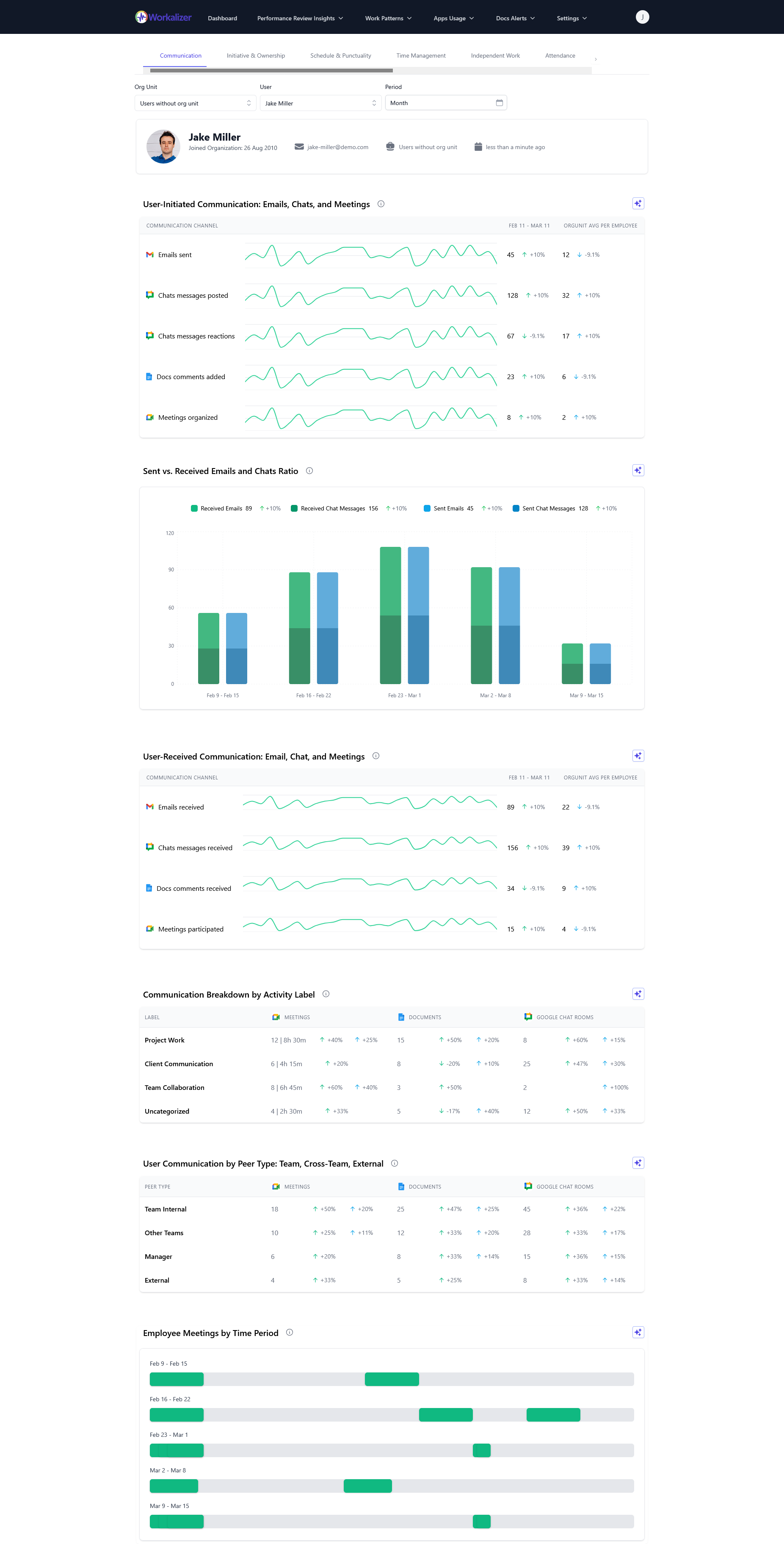
At Workalizer.com, we understand these challenges intimately. Our AI-powered platform provides performance review insights based on your company’s Google Workspace usage. We analyze signals from Gmail, Drive, Chat, Gemini, and Meet to provide data-driven, unbiased productivity analytics. We don't just tell you that your teams are using Google Workspace; we show you *how* they're using it, identifying areas where advanced features are underutilized and where inefficient habits persist.
By pinpointing these gaps, Workalizer empowers HR Leaders, Engineering Managers, and C-Suite Executives to make informed decisions. Is the team struggling with collaboration because they're not fully leveraging Google Docs' advanced features? Is Gemini being underused as a strategic assistant? Our platform provides the answers, enabling targeted training, process adjustments, and ultimately, a more efficient and productive workforce. For a broader perspective on upcoming advancements, consider what we anticipate in The Future of AI in the Workplace: What to Expect in 2027 and Beyond.
The Real Cost of “Good Enough”
In 2026, the competitive landscape demands more than just “good enough” from your technology investments. The cost of underutilized tools isn't just monetary; it's a drain on employee morale, innovation, and ultimately, your bottom line. It's time to move beyond passively deploying technology and actively cultivate a culture of deep utilization and continuous optimization. Workalizer is here to light the way, transforming your Google Workspace data into actionable insights that drive real organizational efficiency.