The Future of Proactive AI: Reshaping Enterprise Productivity in 2027 and Beyond
The Dawn of Anticipatory Intelligence: Your Next Productivity Frontier
It’s April 28, 2026, and the air crackles with a peculiar energy. Not just the usual hum of innovation, but a palpable shift in how we interact with technology. The era of reactive AI is rapidly giving way to anticipatory intelligence, fundamentally reshaping enterprise productivity. If you, like me, believe that the future of work isn't just about doing more, but about doing smarter, then the trends emerging this year demand your immediate attention. We're not just talking about AI assisting tasks; we're talking about AI anticipating our needs, often before we even articulate them.
This isn't science fiction anymore. It’s the strategic imperative for any HR leader, Engineering Manager, or C-Suite executive looking to gain a competitive edge. The question is no longer if AI will transform your organization, but how quickly you can adapt to a world where your digital assistants are becoming genuine agents.
AI Agents on the Horizon: Beyond the Smartphone
For years, we've debated whether AI would replace the smartphone. Now, the conversation has matured. It seems even OpenAI, a vanguard of AI development, believes the answer isn't replacement, but rather a profound redefinition of the device itself. Analyst Ming-Chi Kuo recently reported that OpenAI is developing its own smartphone, designed from the ground up to deliver a “comprehensives AI agent service.” Imagine a device where your homescreen isn't an array of apps, but a dynamic panel of ongoing AI tasks – booking flights, compiling market data, managing your schedule. This isn't just about a new gadget; it's about a new paradigm for interacting with digital intelligence, with mass production potentially by 2028.
This vision aligns perfectly with Google's own trajectory for Gemini. Earlier this year, Digital Trends revealed that Gemini wants to read your emails, calendar, and notifications to help you before you even ask. Think about the implications: an AI that proactively drafts responses, schedules meetings based on your availability and priorities, or flags critical information from your inbox without you needing to prompt it. This level of integration within Google Workspace – Gmail, Drive, Chat, Meet – moves beyond simple automation to genuine augmentation. For instance, an AI agent could proactively suggest the most efficient way to share large files with google drive for an upcoming project, considering recipient permissions and bandwidth, or even initiate the process to how to share a google doc for editing with a new team member based on their role and the project's requirements.
However, this shift also brings challenges. What happens when these advanced AI agents don't perform optimally? Organizations need robust strategies to ensure their AI tools are running smoothly. If you've ever experienced hiccups with your AI assistant, you'll understand the frustration. For those looking to fine-tune their Google Workspace AI deployments, understanding how to maintain peak performance is crucial. Our recent post, "Gemini Stalling? Optimize Performance with Google Workspace Login & Usage Management", delves into optimizing your AI's operational efficiency.
The AI Philosophical Divide: Superlearners vs. LLMs
While the industry races to embed AI agents into our daily workflows, a fascinating philosophical debate is unfolding at the highest echelons of AI research. David Silver, the brilliant mind behind Google DeepMind's AlphaGo, believes the current path of large language models (LLMs) might be fundamentally flawed. Speaking to WIRED, Silver, now CEO of Ineffable Intelligence, argues that AI is taking the wrong path by primarily learning from human intelligence. He champions reinforcement learning – AI models learning through trial and error – to create "superlearners" that can discover new forms of science, technology, and even governance, going far beyond human capabilities.
This isn't a mere academic squabble; it has profound implications for enterprise AI. If our AI tools are simply sophisticated mirrors of human data, are we truly innovating, or just optimizing existing processes? The promise of "superlearners" suggests an AI that doesn't just process information but generates entirely new solutions, potentially revolutionizing everything from product development to strategic planning. Imagine an AI agent not just summarizing market data, but identifying entirely novel market opportunities or optimizing supply chains in ways no human could conceive.
Navigating the Ethical and Practical Realities
As AI becomes more autonomous and proactive, the ethical and practical considerations multiply. Data privacy, intellectual property, and algorithmic bias are no longer abstract concepts but immediate concerns. The legal landscape is already adapting, with figures like Taylor Swift taking proactive measures to trademark her voice and image to counter AI misuse. For businesses, this translates to stringent data governance policies and a clear understanding of where AI-generated content originates and who owns it.
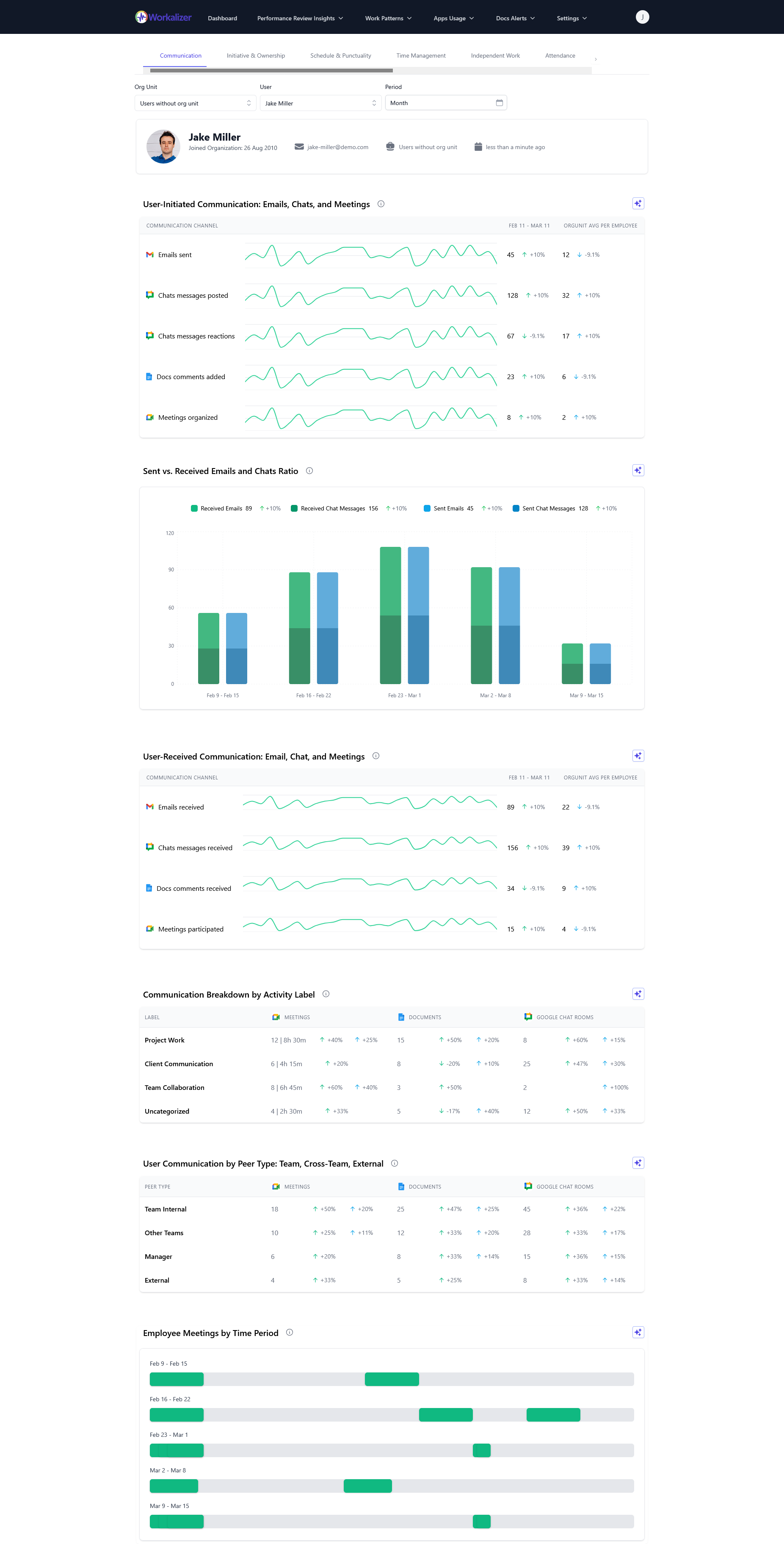
Moreover, the sheer volume of data processed by these proactive AIs raises questions about auditability and transparency. How do you track the decisions made by an AI agent that's constantly operating in the background? This is where Workalizer becomes indispensable. We provide the crucial, unbiased analytics on Google Workspace usage – Gmail, Drive, Chat, Gemini, Meet – to give leaders visibility into the true impact of their AI deployments. Understanding how your team interacts with and leverages AI, and how AI agents are influencing workflows, is paramount. For instance, knowing how AI is assisting in the creation and sharing of documents helps measure the true efficiency gains. And for those concerned about managing their AI data, our article on "Google Takeout and Gemini: Exporting Your AI Chat History (and What To Do Next)" offers practical guidance on data export and management.
While the immediate focus for most enterprises remains on optimizing daily operations and leveraging AI for competitive advantage, the broader societal impact of advanced AI cannot be ignored. Even in the realm of human well-being, we see cutting-edge technologies like Motif Neurotech's blueberry-sized brain implant, now approved for human trials, aiming to treat severe depression by stimulating the brain's central executive network. This pioneering work, reported by WIRED, highlights the incredible breadth of technological advancement, pushing the boundaries of what's possible, even as we grapple with the ethical frameworks for such power.
Workalizer's Vision: Unbiased Insights for the AI-Powered Enterprise
At Workalizer, we believe that the future of enterprise productivity hinges on clarity and data. As AI agents become more embedded and autonomous, the need for unbiased, data-driven insights into team performance and tool efficacy will only grow. Our platform analyzes the signals from your Google Workspace – every email, Drive interaction, Chat message, Gemini prompt, and Meet call – to provide a holistic view of how your organization truly works.
We empower HR leaders to understand the impact of new AI tools on employee engagement and workload, enable Engineering Managers to identify bottlenecks and optimize collaborative processes, and provide C-Suite Executives with the strategic intelligence needed to make informed decisions about technology investments and organizational design. In a world where AI is constantly learning and evolving, having a clear, objective measure of its impact is not just beneficial; it’s essential.
The Path Forward: Embrace, Evaluate, Evolve
The next few years will be defined by the accelerating adoption of proactive AI agents. Organizations that embrace this shift, while rigorously evaluating its impact with data-driven tools, will be the ones that thrive. The promise of AI to unlock unprecedented levels of efficiency and innovation is real, but it requires a conscious, informed approach. Don't just deploy AI; understand its heartbeat within your organization. Leverage platforms like Workalizer to turn the complex signals of your digital workplace into clear, actionable insights, ensuring your journey into the AI-powered future is both productive and profoundly human.