The Collaborative Convergence: How AI Agents are Reshaping Google Workspace in 2026
The Rise of the Collaborative AI Agent
It's 2026, and the promise of AI isn't just about replacing tasks; it's about augmenting collaboration. We're seeing a shift in how teams interact within Google Workspace, driven by the increasing sophistication and integration of AI agents. These aren't just chatbots; they're proactive participants, capable of understanding context, anticipating needs, and facilitating seamless workflows. But what does this actually look like, and what are the implications for your organization?
The initial hype around AI replacing human workers has largely subsided, replaced by a more nuanced understanding of AI's potential as a collaborative partner. As Dina, a software developer at Amazon, notes, sometimes AI tools like Kiro create more problems than they solve, requiring significant human intervention to correct flawed code. This highlights the critical need for robust oversight and careful implementation when integrating AI into workflows. However, when implemented correctly, AI agents can significantly enhance productivity and streamline processes.
The Gemini Effect: Contextual Awareness and Proactive Assistance
Google's Gemini has been a key catalyst in this evolution. Its ability to understand nuanced context within Gmail threads, Drive documents, and Meet conversations allows AI agents to provide proactive assistance. Imagine an AI agent that automatically schedules follow-up meetings based on action items discussed in a Google Meet, or one that drafts initial responses to emails based on your past communication patterns. This is no longer science fiction; it's the reality for many organizations leveraging the power of Gemini-integrated AI agents.
For example, AI agents can now analyze project documents in Google Drive and automatically generate summaries for team members, saving valuable time and ensuring everyone stays informed. They can also monitor shared documents and alert users when changes are made, ensuring version control and preventing errors. This level of proactive assistance significantly reduces the administrative burden on employees, allowing them to focus on more strategic and creative tasks. Learning how to share files on Google Drive effectively is now augmented by AI that manages permissions and access based on project roles, streamlining the whole process.
Beyond Task Automation: AI Agents as Facilitators of Creativity
The most exciting aspect of AI agent integration is their potential to foster creativity and innovation. By automating routine tasks and providing quick access to information, AI agents free up human employees to focus on higher-level thinking and problem-solving. For instance, an AI agent could analyze market trends and generate potential product ideas, providing a starting point for brainstorming sessions. Or, it could automatically create presentations based on data from Google Sheets, allowing teams to quickly visualize and communicate their findings.
The acquisition of Moltbook by Meta highlights the growing importance of AI agents in social networking and collaboration. Meta's acquisition of Moltbook signals a future where AI agents not only assist individuals but also interact with each other, creating a dynamic and interconnected ecosystem of intelligent assistants. This could lead to entirely new forms of collaboration, where AI agents work together to solve complex problems and generate innovative solutions.
The Challenges of Integration: Trust, Transparency, and Training
Despite the immense potential, integrating AI agents into Google Workspace isn't without its challenges. Building trust in these systems is paramount. Employees need to understand how AI agents make decisions and have confidence in their accuracy. Transparency is key; algorithms should be explainable, and users should be able to easily audit the actions of AI agents. As the situation at Amazon demonstrates, pushing AI integration without proper training and oversight can lead to frustration and decreased productivity.
Furthermore, organizations need to invest in training programs to equip employees with the skills necessary to effectively collaborate with AI agents. This includes teaching employees how to provide feedback, correct errors, and leverage the full potential of these tools. Failing to address these challenges could lead to resistance and ultimately hinder the adoption of AI-powered collaboration.
Workalizer Insights: Measuring the Impact of AI Agents on Productivity
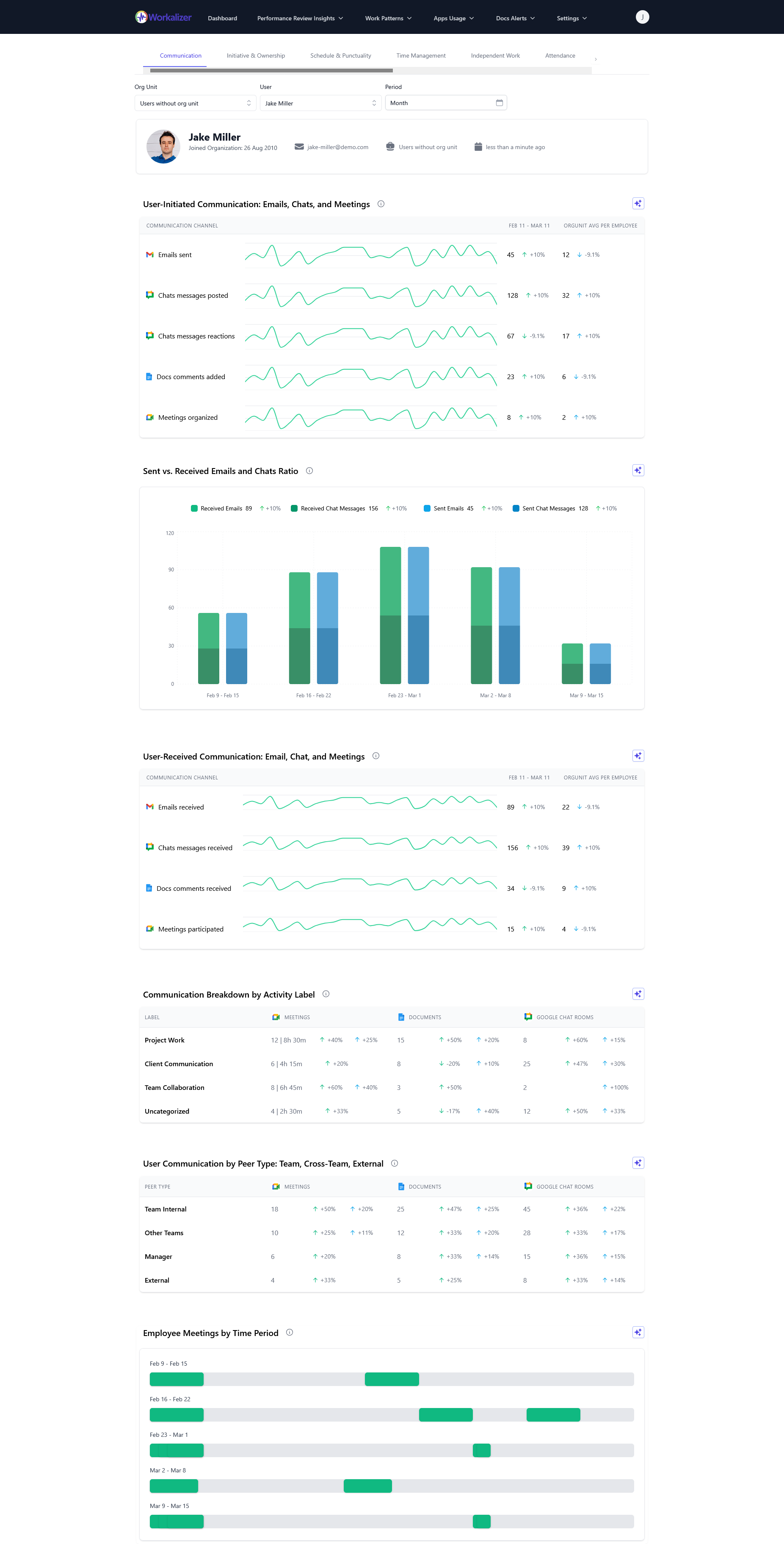
At Workalizer, we're actively tracking the impact of AI agents on Google Workspace usage. Our platform analyzes signals from Gmail, Drive, Chat, Gemini, and Meet to provide data-driven insights into productivity gains and areas for improvement. We've observed that organizations that strategically deploy AI agents and invest in employee training see a significant increase in overall efficiency. Early data suggests that teams using AI-powered assistance for tasks like scheduling and document summarization experience a 15-20% reduction in time spent on these activities.
However, it's crucial to monitor the impact of AI agents on employee well-being. Over-reliance on automation can lead to burnout and decreased job satisfaction. Organizations need to strike a balance between leveraging AI to enhance productivity and ensuring that employees have meaningful and engaging work.
The Future of Collaborative Work: A Symbiotic Relationship
Looking ahead, the future of collaborative work in Google Workspace will be defined by a symbiotic relationship between humans and AI agents. These agents will become increasingly integrated into our daily workflows, providing personalized assistance, automating routine tasks, and fostering creativity. Imagine AI agents that can predict project roadblocks, identify potential collaborators, and even facilitate cross-functional communication. The possibilities are endless.
The key to unlocking this potential lies in responsible implementation, ongoing monitoring, and a commitment to building trust and transparency. By embracing a human-centered approach to AI, organizations can create a collaborative environment where both humans and AI agents thrive.
Actionable Steps for HR Leaders and Engineering Managers
Here are some actionable steps that HR leaders and engineering managers can take to prepare their organizations for the collaborative convergence:
- Assess your current Google Workspace usage: Identify areas where AI agents can have the biggest impact on productivity and efficiency.
- Pilot AI agent integration: Start with small-scale pilot projects to test the waters and gather feedback from employees.
- Invest in training: Provide employees with the training they need to effectively collaborate with AI agents.
- Monitor performance and well-being: Track the impact of AI agents on both productivity and employee satisfaction.
- Prioritize transparency and trust: Ensure that AI algorithms are explainable and that employees understand how they work.
By taking these steps, organizations can harness the power of AI agents to create a more collaborative, productive, and engaging work environment. For further insights into optimizing your Google Workspace, explore our post on Mastering Gemini: Organize Chats to Boost Productivity and Reduce Google Meeting Load. And to ensure your team is protected, review our article on AI Safety Alert: Gemini's 'Pig-Butchering' Scam Simulation & Your Role in Reporting, as AI integration continues to evolve.
Conclusion: Embracing the AI-Powered Future of Work
The integration of AI agents into Google Workspace is transforming the way we collaborate. By automating routine tasks, providing proactive assistance, and fostering creativity, AI agents are empowering teams to achieve more than ever before. However, successful implementation requires careful planning, ongoing monitoring, and a commitment to building trust and transparency. By embracing a human-centered approach to AI, organizations can unlock the full potential of this technology and create a more collaborative, productive, and engaging future of work. And remember, understanding how to share documents on Google effectively is only the beginning; AI is now managing and optimizing those sharing processes.