Future-Proof Your Enterprise: Mastering the Era of Mandated AI and Unforeseen Infrastructure Challenges
The AI Imperative: From Strategic Buzzword to Business Mandate
It’s May 2026, and the conversation around Artificial Intelligence has shifted dramatically. What was once a strategic buzzword, a futuristic aspiration for many enterprises, has now become a tangible, mandated imperative. The era of ‘wait and see’ is over. Leaders across HR, engineering, and the C-suite are grappling with a new reality: AI isn't just an option for competitive advantage; it's rapidly becoming a non-negotiable component of operational existence.
This isn't hyperbole. Consider Dubai's audacious move: on May 4, 2026, Crown Prince Sheikh Hamdan bin Mohammed bin Rashid Al Maktoum launched a two-year initiative to transition the emirate’s entire private sector to agentic AI. This isn't a pilot program or a vague roadmap; it's a hard deadline by May 2028. This mandate follows an April directive for 50 percent of federal government services to be delivered by autonomous AI agents within the same timeframe. Dubai isn't just encouraging AI adoption; it's demanding it, aiming to make its economy “the best in the world in adopting agentic AI technologies.” (Source: The Next Web)
This aggressive stance from a global economic hub signals a profound shift. It means enterprises can no longer afford to treat AI as a side project. It must be central to their strategic planning. As we explored in our recent post, 4 Seismic Shifts: How AI, M&A, and Market Dynamics are Reshaping Enterprise Strategy in 2026, these external pressures are reshaping everything from talent acquisition to technological investment. The question for every HR leader and engineering manager isn't if you'll adopt AI, but how quickly and effectively you will.
The Unseen Costs: AI's Voracious Appetite and the Infrastructure Crunch
As the world rushes to embrace AI, a critical, often overlooked challenge is emerging: the sheer energy and infrastructure demands of these powerful systems. While Dubai mandates adoption, other nations are confronting the very real physical constraints AI imposes. Take Denmark, a global leader in clean energy, generating over 80 percent of its electricity from renewable sources. You'd think they'd be perfectly positioned for the AI boom.
Yet, in March 2026, Denmark's grid operator, Energinet, paused all new grid connection agreements. The reason? A staggering 60-gigawatt queue of projects, nearly nine times the country’s peak electricity demand of 7 gigawatts, overwhelmingly driven by AI data centers. Hyperscalers chose Denmark for its clean grid and cool climate, inadvertently overwhelming an infrastructure never designed for such an explosion of demand. (Source: The Next Web)
This isn't just a Danish problem; it's a canary in the coal mine for the global AI industry. The massive computational power required for training and running complex AI models translates directly into unprecedented energy consumption. For enterprise leaders, this means rethinking AI strategy beyond just software. It demands a hard look at hardware, data center capacity, energy sources, and even geographical location. Ignoring these infrastructure realities can lead to significant bottlenecks, spiraling operational costs, and even regulatory hurdles. True enterprise efficiency in the age of AI, as discussed in How to Drive Enterprise Efficiency with Specialized AI, Avoiding the 'Slop' Trap in 2026, requires a holistic view that includes physical infrastructure.
Specialized AI: The Path to Tangible Value (and its Financial Plumbing)
Amidst the broad mandates and infrastructure challenges, a clear trend is emerging: the most impactful AI applications are often highly specialized, designed to solve specific business problems rather than offering general-purpose intelligence. This focus on specialized AI is where real enterprise value is being unlocked.
Consider the venture capital world. Katie Haun, through Haun Ventures, just raised $1 billion for two new funds, explicitly expanding into AI agents and financial infrastructure. Her thesis isn't about building better foundation models; it's about providing the regulated financial “plumbing” that autonomous AI agents will need to operate effectively in the real world. Her firm’s largest bet so far is a $4.35 billion investment in Erebor, a digital bank, underscoring the belief that finance, not just models, is what these agents truly need to deliver value. (Source: The Next Web)
We see this specialization driving success in consumer-facing platforms too. Pinterest, for instance, reported its first billion-dollar quarter in Q1 2026, with $1.008 billion in revenue, an 18 percent year-on-year increase. This growth wasn't fueled by social media engagement, but by its AI-powered visual search engine, processing over 80 billion searches monthly. Pinterest’s Performance+ advertising suite delivered a 24 percent higher conversion lift and an 80 percent A/B test win rate, proving that AI tied to commercial search intent dramatically outperforms generic content browsing. (Source: The Next Web)
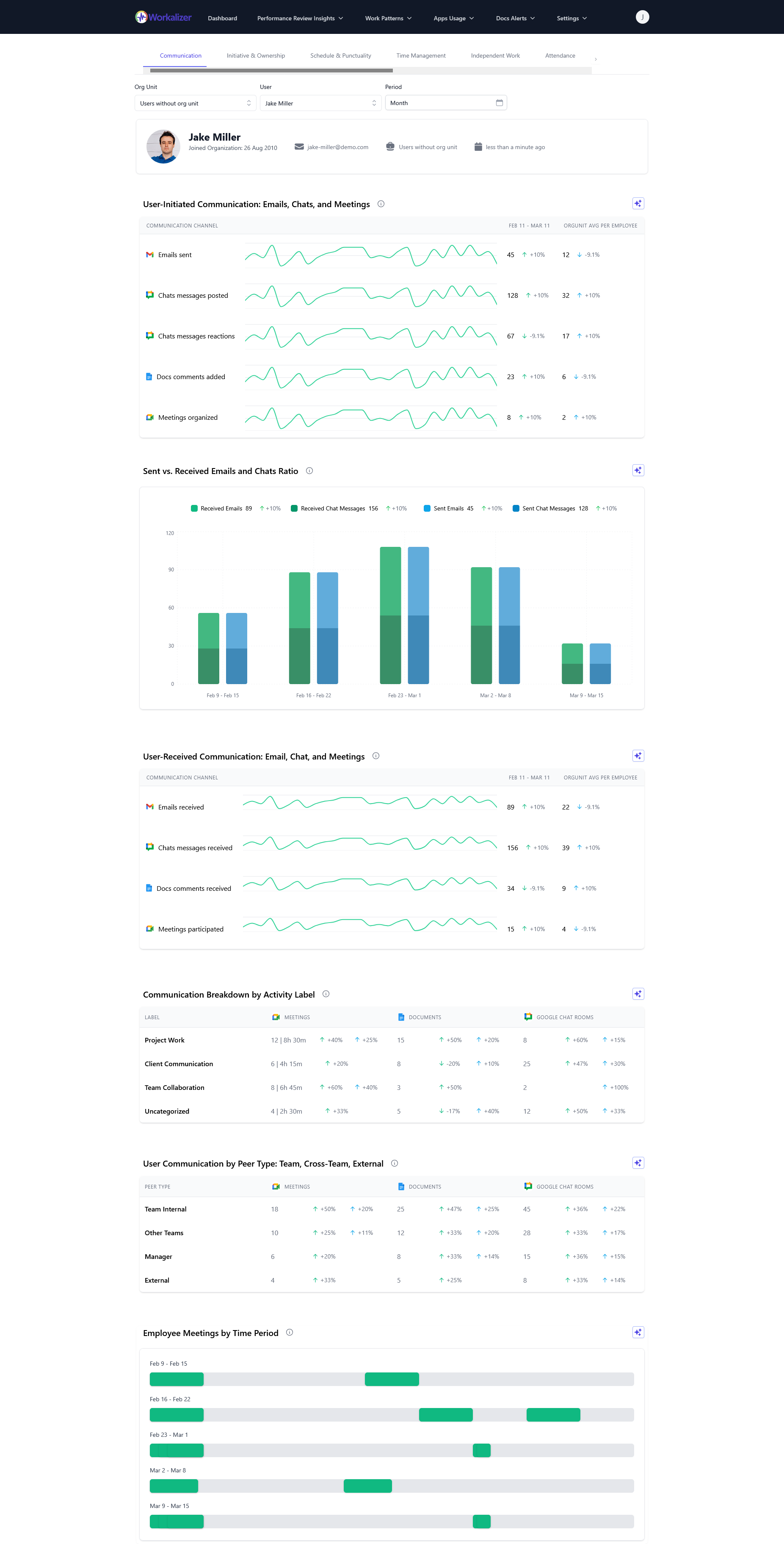
For your organization, this means identifying specific pain points and opportunities where AI can deliver measurable outcomes. This often starts with understanding your internal data landscape. Efficient data management and collaboration are paramount. How your teams organize and access information, whether through robust file sharing in google drive practices or by ensuring teams google drive share all files in folder structures effectively, directly impacts the quality of data available to specialized AI agents. Workalizer, by analyzing Google Workspace usage, helps illuminate these foundational data flows, ensuring your AI initiatives are built on a solid, efficient data infrastructure.
Navigating the Human Element: Creativity, Ethics, and Governance
While the business world embraces AI for efficiency and new revenue streams, the human and ethical dimensions cannot be ignored. The creative industries, in particular, are drawing clear lines in the sand. As of 2026, the Academy of Motion Picture Arts and Sciences has clarified its rules for the Oscars: the golden statue will not go to AI 'actors' or AI-written screenplays. (Source: CNET)
This decision underscores a broader societal conversation about the role of human creativity, authorship, and accountability in an AI-augmented world. For enterprise leaders, this translates into a critical need for robust AI governance frameworks. It's not just about compliance; it's about maintaining trust, fostering innovation responsibly, and ensuring that AI serves to augment human capabilities, not diminish them.
This includes establishing clear guidelines for AI use, ensuring data privacy and security, and implementing processes for human oversight in AI-driven decisions. Workalizer’s mission to provide data-driven, unbiased productivity analytics from Google Workspace usage directly supports this. By offering transparent insights into how AI-powered tools are impacting workflows and team dynamics, we empower HR leaders and engineering managers to make informed decisions, ensuring AI adoption is both efficient and ethically sound.
The Road Ahead: Proactive Strategy in a Mandated AI World
The landscape of AI in May 2026 is one of rapid acceleration, complex challenges, and immense opportunities. The shift from voluntary adoption to mandated integration, exemplified by Dubai, means enterprises must move decisively. The infrastructure crunch in places like Denmark highlights the need for a holistic strategic approach that considers not just software, but also energy and hardware.
Success lies in specializing AI to solve concrete business problems, much like Haun Ventures and Pinterest are demonstrating. And throughout this transformation, maintaining a strong ethical compass and robust governance — ensuring human oversight and accountability — is paramount. For HR leaders, engineering managers, and C-Suite executives, the time to define your proactive AI strategy is now. Leverage data, understand your organizational pulse, and build a future where AI truly amplifies human potential, rather than merely automating tasks.