How to Drive Enterprise Efficiency with Specialized AI, Avoiding the 'Slop' Trap in 2026
As we navigate May 2026, the AI discourse often feels like a tale of two extremes. On one side, we're promised a future of unprecedented efficiency and innovation. On the other, we're warned of a deluge of low-quality, AI-generated content – what some are now calling 'slop.' For HR Leaders, Engineering Managers, and C-Suite Executives, the challenge isn't whether to adopt AI, but how to harness its true potential for enterprise efficiency without falling victim to its less desirable outputs.
At Workalizer, we believe the path to real AI-driven value lies in specialization and data-driven discernment. Let's cut through the noise and explore how leading enterprises are strategically leveraging AI to achieve tangible results this year, while others risk drowning in digital detritus.
The Double-Edged Sword of AI: Promise and Peril
The current landscape of AI is a fascinating paradox. It offers tools that can revolutionize everything from customer service to complex data analysis, yet it also threatens to degrade the very quality of information we rely upon.
The Rise of "Slop": When AI Undermines Quality
The term "AI slop" has become a stark descriptor for the glut of poorly generated, often inaccurate, and repetitive content flooding the digital realm. Digital Trends recently highlighted how deeply AI has polluted podcasts, akin to the impact seen in music. This isn't just an issue for creators; it's a critical concern for businesses.
Imagine your internal communications, training materials, or even market research reports being diluted by generic, AI-spun content lacking genuine insight or accuracy. This isn't just inefficient; it erodes trust and wastes valuable employee time. The proliferation of low-quality AI output can even contribute to an increase in issues like gmail complaints spam, as automated, undifferentiated messages become harder to filter and trust. The cost of sifting through this digital waste, or worse, making decisions based on it, is a hidden drain on organizational efficiency.
The Power of Precision: Specialized AI for Real-World Impact
Contrast this with the strategic application of AI. Consider OpenAI's development of a special ChatGPT for doctors, as reported by CNET. This isn't a generic chatbot; it's a domain-specific tool designed with the unique needs and stringent accuracy requirements of clinicians in mind. This move signifies a crucial shift: from broad, generalized AI to highly specialized, purpose-built solutions that deliver precise, high-value outcomes.
For enterprise leaders, this is the blueprint for success. Instead of chasing every shiny new AI gadget, the focus must be on identifying specific challenges within your organization that can be addressed by AI trained on relevant, high-quality data. This approach moves AI from a mere novelty to a strategic imperative, delivering verifiable improvements in areas that matter most.
Driving Tangible Efficiency: Lessons from Industry Leaders
The promise of AI isn't just about avoiding pitfalls; it's about achieving measurable, impactful gains. This year, forward-thinking companies are demonstrating what's truly possible.
The Rivian Blueprint: 50% Cost Reduction Through Optimized Processes
One of the most compelling examples of AI-driven efficiency comes from the automotive sector. Rivian, for instance, achieved a remarkable 50% lower cost in making its R2 EVs. While the direct role of AI in this specific cost reduction isn't explicitly detailed, such significant gains in modern manufacturing are invariably tied to advanced analytics, process optimization, and intelligent automation – all areas where specialized AI plays a transformative role. This isn't just about cutting corners; it's about fundamentally rethinking and optimizing every step of a complex process, from design to supply chain to assembly.
Imagine applying this level of process optimization to your own enterprise operations. From streamlining HR workflows to optimizing engineering design cycles, the potential for substantial cost savings and accelerated output is immense. This isn't a distant dream; it's a present-day reality for companies that strategically deploy AI to analyze, predict, and optimize.
Beyond Automation: AI as a Strategic Enabler
The Rivian example underscores a critical point: AI's greatest value isn't just in automating tasks, but in enabling strategic decisions and fostering systemic efficiency. It's about providing the insights that allow leaders to identify bottlenecks, predict outcomes, and allocate resources more effectively. We've seen this theme emerge as one of the 4 Seismic Shifts: How AI, M&A, and Market Dynamics are Reshaping Enterprise Strategy in 2026.
For HR leaders, this means moving beyond basic HRIS automation to using AI for predictive workforce planning, identifying skill gaps, or even personalizing employee development paths. For engineering managers, it's about leveraging AI to accelerate development cycles, enhance code quality, and optimize project resource allocation. The goal is to move from reactive management to proactive, data-driven leadership.
Workalizer's Approach: Unbiased Insights from Your Google Workspace
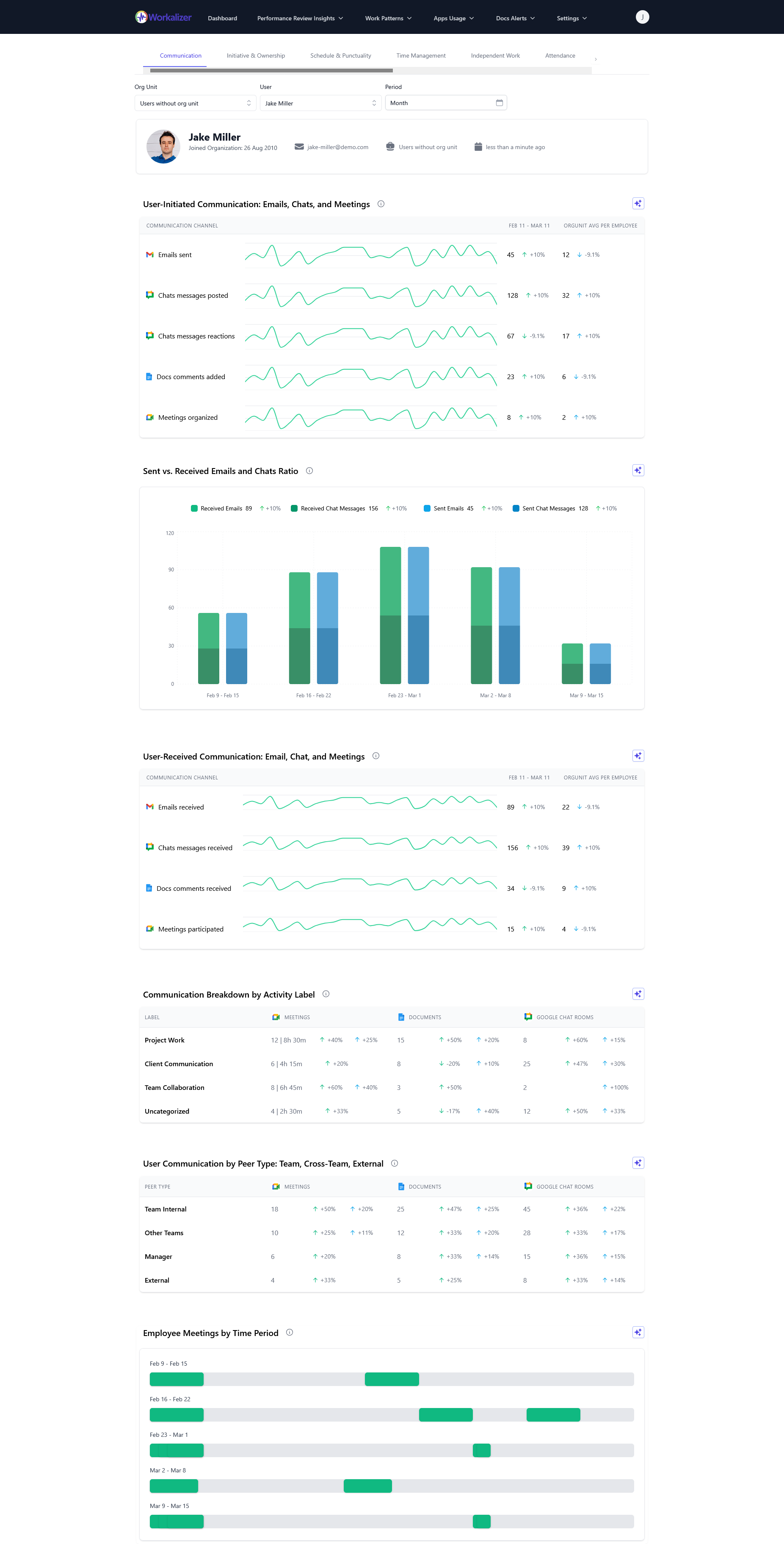
This is where Workalizer steps in. We understand that true efficiency and productivity gains don't come from generic AI solutions, but from specialized insights derived from your unique operational data. Workalizer is an AI-powered platform providing performance review insights based on your company’s actual usage of Google Workspace.
We analyze signals from Gmail, Drive, Chat, Gemini, and Meet to provide data-driven, unbiased productivity analytics. This isn't about surveillance; it's about understanding how your teams truly collaborate, where efficiencies can be gained, and where friction points exist. For example, by analyzing how frequently and effectively teams use a google drive file share link, or how communication flows within Google Chat, we can provide actionable insights into collaboration patterns and potential areas for improvement.
Our goal is to give HR leaders and C-Suite executives the objective data they need to make informed decisions, foster a culture of high performance, and avoid the 5 AI Productivity Paradoxes: What HR Leaders Need to Master in 2026. We help you move beyond anecdotal evidence to a clear, quantitative understanding of your organizational efficiency, ensuring AI serves as an accelerant, not a distraction.
The Path Forward for Enterprise Leaders in 2026
The year 2026 demands a sophisticated approach to AI. Enterprise leaders must:
- **Prioritize Quality over Quantity:** Reject the notion that more AI-generated content equals more value. Focus on specialized AI applications that deliver precise, verified insights.
- **Embrace Data-Driven Decisions:** Leverage platforms that provide unbiased, actionable data to guide your AI strategy and measure its impact.
- **Seek Specialization:** Invest in AI tools designed for specific business functions or industry challenges, rather than generic solutions.
- **Continuously Optimize Processes:** Use AI not just to automate, but to fundamentally rethink and improve operational workflows, mirroring the success seen in cost reduction initiatives.
The choice is clear: succumb to the "slop" and dilute your enterprise's potential, or strategically harness specialized AI to drive unprecedented efficiency and innovation. The future of your organization's productivity in 2026 hinges on this discernment.