5 Unavoidable Tech Shifts Redefining Workforce Productivity in 2026
The Future of Work is Now: Are Your Productivity Strategies Keeping Up?
It’s April 20, 2026, and the pace of technological evolution isn’t just “fast”; it&rsquos a relentless current reshaping the very bedrock of our professional lives. For HR Leaders, Engineering Managers, and C-Suite Executives, staying ahead isn’t a luxury—it’s an existential necessity. The “future of work” isn’t some distant horizon; it’s what’s happening in our Google Workspace today, driven by innovations that are both subtle and seismic.
As a Senior Tech Writer at Workalizer.com, I’ve seen firsthand how companies struggle to bridge the gap between emerging tech and measurable productivity. Traditional performance metrics are increasingly obsolete in a world powered by AI, global connectivity, and ever-evolving digital tools. The good news? The same forces driving this change also offer unprecedented opportunities for data-driven insights. Let’s dive into five unavoidable tech shifts that are redefining workforce productivity this year, and what they mean for your organization’s efficiency.
1. Hyper-Connected Workforces: The Sky’s No Longer The Limit
The dream of ubiquitous, high-speed internet is rapidly becoming a reality, thanks to breakthroughs in high-altitude platform systems (HAPS). Just recently, Sceye’s HAPS completed its endurance testing, marking a significant step toward wider deployment of floating internet infrastructure. This isn’t just about bringing internet to remote villages; it’s about creating an even more robust and reliable global network for businesses.
What does this mean for your workforce? It means “remote” and “hybrid” work models will become even more seamless and geographically unbound. Teams can be truly distributed across continents, collaborating in real-time with minimal latency. For HR leaders, this shift necessitates a deeper understanding of how productivity scales across diverse locations and time zones. You need tools that can provide unbiased analytics on engagement and output, regardless of where your employees are logging in from. Workalizer, by analyzing signals from Google Workspace, is uniquely positioned to offer these insights, ensuring your globally dispersed teams are not just connected, but effectively productive. You can read more about this innovation on Mashable.
2. AI’s Deeper Integration: Smarter Assistants, Smarter Workflows
Artificial Intelligence is no longer a futuristic concept; it’s an embedded reality in our daily tools. This year, we’re seeing a significant revamp of personal AI assistants, with reports from Bloomberg’s Mark Gurman suggesting Apple’s Siri is undergoing a “significant revamp” ahead of WWDC ’26. The new Siri is expected to feature a “Search or Ask” prompt within the Dynamic Island, complete with a distinctive glowing cursor, as teased in the Apple WWDC 26 logo. This isn’t just a cosmetic change; it signals a deeper integration of AI into user interfaces, making AI interaction more intuitive and pervasive.
For businesses leveraging Google Workspace, this trend is critical. AI-powered tools like Gemini are becoming central to generating content, summarizing meetings, and streamlining communications. The question isn't if your employees are using AI, but how effectively they’re integrating it into their workflows. Understanding this allows you to optimize training, identify power users, and ensure your team is maximizing these powerful capabilities. Workalizer helps you see beyond mere usage statistics, providing insights into how AI tools within Google Workspace translate into tangible productivity gains. If you're experiencing issues with specific AI tools, understanding their nuances is key, as we discussed in our post on Fixing Gemini Mobile Image Editing: When Tools Disappear and Errors Emerge, highlighting the importance of reliable AI integration.
3. The Mobile-First Imperative: Devices Shaping Collaboration
The evolution of mobile hardware continues to push the boundaries of productivity. Samsung’s “limited run” Galaxy Z TriFold, a device pushing innovative form factors, reportedly sold out completely. This isn’t just about consumer demand for flashy gadgets; it’s a clear signal that employees are increasingly relying on advanced, adaptable mobile devices to get work done, often leveraging the flexibility of foldable screens for multitasking and complex tasks on the go.
This trend underscores the mobile-first imperative for collaboration. Your teams are no longer tethered to desktops; they’re creating, sharing, and reviewing documents from phones and tablets. This makes understanding mobile usage patterns within Google Workspace crucial. How efficiently are team members collaborating on shared documents from their devices? Are they effectively using features like “how to create a shared folder in Google Docs” to streamline project workflows? Workalizer provides the data to evaluate these mobile collaboration dynamics, giving you a holistic view of productivity across all device types. It’s essential to know “what happens when you share a file on Google Drive” from a mobile device versus a desktop, as the context and efficiency can differ significantly.
4. Economic Headwinds & the Quest for Efficiency
While tech innovation soars, the broader economic landscape presents its own set of challenges. This year, the automotive industry, for example, is facing a “rough patch,” with an average new car price of $49,353 at the start of 2026, according to Kelley Blue Book. Factors like the 2025 tariffs and slowing EV demand are forcing “tough decisions” for manufacturers. These micro-economic tremors are indicative of a larger trend: businesses across sectors are under immense pressure to optimize resources and maximize efficiency.
In this environment, every dollar counts, and every hour of employee time must be productive. “Doing more with less” isn’t just a mantra; it’s a strategic imperative. For HR and C-suite, this means moving beyond gut feelings and subjective performance reviews. You need concrete data to identify bottlenecks, streamline processes, and ensure your workforce is operating at peak efficiency. Workalizer delivers this by transforming raw usage data from Google Workspace — from Gmail activity to Drive collaboration — into actionable insights that highlight productivity strengths and areas for improvement. Understanding how your teams manage digital assets, like Navigating Accidental Deletions: Restoring Google Drive Files and Monitoring Storage Usage, becomes part of this overall efficiency drive.
5. Data-Driven Performance: The New Mandate for HR Leaders
Bringing these shifts together, a clear mandate emerges for HR leaders: performance management must be data-driven. The days of relying solely on annual reviews and anecdotal evidence are over. In a world of hyper-connected, AI-augmented, mobile-first workforces operating under economic scrutiny, you need an unbiased, real-time understanding of productivity.
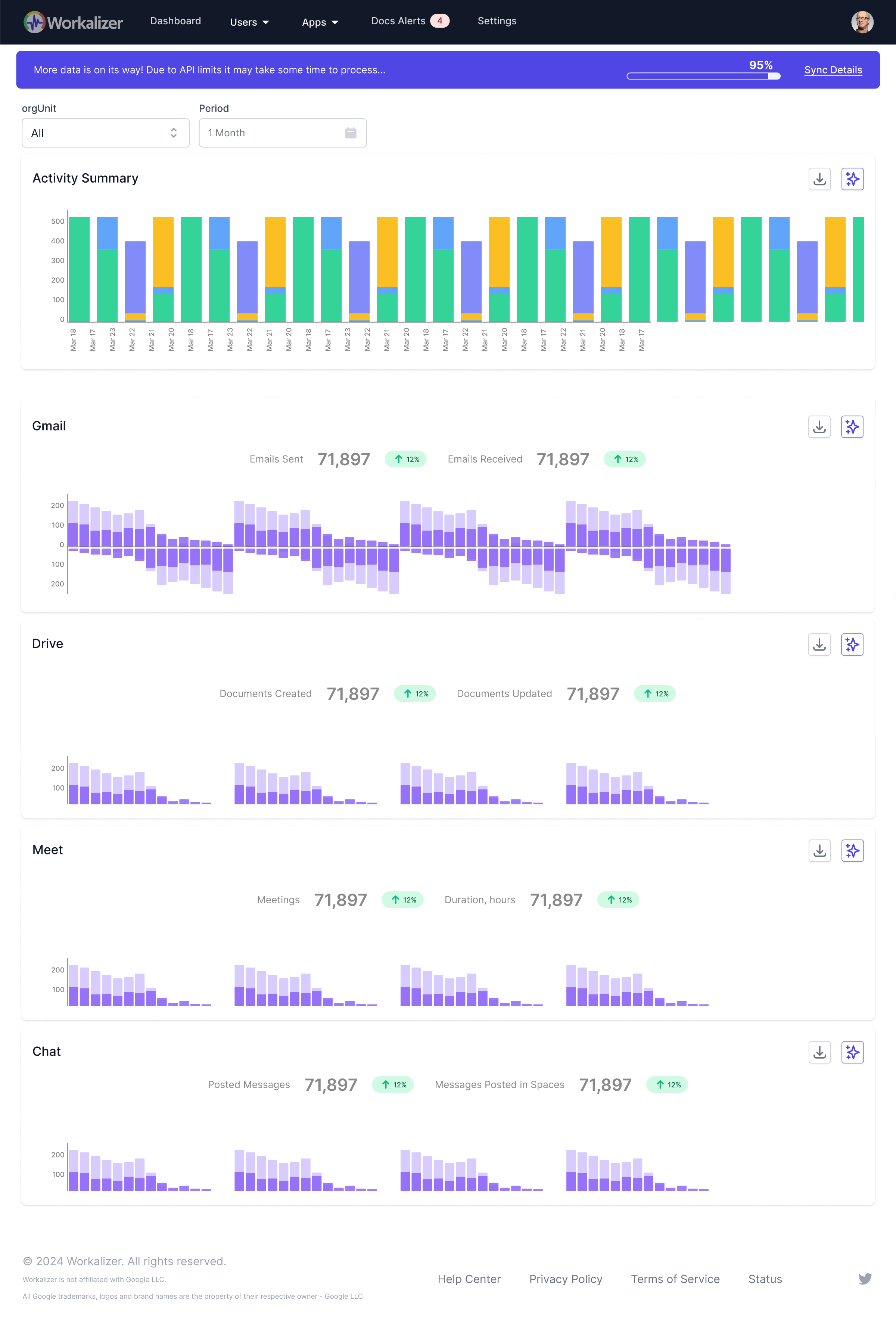
This is where Workalizer shines. We analyze the rich tapestry of signals from your company’s Google Workspace — Gmail, Drive, Chat, Gemini, and Meet — to provide unbiased, data-driven productivity analytics. We don’t just tell you “what” happened; we help you understand “how” and “why,” empowering you to make strategic decisions that boost organizational efficiency and foster a high-performing culture. Don’t let these tech shifts leave your organization behind. Embrace the power of data to truly understand and elevate your workforce’s potential.
Ready to Transform Your Performance Reviews?
The future is here, and it’s powered by data. Workalizer is your partner in navigating these complex tech shifts, transforming your Google Workspace usage into actionable insights. Stop guessing and start leading with conviction. Visit Workalizer.com today to learn how we can help your organization thrive in 2026 and beyond.