5 Pillars of Peak Performance: How Data-Driven Insights Define Productivity in 2026
As we navigate April 2026, the discourse around productivity has shifted dramatically. Gone are the days of simply clocking hours; today's organizational leaders, from HR VPs to C-suite executives, demand tangible, data-driven insights into what truly drives performance. The relentless pace of innovation, particularly with AI, means that traditional metrics often fall short, failing to capture the nuanced reality of how work gets done. If you're feeling that your teams are busy but not necessarily productive, you're not alone. The challenge isn't just about working harder, but working smarter, with precision and purpose.
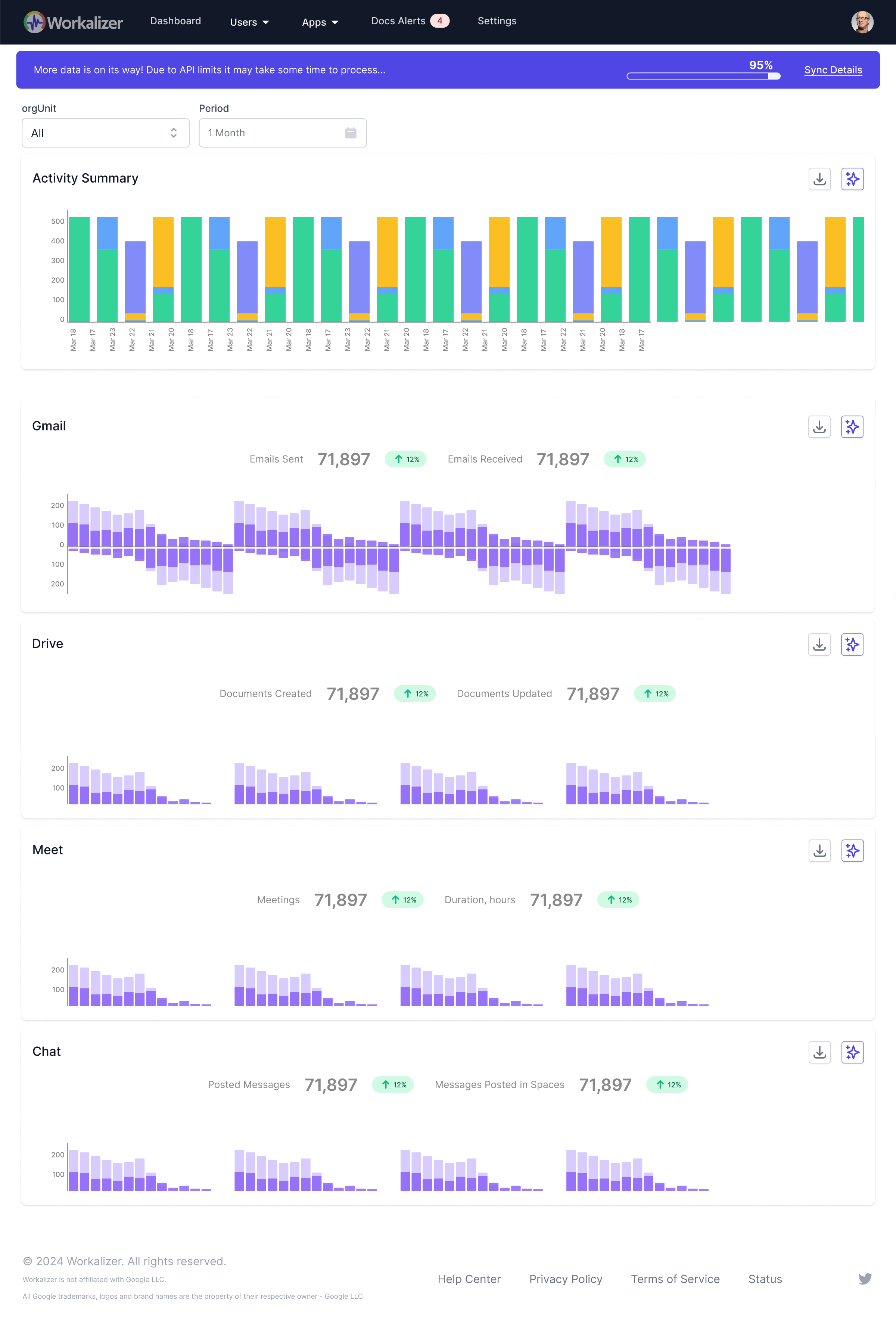
At Workalizer.com, we believe that understanding productivity begins with unbiased data. By analyzing signals from your Google Workspace — Gmail, Drive, Chat, Gemini, and Meet — we provide the clarity you need to foster a truly high-performing culture. This isn't about surveillance; it's about empowerment, identifying bottlenecks, celebrating successes, and optimizing workflows based on real-world usage. Let's dive into the five critical pillars that define peak performance in 2026, backed by insights that cut through the noise.
1. Embrace Individual Rhythms and Preferences for Optimal Flow
One of the most overlooked aspects of productivity is the individual. We're not machines; our energy levels, focus, and creativity ebb and flow throughout the day. Forcing a 'one-size-fits-all' work schedule is a recipe for burnout and underperformance. As highlighted by Get Organized Wizard, a significant reason for low productivity is that many individuals ignore their own preferences. Some thrive in the morning chaos, others require quiet evenings for deep work. Do your employees truly have the autonomy to structure their time and environment for maximum effectiveness?
Workalizer's analytics help HR leaders and managers understand these patterns at an aggregate level, identifying peak collaboration times versus periods best suited for individual focus. This isn't about micromanagement; it's about creating a flexible framework that respects natural human rhythms, leading to more engaged and effective teams. When employees are empowered to work when they are most productive, the quality and speed of output naturally increase. It's a fundamental shift from rigid schedules to results-oriented flexibility.
2. Cultivate Strategic Focus: Prioritizing Impact Over Activity
In a world overflowing with tasks, distinguishing between 'busy work' and 'impactful work' is paramount. The temptation to believe 'there's time for everything' is a dangerous trap, as it often keeps the truly important tasks out of reach. Identifying which activities truly matter is a skill that organizations must foster.
This pillar is about ruthless prioritization and effective delegation. Megan Hyatt Miller, CEO of Full Focus, emphasizes the importance of getting clear on where to invest time and what to delegate. For engineering managers, this might mean ensuring developers aren't bogged down in administrative tasks when their core skill set is coding. For marketing teams, it's about focusing on campaigns that move the needle, not just filling social media calendars.
Our analytics can pinpoint where time is being spent — identifying projects or communication channels that absorb disproportionate effort without yielding commensurate results. Furthermore, enhancing collaboration tools is key. Knowing how to create a shared Google document efficiently, for instance, can drastically reduce back-and-forth emails and ensure everyone is working from the latest information, freeing up valuable time for strategic initiatives. This focus on high-value activities ensures that effort translates directly into progress.
3. Prioritize the Human Element: Happiness, Balance, and Mental Well-being
It's no secret that happiness and productivity are deeply intertwined. When employees are stressed, distracted, or unhappy, their effectiveness plummets. A study cited by Get Organized Wizard noted that when employees overwork, they often find themselves less effective and productive, potentially spending eight hours to accomplish what could take two. This isn't just about morale; it's a direct hit to your bottom line.
In 2026, progressive employers are actively supporting the mental health of their employees through flexible work schedules, open communication, and accessible resources. A healthy work-life balance isn't a perk; it's a foundational requirement for sustained high performance. Workalizer can help identify patterns that might indicate burnout risk, such as unusually long working hours or late-night activity spikes, allowing HR to intervene proactively with support and resources.
This empathetic approach to productivity is critical for talent retention and fostering a resilient workforce. To truly understand the broader impact of artificial intelligence on your teams, consider diving into The Future of Work: How AI is Reshaping Productivity in 2026 and Beyond, which further explores this crucial balance.
4. Combat Procrastination with Clarity and Reduced Friction
Procrastination isn't always about laziness; often, it stems from a lack of clarity or overwhelming distractions. When employees aren't sure what success looks like or where to begin, tasks languish. The solution, as advised by Get Organized Wizard, is to define success clearly and dump distractions.
For organizations, this means streamlining processes and minimizing cognitive load. Think about how easily your teams can access necessary information or collaborate with external partners. For instance, simplifying how to share Google Drive files with non-Google users can prevent significant delays and frustration, ensuring projects move forward without unnecessary hurdles. Workalizer provides insights into communication and document flow, highlighting areas where information silos or complex sharing procedures might be inadvertently fueling procrastination.
By creating an environment where goals are explicit, tools are intuitive, and distractions are minimized, you empower your teams to move forward with confidence and efficiency. This reduction in friction is a silent yet powerful driver of productivity.
5. Leverage AI-Powered Performance Management for Unbiased Growth
The most transformative pillar for productivity in 2026 is the intelligent application of AI in performance management. The AssessTEAM blog, in its discussion of top performance management metrics, highlighted AI-powered solutions as a key trend. This isn't about replacing human judgment but augmenting it with objective data.
Workalizer is at the forefront of this revolution. By analyzing Google Workspace signals, we provide unbiased productivity analytics that identify trends, highlight areas of excellence, and pinpoint opportunities for improvement. This data offers job clarity to employees and allows managers to make data-driven decisions that boost engagement, morale, and overall productivity. Imagine understanding which communication channels are most effective for certain types of projects, or identifying teams that excel in cross-functional collaboration based on their Drive and Chat activity.
This approach moves beyond subjective performance reviews, offering concrete evidence of contribution and areas for development. It's a strategic imperative for any organization aiming for sustainable growth and efficiency in the modern era. For a deeper dive into how AI is truly impacting your enterprise, explore AI's Dual Edge: 4 Critical Trends Shaping Enterprise Productivity in 2026.
Conclusion: The Future of Productivity is Data-Driven and Human-Centric
The journey to peak organizational performance in 2026 is multifaceted, requiring a blend of technological sophistication and human empathy. It's about respecting individual working styles, focusing on high-impact activities, nurturing well-being, simplifying workflows, and leveraging AI to provide objective, actionable insights. These five pillars are not independent; they are interconnected elements of a holistic strategy that empowers every employee to contribute their best.
At Workalizer.com, we are committed to providing HR leaders, engineering managers, and C-suite executives with the tools to navigate this new landscape. By transforming raw Google Workspace data into clear, unbiased performance insights, we help you build a culture where productivity isn't a buzzword, but a measurable, sustainable reality. Stop guessing, start knowing. Discover how Workalizer can unlock your team's full potential today.