5 Data-Driven Strategies to Supercharge Productivity in Google Workspace This Year
Introduction: The Productivity Imperative in 2026
In the fast-paced digital landscape of 2026, organizational efficiency is no longer a luxury—it's a necessity. As companies navigate increasingly competitive markets, the ability to maximize productivity within their existing technology ecosystems becomes a critical differentiator. Google Workspace, a ubiquitous suite of tools for collaboration and communication, offers a wealth of opportunities for optimization. However, many organizations struggle to unlock its full potential. This year, the key lies in leveraging data-driven insights to identify bottlenecks, streamline workflows, and empower employees to work smarter, not harder.
Google Workspace performance dashboard
1. Embrace AI-Powered Analytics for Performance Insights
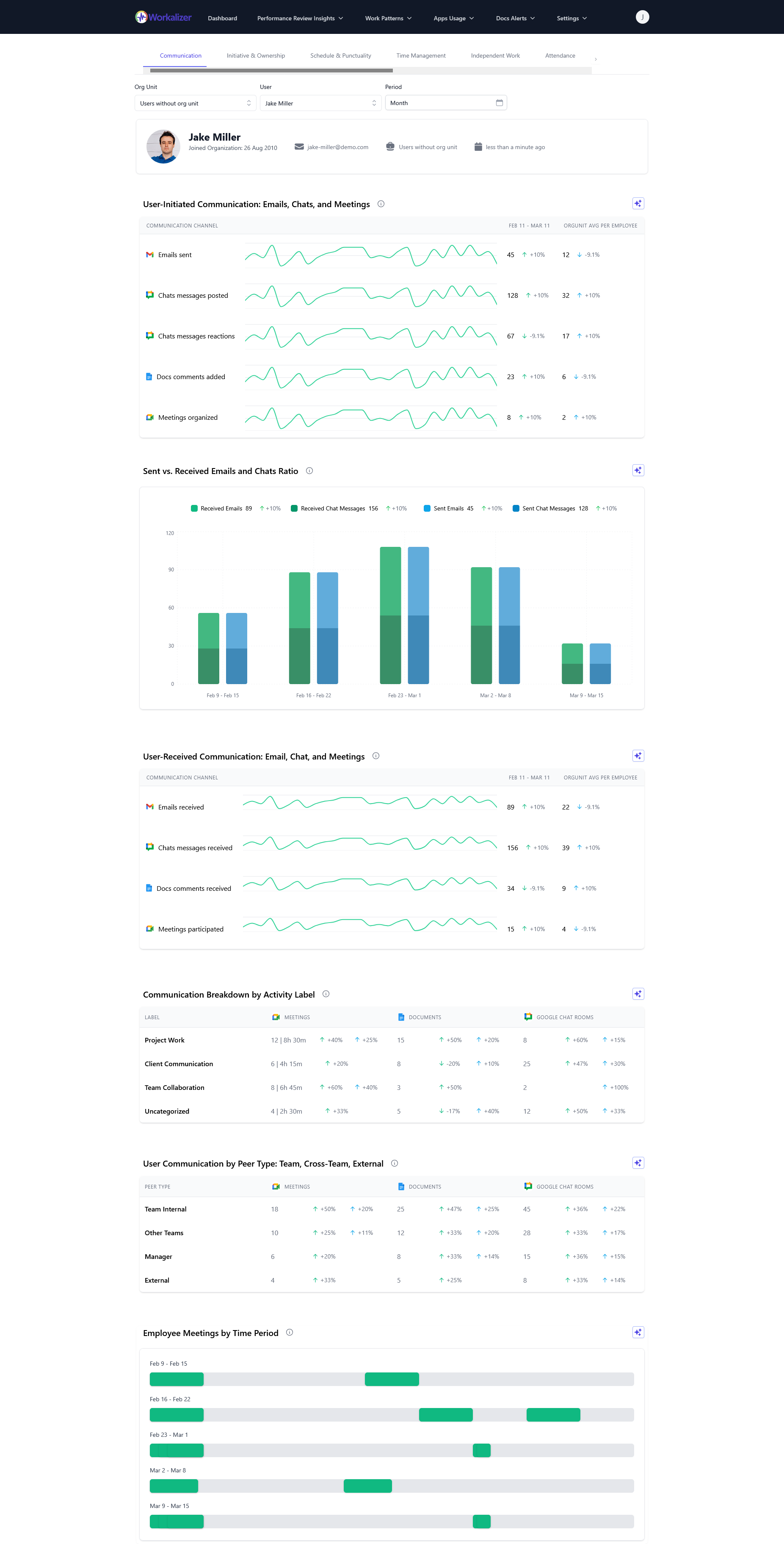
The days of relying on gut feelings and subjective observations for performance reviews are over. In 2026, AI-powered analytics platforms like Workalizer are revolutionizing how companies understand and improve productivity within Google Workspace. By analyzing signals from Gmail, Drive, Chat, Gemini, and Meet, these platforms provide data-driven, unbiased insights into employee workflows and collaboration patterns.
For example, Workalizer can identify teams that are spending excessive time in meetings, highlight individuals who are struggling with email overload, or pinpoint bottlenecks in document collaboration. This granular level of visibility enables HR leaders, engineering managers, and C-suite executives to make informed decisions about resource allocation, process optimization, and employee training. Rather than relying on anecdotal evidence, companies can now base their strategies on concrete data, leading to more effective and impactful interventions. To ensure that everyone is on the same page, you can easily share large files with google drive to give access to important reports.
2. Optimize Communication Channels to Reduce Information Overload
Information overload is a significant drain on productivity. Employees spend countless hours sifting through emails, chat messages, and notifications, struggling to prioritize tasks and stay focused. To combat this, organizations must optimize their communication channels and establish clear guidelines for using different tools within Google Workspace.
For instance, consider implementing a policy that encourages the use of Google Chat for quick, informal communication and Gmail for more formal, documented exchanges. Train employees on how to effectively use features like labels, filters, and priority inbox to manage their email flow. Furthermore, explore the potential of AI-powered tools to automatically summarize email threads, filter out irrelevant messages, and prioritize urgent requests. By streamlining communication, companies can free up valuable time and attention, allowing employees to focus on their core responsibilities. It's also important to know how to share a google drive document with others effectively to prevent unnecessary emails.
Case Study: Reducing Meeting Fatigue
One Workalizer client, a mid-sized engineering firm, discovered through our analytics platform that its employees were spending an average of 15 hours per week in meetings. This was significantly higher than the industry benchmark of 10 hours. By analyzing meeting attendance, duration, and frequency, the firm identified several recurring meetings that were either unnecessary or poorly structured. They then implemented a policy that required meeting organizers to justify the purpose of each meeting, set clear agendas, and limit attendance to only essential participants. As a result, the firm reduced its overall meeting time by 20%, freeing up valuable time for employees to focus on project work.
Automated workflow using Google Apps Script
3. Automate Repetitive Tasks with Google Workspace Integrations
Many employees spend a significant portion of their day performing repetitive, manual tasks that could be easily automated. Google Workspace offers a wide range of integrations with third-party apps and services that can streamline workflows and free up valuable time.
For example, consider using Google Apps Script to automate tasks like generating reports, updating spreadsheets, or sending email reminders. Explore the potential of integrating Google Forms with your CRM system to automatically capture leads and track customer interactions. Furthermore, leverage the power of AI-powered tools to automate tasks like data entry, document summarization, and language translation. By automating repetitive tasks, companies can significantly reduce errors, improve efficiency, and empower employees to focus on more strategic and creative work. Don't forget to check out our guide to Google Workspace Admin's Role in Calendar Management to ensure everything runs smoothly.
4. Foster a Culture of Continuous Learning and Skill Development
In the ever-evolving digital landscape, continuous learning and skill development are essential for maintaining a competitive edge. Organizations must invest in training programs that equip employees with the skills they need to effectively use Google Workspace and other productivity tools.
Offer workshops and online courses on topics like advanced Gmail features, Google Sheets formulas, and Google Apps Script programming. Encourage employees to explore the vast library of resources available on the Google Workspace Learning Center. Furthermore, foster a culture of knowledge sharing and collaboration by creating internal forums where employees can share tips, tricks, and best practices. By investing in employee development, companies can empower their workforce to become more productive, innovative, and engaged. As Workalizer continues to evolve, staying updated on these skills is vital. You may also want to read 5 Ways to Supercharge Productivity by Understanding Your Work Rhythms.
Benchmark: The Impact of Training
A recent study by the Association for Talent Development (ATD) found that companies that invest in employee training experience a 24% higher profit margin and a 218% higher income per employee. This underscores the significant return on investment that can be achieved by prioritizing employee development.
Employee well-being and work-life balance
5. Prioritize Employee Well-being and Work-Life Balance
Employee well-being and work-life balance are not just nice-to-haves—they are essential for sustained productivity. Overworked and stressed employees are more likely to experience burnout, decreased motivation, and reduced performance. To foster a healthy work environment, organizations must prioritize employee well-being and promote work-life balance.
Encourage employees to take regular breaks, disconnect from work during off-hours, and utilize features like Google Calendar's out-of-office settings to manage their availability. Implement policies that discourage after-hours emails and promote flexible work arrangements. Furthermore, offer resources like mindfulness training, stress management workshops, and employee assistance programs to support employee well-being. By prioritizing employee well-being, companies can create a more engaged, productive, and resilient workforce. According to OpenAI, ChatGPT now has more than 900 million weekly active users, highlighting the increasing importance of managing digital overload and promoting well-being in the age of AI (Search Engine Land).
Conclusion: Data-Driven Productivity for a Brighter Future
In 2026, the path to Google Workspace productivity lies in embracing data-driven strategies. By leveraging AI-powered analytics, optimizing communication channels, automating repetitive tasks, fostering continuous learning, and prioritizing employee well-being, organizations can unlock the full potential of their technology ecosystems and achieve sustained success. The advancements at MWC 2026, including AI and satellite connectivity (Android Central), further emphasize the need for adaptable and efficient workflows. As Tesla's rivals claim longer-range EVs (Digital Trends), the race for innovation continues, underscoring the importance of efficient resource allocation and productivity. By embracing these strategies, companies can not only improve their bottom line but also create a more engaged, productive, and fulfilling work experience for their employees.