The Future of Productivity: Redefining Organizational Efficiency in 2027
It’s Saturday, May 2, 2026, and if you’re reading this, you’re likely grappling with the same question many HR leaders, engineering managers, and C-Suite executives are: What does 'productivity' even mean anymore? The term feels stretched thin, burdened by endless AI hype cycles and the lingering shadows of remote work adjustments. Yet, the imperative for true organizational efficiency has never been stronger. We’re not just talking about getting more done; we’re talking about getting the right things done, intelligently and sustainably.
At Workalizer.com, we believe the path to redefined productivity in 2027 isn't about working harder, but working smarter, informed by unbiased, data-driven insights. Forget gut feelings and annual reviews based on vague observations. The future demands a granular understanding of how your teams actually work, collaborate, and innovate within the digital ecosystem you provide.
The Shifting Sands of Productivity in 2026
This year has solidified one truth: the AI revolution isn't just coming; it's here, and it's fundamentally reshaping our understanding of work. While AI promises unprecedented gains, it also introduces complexities – what we've termed the 5 AI Productivity Paradoxes: What HR Leaders Need to Master in 2026. Are your teams truly more productive, or are they just generating more output faster, without a clear impact on strategic goals?
Traditional performance metrics, often reliant on hours logged or tasks checked off, are increasingly insufficient. They fail to capture the nuances of modern collaboration, the impact of context switching, or the silent drain of digital distractions. As Rajat Mathur, Sales Director at AssessTEAM, observed in his 2025 analysis of performance metrics, the focus must shift towards more holistic indicators of employee contribution and engagement.
The Human Element: Beyond Just Output
Before we dive into the data, let's acknowledge a fundamental truth: productivity isn't a machine; it's deeply human. Ignoring individual preferences, for instance, can turn a potential dynamo into a 'virtual zombie,' as noted by Get Organized Wizard. Some thrive in the morning chaos, others require evening tranquility and deep focus. Understanding these rhythms, and allowing for flexibility, is paramount.
Moreover, the link between happiness and productivity is undeniable. When employees are stressed or frustrated, their efficiency plummets. It's not about overworking; it's about work-life balance, effective breaks, and scheduling work during peak productive times. Employers play a critical role here, fostering a culture of open communication and providing mental health support, as highlighted in research on happiness and productivity at work. The perennial challenge of procrastination, often stemming from a lack of clarity or overwhelming distractions, further underscores the need for supportive structures and clear goal definition, as explored by Get Organized Wizard on overcoming procrastination.
This human-centric view requires leaders to move beyond simply measuring 'activity' to understanding 'impact' and 'well-being.' Without this foundation, even the most advanced AI tools will fall short of their potential.
Bridging the Gap: The Workalizer Advantage
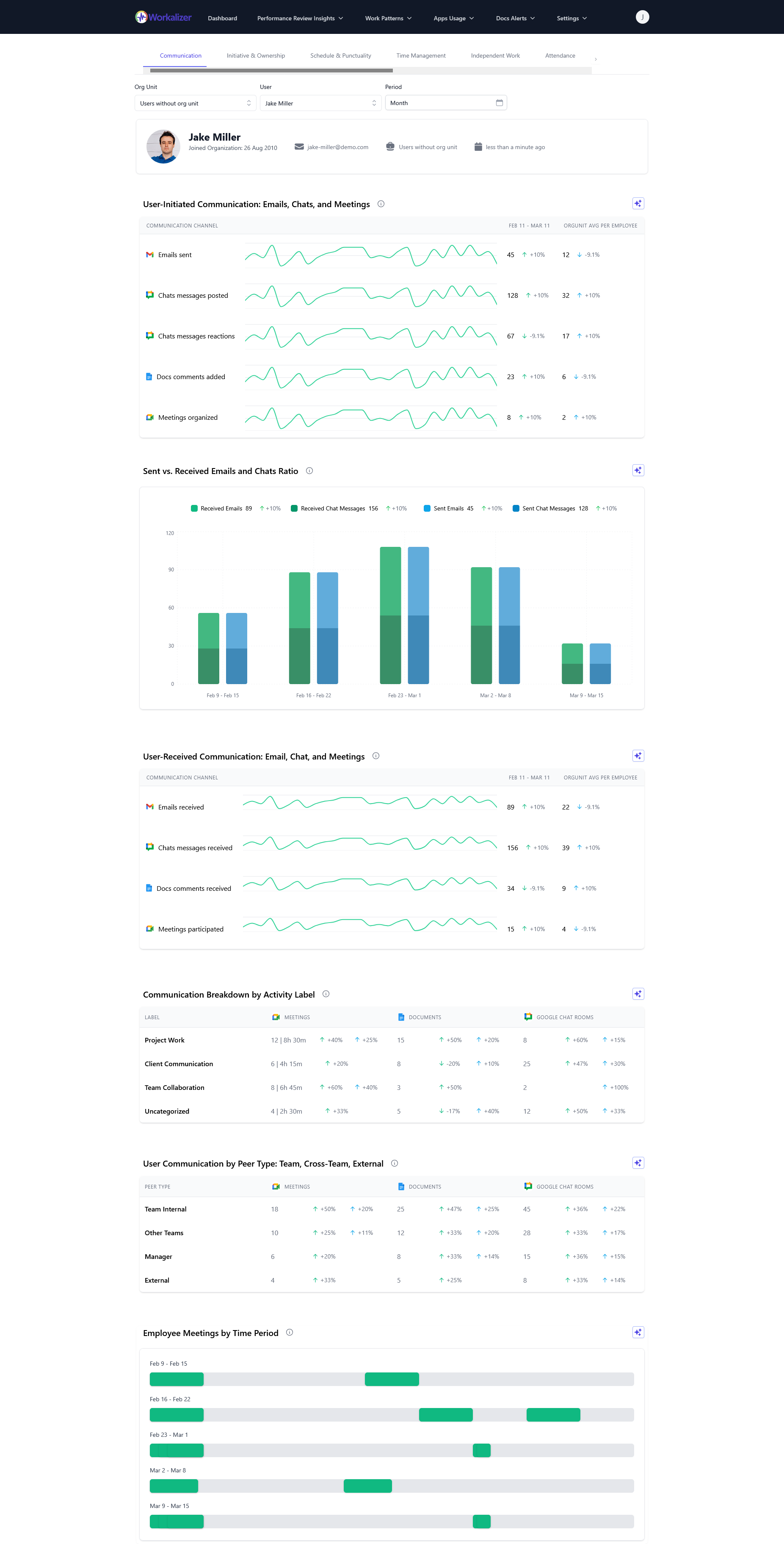
This is where Workalizer steps in. We analyze signals from your company’s Google Workspace usage – Gmail, Drive, Chat, Gemini, and Meet – to provide data-driven, unbiased productivity analytics. We don't just tell you *if* work is happening; we help you understand *how* it's happening, identifying patterns that reveal true efficiency, potential bottlenecks, and areas for improvement.
Consider the simple act of collaboration. How often do teams drive google share files? Is it an efficient exchange, or are files getting lost in a labyrinth of permissions and outdated versions? Our analytics can reveal the frequency of file sharing, the engagement with shared documents, and the overall collaborative health of a project. Similarly, by understanding how teams are using google docs to share documents and co-edit, we can pinpoint effective collaboration strategies and identify where teams might benefit from better training or streamlined workflows. These granular insights transform anecdotal observations into actionable intelligence.
Key Metrics for 2027: What Leaders Must Track
Looking ahead to 2027, the focus for performance management must be dynamic, continuous, and deeply integrated with daily operations. AssessTEAM's insights on top performance management metrics, though published in 2025, remain highly relevant, emphasizing job clarity, continuous feedback, employee engagement, and robust goal setting via OKRs. These aren't just buzzwords; they are the pillars of a truly productive organization.
Workalizer augments these traditional metrics by providing the underlying data from your digital workspace. We measure:
- Collaboration Velocity: How quickly are teams iterating on shared documents in Drive? Are communication channels in Chat active and efficient?
- Focus Time vs. Meeting Overload: Identifying patterns where deep work is being consistently interrupted by excessive meetings in Meet.
- AI Adoption & Impact: How effectively are tools like Gemini being leveraged? Are they truly enhancing output or simply adding complexity?
- Communication Effectiveness: Beyond just email volume, understanding the responsiveness and resolution rates in Gmail and Chat.
By providing job clarity through continuous, data-driven feedback, we empower employees and managers alike. This simplified approach to employee evaluation and growth, as described by AssessTEAM on online performance management systems, moves beyond yearly appraisals to real-time, actionable insights.
Strategic Leadership in an AI-Driven World
The evolving landscape of AI demands strategic leadership, not reactive management. As we explored in The Future of Productivity: How AI's Evolving Landscape Demands Strategic Leadership in 2026, leaders must shape the environment where AI tools are integrated thoughtfully, ensuring they serve human potential rather than replacing it indiscriminately.
This means embracing a culture where data informs decisions, but human judgment remains supreme. Workalizer doesn't replace managers; it equips them with an x-ray vision into team dynamics, allowing them to proactively address issues, celebrate successes, and tailor support where it’s most needed. It’s about creating an environment where employees feel understood, valued, and empowered to contribute their best, aligning individual productivity with overarching organizational goals.
The Path Forward for 2027
The journey to truly redefine organizational efficiency in 2027 begins with clarity. Clarity on what productivity means for your specific context, clarity on how your teams are actually working, and clarity on the impact of your digital tools. Workalizer provides that clarity, transforming your Google Workspace data into actionable intelligence.
Don't just measure activity; measure impact. Don't just implement AI; integrate it strategically. Empower your leaders with the insights they need to foster a truly efficient, engaged, and future-ready workforce. The future of productivity isn't a mystery; it's a data-informed journey, and Workalizer is your guide.