Are Annual Performance Reviews Officially Obsolete?
The Performance Review Paradox: Are We Wasting Time?
It's December 3, 2025. HR leaders are gearing up for the dreaded annual performance review cycle. But let's be honest: does anyone *really* look forward to these? Are they truly driving performance, or are they a costly, time-consuming ritual that's outlived its usefulness?
The traditional annual review, often a backward-looking exercise, can feel disconnected from the fast-paced realities of today's workplace. Goals set a year ago might be irrelevant now. Feedback can feel stale and impersonal. And the whole process can suck the energy out of both managers and employees.
The question isn't just whether annual reviews are *good*. It's whether they're the *best* use of our time and resources. In an era where technology allows for continuous, data-driven insights, are we clinging to an outdated model?
Consider this: companies that implement continuous performance feedback practices see 44% higher employee retention compared to those that rely solely on traditional reviews. That's a massive difference. It suggests that the *frequency* and *relevance* of feedback are critical drivers of engagement and loyalty. (Upraise.io)
This year, it's time to ask the hard questions. Is it time to ditch the annual review and embrace a more agile, data-driven approach to performance management?
The Case for Continuous Feedback: Data Doesn't Lie
The limitations of the annual review are becoming increasingly clear. In today's dynamic business environment, waiting a full year to address performance issues is simply too slow. Opportunities are missed, problems fester, and employees can become disengaged.
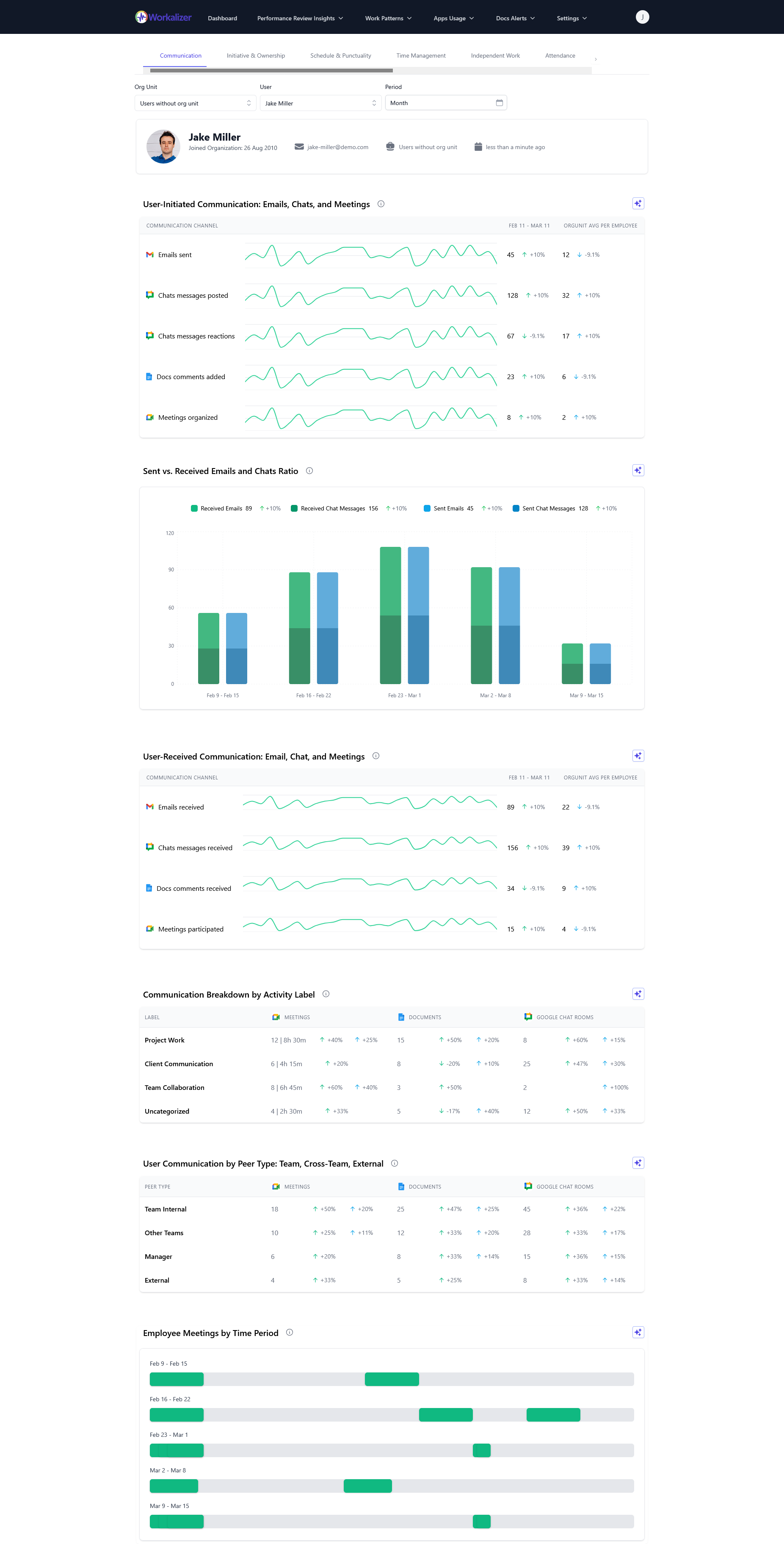
Here's where the power of data comes in. Platforms like Workalizer analyze usage patterns across Google Workspace – Gmail, Drive, Chat, Gemini, and Meet – to provide a real-time, unbiased view of productivity. This allows managers to identify areas where employees are excelling, and areas where they might need support, *as they happen*.
Imagine a scenario where a team member is struggling to meet deadlines. Instead of waiting for the annual review to address this issue, Workalizer could flag a decrease in Drive activity or an increase in after-hours email. This allows managers to proactively intervene, offer assistance, and get the employee back on track.
Furthermore, continuous feedback fosters a culture of growth and development. Employees receive regular input on their performance, allowing them to make adjustments and improve their skills in real-time. This is far more effective than receiving a laundry list of criticisms once a year.
But what about those sensitive situations when you need to **share google doc outside of company**? Workalizer provides insights on how employees are collaborating, ensuring data security policies are being followed and potential risks are identified early.
This shift towards continuous feedback aligns with the needs of today's workforce. Employees crave regular communication, transparency, and opportunities for growth. Annual reviews simply don't cut it anymore.
Workalizer in Action: A Case Study
One of our clients, a mid-sized engineering firm, implemented Workalizer in early 2025. Before Workalizer, they relied solely on annual performance reviews. Managers admitted that these reviews were often subjective and based on limited information. They struggled to get a clear picture of employee productivity and engagement.
After implementing Workalizer, they saw a dramatic improvement. Managers were able to identify high-performing employees and reward them accordingly. They were also able to identify employees who were struggling and provide them with targeted support. Within six months, the company saw a 15% increase in overall productivity and a 10% decrease in employee turnover.
The AI Revolution: Unlocking Deeper Insights
AI is transforming every aspect of the workplace, and performance management is no exception. AI-powered platforms like Workalizer can analyze vast amounts of data to identify patterns and trends that would be impossible for humans to detect. This allows for a more objective and data-driven approach to performance management.
For example, AI can analyze communication patterns to identify employees who are highly collaborative and influential. It can also identify employees who are isolated or disengaged. This information can be used to improve team dynamics and foster a more inclusive work environment.
Furthermore, AI can personalize feedback to each employee's individual needs and goals. Instead of receiving generic feedback, employees receive tailored insights that are relevant to their specific role and responsibilities.
But with great power comes great responsibility. It's crucial to use AI ethically and transparently. Employees should understand how their data is being used and have the opportunity to provide feedback. The goal is to augment human judgment, not replace it.
When considering **google drive file permissions**, AI can flag potential security risks, ensuring that sensitive data is protected. It can also identify areas where employees might need training on data security policies.
The Future of Performance Management: A Hybrid Approach
So, are annual performance reviews officially obsolete? Not necessarily. But they need to evolve. The future of performance management is likely a hybrid approach that combines the best of both worlds: continuous feedback and data-driven insights, augmented by AI.
Annual reviews can still serve a purpose, providing a formal opportunity to discuss long-term goals and career development. However, they should be supplemented by regular check-ins, ongoing feedback, and data-driven insights.
As we move into 2026, HR leaders need to embrace this new paradigm. They need to invest in technology that provides real-time visibility into employee productivity and engagement. They need to train managers on how to provide effective feedback. And they need to create a culture of continuous learning and development.
By embracing a more agile, data-driven approach to performance management, organizations can unlock the full potential of their workforce and achieve sustainable success. Consider exploring The Hyper-Personalized Workspace: How AI is Reshaping Productivity in 2026 for more on the future of work.
For teams already leveraging Android, Reclaim Your Focus: How Android 16's New Features Boost Productivity offers actionable tips to improve focus.