The Hyper-Personalized Workspace: How AI is Reshaping Productivity in 2026
The Dawn of the Hyper-Personalized Workspace
As we stand on the cusp of 2026, the future of work is being rapidly reshaped by artificial intelligence. No longer a futuristic fantasy, AI is now deeply embedded in our daily workflows, particularly within platforms like Google Workspace. But what does this mean for organizational productivity, and how can businesses leverage these advancements to gain a competitive edge? The answer lies in hyper-personalization.
Imagine a workspace that anticipates your needs, provides tailored recommendations, and proactively surfaces the information you require, precisely when you need it. This is the promise of AI-driven personalization, and it's quickly becoming a reality. Google, with its Gemini model, is leading the charge, aiming to transform Workspace into a truly individual experience. According to Google’s VP of product for Search, Robby Stein, people are increasingly seeking advice and recommendations from AI, not just general information. This shift necessitates AI knowing users better to provide uniquely helpful insights. Stein highlighted the opportunity for AI to understand individual preferences through connected services like Gmail, enabling targeted product releases and personalized recommendations.
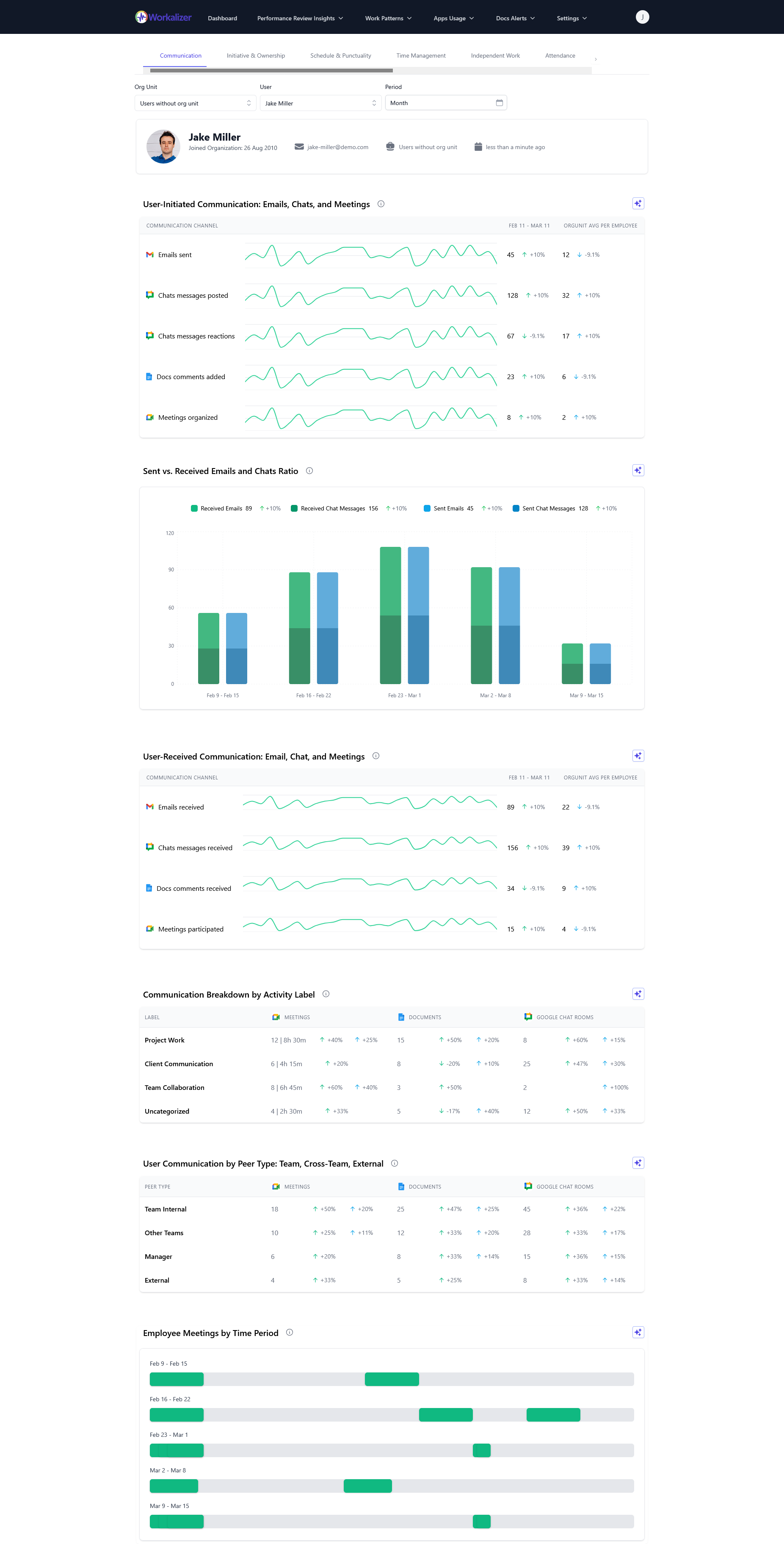
At Workalizer, we're seeing firsthand how this trend is impacting organizations. Our AI-powered platform analyzes Google Workspace usage to provide data-driven performance review insights, and the increasing sophistication of AI models like Gemini is opening up new avenues for personalized productivity enhancement.
The Gemini Effect: A Deeper Dive
Google's Gemini model is more than just an incremental upgrade; it's a paradigm shift. Its integration across the Google ecosystem, including Gmail, Calendar, Drive, Maps, and YouTube, allows it to build a comprehensive understanding of user behavior and preferences. This deep integration enables a level of personalization that was previously unimaginable.
Consider the implications for HR leaders. With Gemini-powered insights, they can identify individual training needs, proactively address potential burnout, and foster a more supportive and engaging work environment. Engineering managers can leverage personalized recommendations to optimize workflows, improve collaboration, and accelerate innovation. And C-suite executives can gain a holistic view of organizational productivity, identifying areas for improvement and making data-driven decisions that drive business growth.
The integration of Gemini within Google Workspace applications is particularly noteworthy. As noted by Gizmodo, Gemini is integrated with Gmail (personal correspondences), Calendar (activity tracking), and Drive (document storage). This level of access allows the AI to learn user habits and preferences, leading to a more tailored experience. The new Chrome browser, also with Gemini integration, can navigate the web and complete tasks on behalf of the user, further streamlining workflows.
The Productivity Implications: Benefits and Challenges
The rise of the hyper-personalized workspace presents both significant opportunities and potential challenges. On the one hand, it promises to unlock unprecedented levels of productivity by streamlining workflows, reducing cognitive overload, and fostering a more engaging and fulfilling work experience. On the other hand, it raises concerns about data privacy, algorithmic bias, and the potential for over-reliance on AI.
Unlocking Productivity Gains
One of the most significant benefits of AI-driven personalization is its ability to streamline workflows. By anticipating user needs and providing tailored recommendations, AI can help employees focus on their most important tasks, reducing distractions and improving overall efficiency. For example, imagine an AI assistant that automatically prioritizes emails based on their importance, suggests relevant documents based on the task at hand, and proactively schedules meetings based on availability and preferences. This level of automation can free up valuable time and energy, allowing employees to focus on more strategic and creative endeavors.
Furthermore, AI can help reduce cognitive overload by filtering out irrelevant information and presenting only the most pertinent data. This is particularly valuable in today's information-saturated environment, where employees are constantly bombarded with emails, notifications, and other distractions. By curating information and providing personalized insights, AI can help employees stay focused and make better decisions.
Addressing the Challenges
However, the hyper-personalized workspace also presents several challenges that organizations must address proactively. One of the most pressing concerns is data privacy. As AI models become more sophisticated, they require access to increasing amounts of personal data, raising questions about how this data is collected, stored, and used. Organizations must be transparent about their data practices and ensure that they comply with all relevant privacy regulations.
Another challenge is the potential for algorithmic bias. AI models are trained on data, and if that data is biased, the model will perpetuate and amplify those biases. This can lead to unfair or discriminatory outcomes, particularly in areas such as hiring, promotion, and performance evaluation. Organizations must carefully audit their AI models for bias and take steps to mitigate any potential negative impacts.
Finally, there is the risk of over-reliance on AI. While AI can be a powerful tool for enhancing productivity, it's important to remember that it's not a substitute for human judgment and critical thinking. Organizations must ensure that employees are properly trained on how to use AI tools effectively and that they understand the limitations of these tools. It's also important to foster a culture of continuous learning and adaptation, so that employees can stay ahead of the curve as AI technology continues to evolve.
DeepSeek's new model represents a growing trend toward more accessible and powerful AI. As ZDNet reports, the rise of such models could challenge the dominance of proprietary AI solutions, potentially democratizing access to advanced AI capabilities and fostering further innovation in the field. This shift could empower smaller businesses and organizations to leverage AI for personalized productivity enhancement without relying on expensive, closed-source platforms.
To effectively leverage AI for personalization, consider how to share using google docs and how to share pdf in google drive, enabling seamless collaboration and information access within your organization.
Embracing the Future of Work
The hyper-personalized workspace is not just a trend; it's the future of work. By embracing AI-driven personalization, organizations can unlock unprecedented levels of productivity, foster a more engaging and fulfilling work experience, and gain a competitive edge in today's rapidly evolving business landscape. However, it's crucial to address the challenges associated with data privacy, algorithmic bias, and over-reliance on AI proactively. By doing so, organizations can harness the power of AI to create a truly human-centered workplace that empowers employees to thrive.
As we move further into 2026, Workalizer remains committed to providing organizations with the insights and tools they need to navigate this new era of work. Our AI-powered platform will continue to evolve, incorporating the latest advancements in AI technology to provide even more personalized and data-driven performance review insights. We believe that the future of work is bright, and we're excited to partner with organizations to help them unlock their full potential.