Streamlining Future-Dated PTO Requests: Optimizing HRIS and Your Google Workspace Dashboard
The Future-Dated PTO Conundrum: A Common HRIS Headache
Imagine this: It's June, and a valued employee wants to book a two-week vacation for Christmas. They know they'll have plenty of PTO accrued by then, but their HRIS throws up a roadblock – it won't let them request the time off because their current balance isn't sufficient. Sound familiar? This frustrating scenario, highlighted in a recent Reddit post, is a surprisingly common pain point for People Ops teams everywhere.
The core issue is an HRIS that prioritizes an employee's immediate PTO balance over their projected accrual. While seemingly logical from a strict accounting perspective, it creates significant operational headaches. Teams resort to maintaining separate Outlook calendars or even physical whiteboards to track future requests, completely undermining the purpose of a centralized HRIS. This fragmented approach not only duplicates effort but also introduces the risk of errors, scheduling conflicts, and a generally poor employee experience.
When confronted with this limitation, many HRIS vendors offer a seemingly simple solution: allow employees to go into negative PTO. However, as the Reddit user pointed out, this comes with its own set of risks, primarily the financial loss incurred when employees leave the company with a negative balance. It's a trade-off many organizations are understandably reluctant to make.
The question then becomes: Is it truly "weird" to want an HRIS that can handle future-dated PTO requests based on projected accruals without resorting to negative balances? The short answer is no. While some systems are configured this way, modern People Ops demands more sophisticated functionality that supports both employee autonomy and organizational efficiency. The idea that this is an unusual request can feel like gaslighting, especially when it directly impacts your team's productivity and employee morale.
Why a Seamless PTO Request Process Matters for Everyone
Beyond the immediate administrative burden, an inefficient PTO request system has ripple effects throughout the organization.
Enhanced Employee Experience and Trust
Employees appreciate transparency and the ability to plan their time off well in advance. When a system prevents them from doing so, it creates frustration and can erode trust. A smooth process demonstrates that the company values work-life balance and empowers employees to manage their time effectively.
Operational Efficiency for People Ops and Managers
Manual workarounds are time sinks. HR and managers spend valuable hours managing external calendars, cross-referencing data, and resolving scheduling conflicts that could be avoided. This diverts focus from strategic People Ops initiatives and can lead to burnout. Efficient processes free up your team to focus on what truly matters: supporting your people.
Data Integrity and Compliance
Fragmented data is unreliable data. When PTO requests are tracked in multiple places, it's easy for discrepancies to arise, leading to payroll errors, compliance risks, and inaccurate reporting. A centralized, accurate system is crucial for maintaining data integrity and ensuring adherence to labor laws.
Strategies for Navigating Future-Dated PTO Challenges
If your HRIS is holding you back, here's how to advocate for change and implement interim solutions.
Review and Refine Your PTO Policy
Start by ensuring your PTO policy is clear, comprehensive, and addresses future-dated requests. Define rules around how far in advance employees can request time off, any blackout periods, and the approval process. A well-defined policy provides a framework, even if your system isn't perfect.
Engage with Your HRIS Vendor (Again!)
Don't accept "that's how it is" as a final answer. Push your HRIS vendor for solutions that allow for projected PTO balances. Many modern HRIS platforms offer this functionality or at least conditional approvals that can be configured. Ask for case studies from other clients who have overcome similar challenges. Emphasize that a truly effective HRIS should integrate seamlessly into your People Ops workflow, much like a comprehensive https workspace google com dashboard provides a unified view of your organization's productivity.
Consider Smart Hybrid Solutions (Temporarily)
If a system overhaul isn't immediately possible, streamline your manual workarounds. Utilize shared digital calendars (like Google Calendar) for initial requests and team visibility. While employees will still need to formally submit through the HRIS when their balance accrues, this provides a transparent way to reserve time and minimize conflicts. Ensure clear communication that the shared calendar is for planning, while the HRIS remains the system of record.
Caution: Always consult with qualified legal counsel when making changes to PTO policies or system configurations to ensure compliance with all applicable labor laws and regulations.
Employee Communication and Training
Transparency is key. Clearly communicate the process for requesting future PTO, including any system limitations and the steps employees need to take. Train managers on how to handle these requests and navigate any hybrid systems. Setting clear expectations can significantly reduce frustration.
Workalizer's Role in Optimizing People Ops Efficiency
While Workalizer doesn't directly manage PTO requests, it plays a crucial role in helping People Ops teams optimize their overall operational efficiency within Google Workspace. When your team is bogged down by manual processes, it impacts their ability to perform strategic work. Workalizer provides the insights to identify these bottlenecks and streamline your workflows.
Where Workalizer Helps:
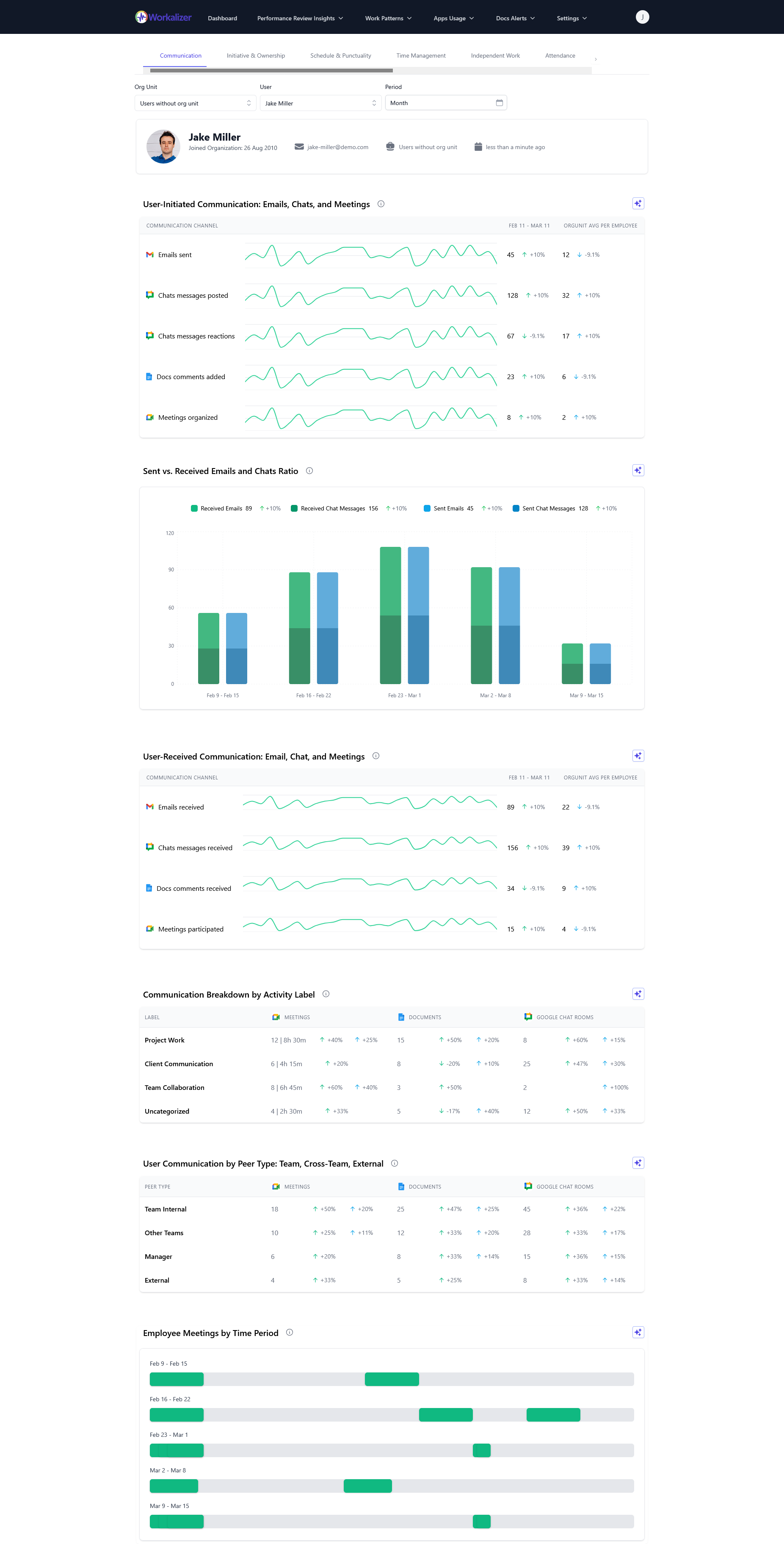
- Understanding Team Activity: If your HR team is spending excessive time on manual calendar management or chasing down information due to HRIS limitations, Workalizer can help you visualize their activity patterns. The https workspace google com dashboard offers a high-level overview of how your team is engaging with Google Workspace tools, helping you spot areas of potential inefficiency.
- Optimizing Information Flow: People Ops teams often manage a wealth of documents related to policies, employee records, and operational guides. Workalizer’s Google Drive Usage Report can help ensure these critical resources are organized, accessible, and not contributing to unnecessary `google drive ram usage` by being duplicated or poorly managed. Efficient document management frees up valuable time.
- Identifying Process Bottlenecks: By analyzing how your team collaborates and uses Workspace tools, Workalizer can indirectly highlight areas where manual workarounds are consuming too much time. This data can then inform decisions about HRIS improvements or process re-engineering.
By ensuring your People Ops team is working as efficiently as possible within Google Workspace, you create a more robust and responsive HR function, even as you advocate for better HRIS solutions.
Key Takeaways: A Checklist for People Ops
Take control of your future-dated PTO challenges with these actionable steps:
- Review Your PTO Policy: Ensure it's clear on future requests and accruals.
- Challenge Your HRIS Vendor: Advocate for projected balance functionality or conditional approvals.
- Implement Smart Hybrid Solutions: Use shared calendars for planning, with clear HRIS submission guidelines.
- Communicate & Train: Keep employees and managers informed about the process.
- Leverage Analytics: Use tools like Workalizer to optimize your People Ops team's overall efficiency within Google Workspace, monitoring your g suite google dashboard for insights into productivity.
Conclusion
The struggle with future-dated PTO requests is a testament to the evolving needs of modern People Ops. It's not "weird" to expect an HRIS to support intuitive, forward-looking functionality. By understanding the problem, advocating for better solutions, and optimizing your internal processes with tools like Workalizer, you can transform a frustrating administrative hurdle into a seamless experience that benefits both your employees and your organization's bottom line. Empower your People Ops team to lead the charge for efficiency and employee satisfaction.