How to Interview for Initiative, Follow-Through, and Troubleshooting: Beyond the Resume for HR & Accounting Roles | Workalizer
The Frustration of the "Dud" Hire: Elevating Your Interview Strategy
It's a common lament in the HR world: you invest time and resources into a hire, their resume shines, the interview feels promising, but then they start, and the reality falls short. A recent Reddit post perfectly captured this frustration, with a user expressing dismay over new hires lacking follow-through, initiative, and basic troubleshooting skills, particularly in HR and accounting roles. If this sounds familiar, you're not alone. The challenge isn't just finding someone with the right technical skills, but uncovering those crucial soft skills and work habits that truly drive success.
At Workalizer, we understand that effective people operations begin long before an employee's first day. It starts with a robust hiring process designed to identify not just what candidates know, but how they act and think. This post will equip you with targeted interview questions and strategies to help you weed out the "duds" and build a team of proactive, problem-solving professionals.
Why Good Hires Go Bad: Unpacking the "Dud" Phenomenon
The disconnect between a candidate's interview persona and their on-the-job performance often stems from several factors:
- Over-reliance on Resumes: Resumes highlight achievements but rarely reveal work style or problem-solving approaches.
- Unstructured Interviews: Without a consistent framework, interviews can become informal chats, failing to probe critical competencies.
- Focus on Technical Skills Only: While essential, technical prowess without initiative or follow-through can lead to stagnation.
- Lack of Clear Expectations: If the hiring team isn't aligned on the core behaviors needed, it's hard to assess for them.
Key Competencies for Success in HR & Accounting
Based on the Reddit user's pain points, three competencies stand out as critical for HR and accounting roles:
- Follow-Through: The ability to complete tasks, meet deadlines, and see projects to completion, even when obstacles arise.
- Initiative: Proactively identifying problems or opportunities, taking ownership, and acting without constant prompting.
- Troubleshooting & Problem-Solving: Diagnosing issues, analyzing root causes, and implementing effective solutions.
Mastering the Interview: Questions to Uncover True Potential
Moving beyond generic questions means crafting behavioral and situational inquiries that reveal a candidate's past actions and predicted future behavior. Here are some of our best questions to help you assess these vital competencies:
Assessing Follow-Through
These questions aim to understand a candidate's commitment to seeing tasks through, even when faced with challenges.
- Behavioral: "Tell me about a time you were responsible for a project or task that faced unexpected obstacles or delays. How did you ensure its completion, and what was the outcome?"
- Behavioral: "Describe a situation where you had multiple competing priorities with tight deadlines. How did you manage your workload to ensure everything was completed accurately and on time?"
- Situational: "You're assigned a critical report due by the end of the day, but a major system crash occurs mid-afternoon, preventing you from accessing necessary data. What are your immediate steps, and how do you ensure the report is still delivered or an appropriate update is provided?"
Probing for Initiative
These questions help identify candidates who are proactive, self-starters, and willing to take ownership beyond their immediate job description.
- Behavioral: "Describe a situation where you identified a process or system that could be significantly improved, even if it wasn't directly your responsibility. What did you do about it, and what was the impact?"
- Behavioral: "Tell me about a time you took on a responsibility or project that was outside your comfort zone or typical duties. What motivated you, and what did you learn?"
- Situational: "You notice a recurring error in a data entry process that isn't directly your responsibility but consistently impacts your team's ability to complete their tasks efficiently. How would you approach this situation?"
Unveiling Troubleshooting & Problem-Solving Skills
For HR and accounting, the ability to diagnose and resolve issues is paramount. These questions test critical thinking and practical application.
- Behavioral: "Walk me through a complex problem you encountered in a previous HR or accounting role. How did you diagnose the root cause, what steps did you take to resolve it, and what was the long-term solution?"
- Situational: "An employee reports an issue with their payroll, stating their direct deposit is incorrect, but all your systems indicate the payment was processed correctly. How would you investigate this discrepancy, and what steps would you take to resolve it for the employee?"
- Situational: "A manager is struggling to find a critical document in Google Drive, claiming it's 'lost' or 'deleted,' but you suspect it's simply misfiled or they lack access. What steps would you take to help them troubleshoot and locate the document, or determine its status?" (Hint: This might involve checking access permissions or leveraging tools to google drive see storage usage for specific files.)
Beyond the Interview: Reinforcing Your Hiring Decisions
While interviews are crucial, a holistic approach strengthens your hiring process:
- Structured Reference Checks: Design reference questions specifically to validate the competencies you've assessed in the interview. Ask previous managers about the candidate's follow-through on projects, their initiative in identifying improvements, and their approach to troubleshooting.
- Work Sample Tests/Assessments: For accounting roles, a short task involving data entry, reconciliation, or spreadsheet analysis can reveal practical skills. For HR, a scenario-based exercise on policy interpretation or employee relations can be invaluable.
- Robust Onboarding & Training: Even the best hires need clear expectations, resources, and support. A structured onboarding process helps new employees understand their role, the company culture, and how their work contributes to the larger goals.
Where Workalizer Helps: From Hiring to High Performance
Once you’ve made that critical hire, the journey to peak performance continues. Workalizer provides the tools to monitor, support, and optimize employee productivity and engagement, particularly for teams leveraging Google Workspace.
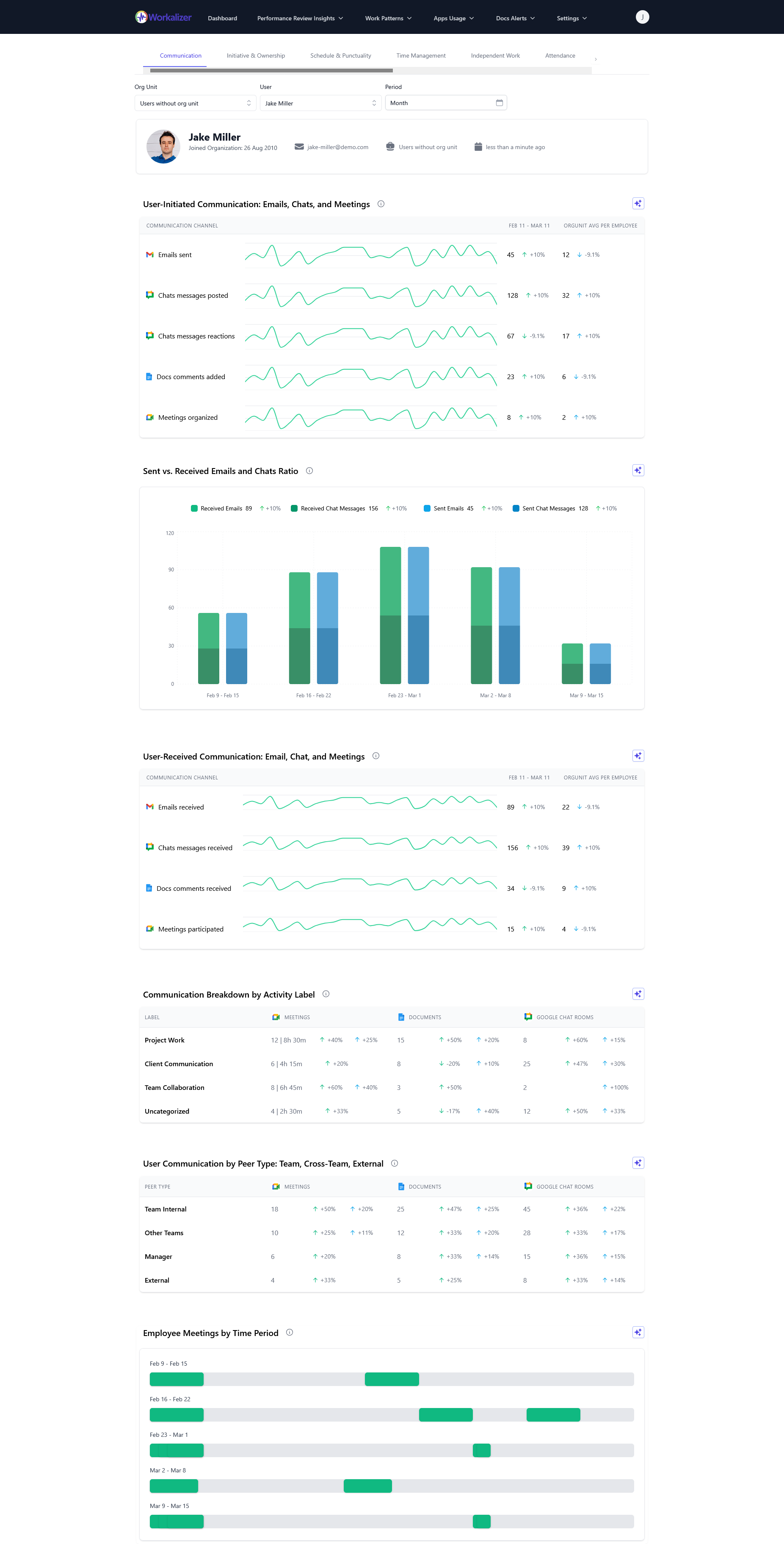
For instance, after a new HR or accounting professional joins your team, you can use Workalizer to gain insights into their work patterns and collaboration:
- Performance Reviews: Leverage Workalizer's Performance Review for Employee, Performance Review for Manager, and Performance Review for Team features to set goals, track progress, and provide structured feedback. This helps ensure that the follow-through and initiative you assessed during interviews translate into measurable results.
- Activity Monitoring (Ethical & Transparent): To understand how effectively new hires are engaging with collaborative tools and managing their workload, you can ethically monitor aggregated data. For example, you might review metrics like google meet duration 2022 for team meetings to see participation patterns, or analyze google drive see storage usage and activity for project-related documents to ensure proactive data management and collaboration.
- Google Workspace Dashboard: Your google suite dashboard login provides a centralized view of activity across your organization, helping managers identify patterns, offer timely support, and ensure new hires are quickly integrating into workflows.
- Activity Labels: Utilize Activity Labels to categorize work and understand where time is being spent, allowing you to coach new hires on efficiency and focus.
Conclusion: Building a Proactive and Accountable Team
Hiring is an art and a science. By moving beyond superficial assessments and focusing on core competencies like follow-through, initiative, and troubleshooting, you can significantly improve your success rate. Combine thoughtful interview questions with robust reference checks and practical assessments. Once hired, leverage tools like Workalizer to foster a culture of accountability and continuous improvement, turning promising candidates into indispensable team members. Stop hiring "duds" and start building a high-performing team that drives your organization forward.