The AI Productivity Paradox: Why Burnout Isn't Going Away in 2026
The AI Productivity Paradox: Why Burnout Isn't Going Away in 2026
It’s April 27, 2026, and the promise of Artificial Intelligence has never been louder. We’ve been told AI will revolutionize our workflows, liberate us from mundane tasks, and usher in an era of unprecedented productivity. Yet, the data tells a starkly different story: employee burnout remains a critical, pervasive issue, threatening talent retention and organizational efficiency across industries. Is AI truly the panacea we hoped for, or are we witnessing a “productivity paradox” where advanced tools inadvertently exacerbate the very problems they were meant to solve?
Consider this unsettling fact: nearly half of cybersecurity professionals are contemplating quitting their jobs. This isn't just a ripple; it's a tidal wave of disillusionment in a sector vital to every modern enterprise. While the ZDNet article highlights this alarming trend within cybersecurity, it’s a symptom of a broader malaise affecting knowledge workers everywhere. The question isn't if your employees are feeling the heat, but how much, and what role AI plays in turning up the temperature.
The AI Promise: More Skills, More Output?
For years, Google Research and other pioneers have championed generative AI as a catalyst for developing “future-ready skills.” The vision is compelling: AI assists with complex problem-solving, frees up cognitive load, and allows employees to focus on higher-value, creative work. We’ve seen impressive strides in areas like code generation, content creation, and data analysis, all designed to make us more effective. The underlying assumption is that by augmenting human capabilities, AI inherently leads to greater satisfaction and reduced stress.
Organizations are investing heavily in AI tools, from advanced analytics platforms to integrated AI assistants like Gemini within Google Workspace. The expectation is a direct correlation between AI adoption and a healthier, more productive workforce. Yet, for many HR leaders, Engineering Managers, and C-Suite Executives, the reality feels disjointed. Productivity metrics might tick up in some areas, but the pervasive sense of overwhelm and exhaustion doesn't seem to recede. What gives?
**The Unseen Costs: Cognitive Load and “AI Fatigue”
The paradox lies in the often-overlooked cognitive load that AI introduces. While AI can automate tasks, it also demands new skills: prompt engineering, critical evaluation of AI outputs, and the constant mental overhead of deciding when and how to integrate AI into existing workflows. This isn't always a seamless augmentation; it can be an additional layer of complexity.
Moreover, the sheer volume of information and communication facilitated by AI can be overwhelming. Tools designed to enhance collaboration, like Google Workspace, become conduits for an incessant flow of messages, documents, and notifications. Are teams effectively using Google Docs to share documents, or are they drowning in shared files, struggling to discern what's critical amidst the noise? The challenge isn't just knowing how to share via Google Docs; it's ensuring that sharing translates into genuine collaboration and not just another notification to triage.
This “AI fatigue” is real. Employees find themselves not just doing their jobs, but also managing their AI tools, validating their outputs, and constantly adapting to new features. This invisible labor adds to their already packed schedules, contributing to the very burnout AI was meant to alleviate. For a deeper dive into the broader implications, read our recent post, The Future of AI: Navigating the Unseen Costs and Unfolding Opportunities in 2026.
Wellness Tech: A Band-Aid for a Deeper Wound?
In response to persistent burnout, the wellness tech market has exploded. SlashGear reports that the “wellness tech market is massive,” with companies constantly finding new ways to put health and wellness into our hands, from advanced sleep trackers to wearable red light therapy devices. The appeal is clear: these gadgets offer the promise of “self-care at home,” allowing individuals to “skip the pricey spa treatments” and gain more control over how they feel from day to day (Source: SlashGear).
**But are these innovations addressing the root causes of burnout, or simply treating the symptoms? While personal wellness tools have their place, they often shift the burden of well-being entirely onto the individual, rather than addressing systemic workplace issues. An employee struggling with an unsustainable workload isn't going to be “cured” by a fancy meditation app or a red light therapy device if their core work environment remains unchanged. It’s akin to providing a high-performance engine with premium fuel but ignoring the fact that the car has flat tires.
Organizations that simply push wellness tech without examining underlying operational inefficiencies or unrealistic expectations risk alienating their workforce further. It can send a message that individual resilience, not systemic improvement, is the expected solution.
Beyond the Hype: Data-Driven Insights for True Well-being
So, if AI isn't the magic bullet for burnout, and wellness tech is often a superficial fix, what's the answer? The key lies in understanding the true impact of our tools and processes on our people. This is where Workalizer.com steps in.
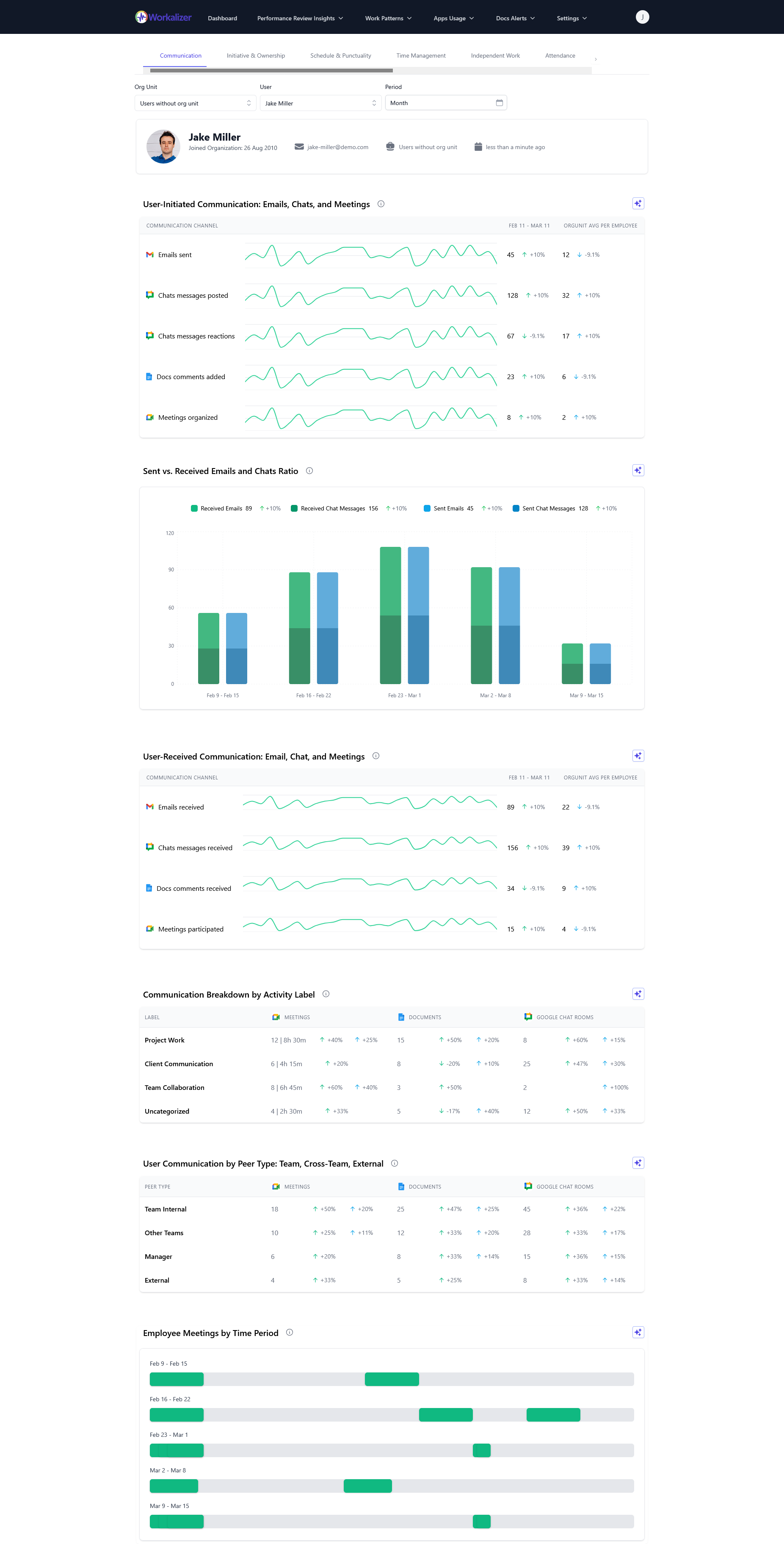
At Workalizer, we believe that genuine productivity and well-being stem from data-driven insights, not just anecdotal evidence or market trends. We analyze signals from your company’s usage of Google Workspace — Gmail, Drive, Chat, Gemini, and Meet — to provide unbiased, actionable analytics. This isn't about surveillance; it's about identifying patterns, understanding bottlenecks, and revealing where your teams are truly thriving or struggling.
For instance, are project managers spending an inordinate amount of time on email instead of strategic planning? Are certain teams collaborating effectively by using Google Docs to share documents, or are they duplicating efforts in silos? Our platform can pinpoint where AI adoption is genuinely enhancing workflows and where it might be adding to the cognitive burden. We help you move beyond assumptions to a place of informed decision-making.
**The Path Forward: Smart, Sustainable Productivity
In 2026, navigating the complexities of AI and employee well-being requires a nuanced, data-centric approach. It’s not about rejecting AI or wellness tech, but about integrating them intelligently and evaluating their real-world impact.
- Measure Real Productivity: Go beyond surface-level metrics. Workalizer helps you understand how people actually work, collaborate, and utilize tools like Gemini, providing context to productivity numbers.
- Identify AI Overload: Pinpoint areas where AI might be adding complexity rather than streamlining. Optimize workflows to reduce cognitive friction.
- Foster Meaningful Collaboration: Analyze how teams are sharing information and collaborating within Google Workspace to ensure it’s efficient and effective, whether it's understanding how to share via Google Docs or managing shared Drive files.
- Address Root Causes: Use insights to identify systemic issues contributing to burnout, allowing you to implement targeted interventions that truly support employee well-being.
The AI productivity paradox is real, but it doesn't have to be your organization's reality. By embracing data-driven insights, leaders can move beyond the hype and build a workplace where AI empowers, rather than exhausts, and where genuine well-being is a measurable outcome, not just a marketing buzzword.