Future-Proofing Productivity: How AI Ethics & Alternatives Will Reshape Google Workspace in 2026
The AI Reckoning: Ethical Considerations in the Age of Google Workspace
The year is 2026, and the integration of Artificial Intelligence into every facet of our professional lives is no longer a futuristic fantasy – it's the present reality. Google Workspace, a cornerstone of modern organizational workflows, is deeply intertwined with AI, from predictive text in Gmail to Gemini-powered insights in Google Docs. However, this increasing reliance on AI raises critical ethical questions that demand our immediate attention.
Recent events, such as the controversy surrounding OpenAI's collaboration with the Pentagon after Anthropic's departure due to ethical concerns (The Guardian), highlight the growing importance of ethical considerations in AI development and deployment. Are we sacrificing our values at the altar of efficiency? Are we adequately addressing the potential biases embedded within these AI systems? These are the questions that HR leaders, Engineering Managers, and C-Suite Executives must grapple with as they navigate the evolving landscape of Google Workspace and AI-driven productivity.
We've seen how AI-powered tools can boost productivity, but at what cost? Are we creating a workplace where employees are constantly monitored and evaluated by algorithms? Are we prioritizing efficiency over employee well-being? These are not just philosophical musings; they have tangible implications for employee morale, retention, and ultimately, the bottom line. Smart leaders are thinking critically about how to best integrate AI ethically.
The Bias Blind Spot: Unmasking Algorithmic Discrimination
One of the most pressing ethical concerns surrounding AI in Google Workspace is the potential for algorithmic bias. AI models are trained on vast datasets, and if these datasets reflect existing societal biases, the AI will inevitably perpetuate and amplify those biases. This can lead to discriminatory outcomes in areas such as hiring, performance evaluations, and promotion decisions. Imagine an AI-powered performance review system that consistently undervalues the contributions of female employees simply because the training data overrepresents male success stories. The consequences can be devastating.
Combating algorithmic bias requires a multi-pronged approach. First and foremost, organizations must prioritize data diversity and inclusion when training their AI models. This means actively seeking out and incorporating data from underrepresented groups to ensure that the AI is not inadvertently discriminating against them. Second, organizations must implement robust auditing and monitoring mechanisms to detect and mitigate bias in AI-driven decision-making processes. This includes regularly evaluating the performance of AI systems across different demographic groups and taking corrective action when bias is detected. Workalizer is dedicated to providing unbiased productivity analytics, helping companies avoid these pitfalls. If you're unsure how to share a google doc file, consider the ethical implications of who has access and what biases might be present in the content itself.
Transparency and Explainability: Demystifying the Black Box
Another critical ethical consideration is the lack of transparency and explainability in many AI systems. Often referred to as the "black box" problem, this refers to the fact that it can be difficult, if not impossible, to understand how an AI system arrived at a particular decision. This lack of transparency can erode trust and make it difficult to hold AI systems accountable for their actions.
To address this issue, organizations must demand greater transparency and explainability from their AI vendors. This means requiring vendors to provide clear and concise explanations of how their AI systems work and how they arrive at their decisions. It also means implementing mechanisms for users to challenge and appeal AI-driven decisions that they believe are unfair or inaccurate.
The Rise of Alternatives: Beyond the Big Tech Ecosystem
Growing concerns about data privacy, security, and ethical practices are driving a surge in demand for Google Workspace alternatives. As highlighted in The Guardian, many organizations are seeking more ethical and privacy-focused solutions to meet their collaboration and productivity needs.
This trend is particularly pronounced in Europe, where stricter data protection regulations and a growing awareness of the potential harms of big tech are fueling the adoption of alternative platforms. But the movement is gaining momentum globally, as organizations of all sizes recognize the importance of taking control of their data and ensuring that their technology aligns with their values.
Open Source Solutions: Embracing Community-Driven Innovation
One of the most promising alternatives to Google Workspace is open-source software. Open-source solutions offer a number of advantages, including greater transparency, customizability, and control over data. They also tend to be more privacy-focused, as they are not typically driven by the same profit motives as their proprietary counterparts.
Examples of popular open-source alternatives to Google Workspace include Nextcloud (for file storage and collaboration), Collabora Online (for document editing), and Rocket.Chat (for team communication). These solutions offer comparable functionality to Google Workspace, but with a greater emphasis on privacy, security, and user control.
The European Edge: Privacy-First Productivity Platforms
Europe is emerging as a hub for privacy-focused productivity platforms. Companies like ProtonMail (encrypted email) and Tutanota (encrypted email and calendar) are gaining traction as organizations seek alternatives to Google Workspace that prioritize data privacy and security. These platforms offer end-to-end encryption, meaning that only the sender and recipient can access the content of their communications. They also comply with strict European data protection regulations, such as GDPR.
The Future of Productivity: AI-Powered, Ethical, and Empowering
The future of productivity is not just about efficiency; it's about creating a workplace that is ethical, empowering, and aligned with human values. This means embracing AI in a responsible and transparent manner, prioritizing data privacy and security, and empowering employees to take control of their technology.
As the AI landscape continues to evolve, organizations must remain vigilant in their pursuit of ethical and responsible AI practices. This requires ongoing dialogue, collaboration, and a commitment to continuous improvement. It also requires a willingness to challenge the status quo and to explore alternative solutions that better align with our values.
India's AI Trajectory: Balancing Growth with Ethics
The rapid growth of the AI sector in India, as noted by TechCrunch (TechCrunch), presents both opportunities and challenges. While the country has emerged as a major hub for AI development and adoption, it is crucial to ensure that this growth is guided by ethical principles. As Indian firms prioritize user acquisition, it is imperative that they do not compromise on data privacy, security, or fairness.
The Indian government's commitment to becoming a global AI hub is commendable, but it must be accompanied by strong regulatory frameworks and ethical guidelines. This includes promoting data localization, ensuring transparency in AI decision-making, and protecting the rights of individuals whose data is being used to train AI models. Like the challenge of how to share link in google drive safely, companies must consider security and data privacy.
MWC 2026: A Glimpse into the Future of AI and Productivity
The Mobile World Congress (MWC) 2026 showcased the latest advancements in AI, foldable devices, and satellite connectivity (Android Central). These innovations have the potential to transform the way we work and collaborate, but they also raise new ethical questions. For example, the increasing use of AI in mobile devices could lead to greater surveillance and data collection, while satellite connectivity could exacerbate the digital divide. As we embrace these new technologies, it is essential to consider their ethical implications and to ensure that they are used in a way that benefits all of humanity.
Workalizer: Your Partner in Ethical AI and Workspace Optimization
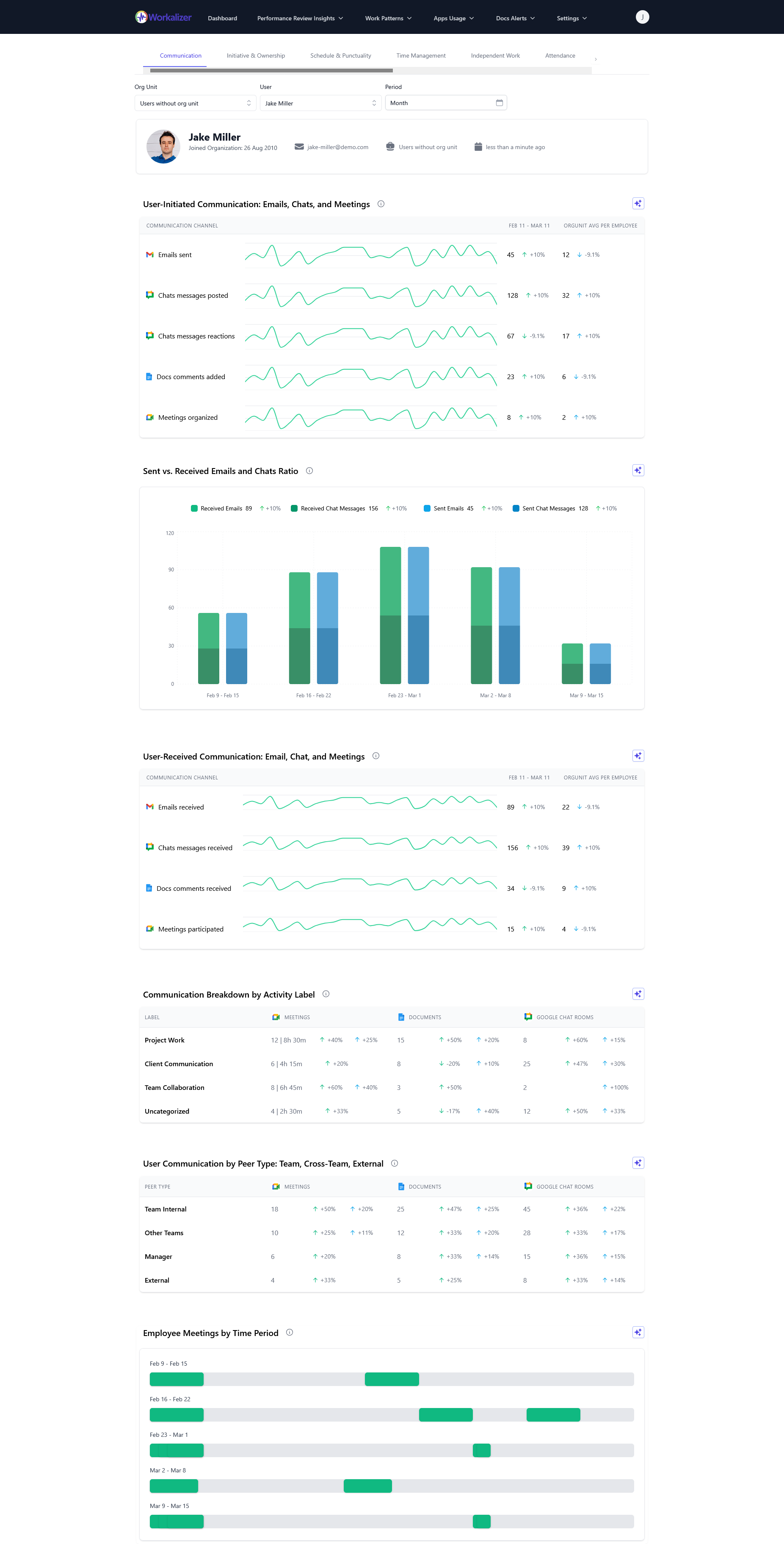
At Workalizer, we are committed to helping organizations navigate the complex landscape of AI and Google Workspace in an ethical and responsible manner. Our AI-powered platform provides performance review insights based on company usage of Google Workspace, helping you identify areas for improvement and optimize your workflows. We are dedicated to providing data-driven, unbiased productivity analytics that empower your employees and drive organizational success.
We believe that the future of productivity is not just about technology; it's about people. By embracing ethical AI practices, prioritizing data privacy, and empowering employees, we can create a workplace that is both efficient and humane. Contact us today to learn more about how Workalizer can help you unlock the full potential of your organization.