The Agentic Revolution: How AI Integrations Will Transform Development in 2026
The Agentic Revolution: How AI Integrations Will Transform Development in 2026
Forget the lone coder hunched over a keyboard. The future of software development, arriving at breakneck speed in 2026, is collaborative, intelligent, and driven by AI agents. We're not just talking about AI-powered code completion; we're talking about a fundamental shift in how applications are built, tested, and deployed. This transformation is fueled by increasingly sophisticated AI integrations, capable of automating complex tasks, understanding context, and even anticipating developer needs. Think of it as having an army of tireless, highly skilled assistants working alongside your team, boosting productivity and unlocking new levels of innovation.
But what does this revolution look like in practice? And how can organizations prepare to embrace this new paradigm? Let's dive into the key trends and technologies driving the agentic revolution in software development.
The Rise of Agentic AI
At the heart of this transformation is the rise of agentic AI – AI systems designed to act autonomously to achieve specific goals. These agents are no longer passive tools; they are active collaborators, capable of understanding complex instructions, making decisions, and executing tasks with minimal human intervention. Gemini 3, for example, is rapidly becoming the core orchestrator for these workflows. As noted in Google's developer blog, Gemini 3 offers precise controls over reasoning depth and state management, addressing reliability challenges that have historically hindered the deployment of AI agents.
One compelling example of this is the Agent Development Kit (ADK), a model-agnostic framework that allows developers to build, test, and deploy AI agents as if they were standard software components. This shift towards treating AI agents as first-class citizens in the development process is a game-changer, enabling organizations to build more complex and sophisticated applications with greater speed and efficiency.
Furthermore, the availability of models like Gemini 3 Flash in Gemini CLI, boasting a SWE-bench Verified score of 78% for agentic coding, demonstrates the increasing capabilities and cost-effectiveness of AI-powered development tools. This outperformance compared to previous models, at a fraction of the cost, makes AI-driven development accessible to a wider range of organizations.
Context-Driven Development with Conductor
However, simply throwing AI at the problem isn't enough. True productivity gains require a more structured and intentional approach to development. That's where context-driven development comes in. Conductor, a new extension for Gemini CLI, embodies this philosophy. As explained on the Google Developers Blog, Conductor helps developers create formal specs and plans that live alongside their code in persistent Markdown files, allowing for better planning, review, and control over the development process.
This approach addresses a critical challenge in AI-assisted development: ensuring that the AI understands the developer's intent and maintains a consistent understanding of the project context. By formalizing intent and integrating it directly into the codebase, Conductor helps bridge the gap between human and AI, leading to more reliable and predictable outcomes. For organizations using Google Workspace, this means better integration with tools like Google Docs. You can now easily use AI to generate documentation, ensuring everyone knows how to share google docs link with stakeholders. This level of integration and automation significantly reduces the manual effort involved in documentation and collaboration.
The Universal Commerce Protocol (UCP): A New Foundation for Agentic Commerce
Beyond general-purpose development tools, we're also seeing the emergence of specialized AI integrations tailored to specific industries and use cases. One notable example is the Universal Commerce Protocol (UCP), an open-source standard designed to power the next generation of agentic commerce. According to the Google Developers Blog, UCP establishes a common language and functional primitives that enable seamless commerce journeys between consumer surfaces, businesses, and payment providers.
With endorsements from industry giants like Shopify, Etsy, Walmart, and major payment processors, UCP has the potential to revolutionize the way businesses interact with customers and conduct transactions. By providing a standardized framework for agentic commerce, UCP reduces friction, unlocks new opportunities for personalization, and enables more efficient and automated commerce workflows. This is especially relevant for businesses who are looking for ways to adapt their performance metrics to the changing landscape.
Debugging in the Age of AI
The increasing complexity of AI-powered systems also presents new challenges for debugging and troubleshooting. Traditional debugging techniques are often inadequate for dealing with the nuances of AI models and distributed cloud environments. Fortunately, new tools and techniques are emerging to address these challenges.
As highlighted in "A Developer's Guide to Debugging JAX on Cloud TPUs," specialized tools are needed to debug workflows in distributed cloud environments. These include tools for accessing logs, hardware metrics, and other critical information. Understanding the core components and dependencies of the system, such as libtpu and JAX/jaxlib, is essential for effective debugging.
Implications for Workalizer Users
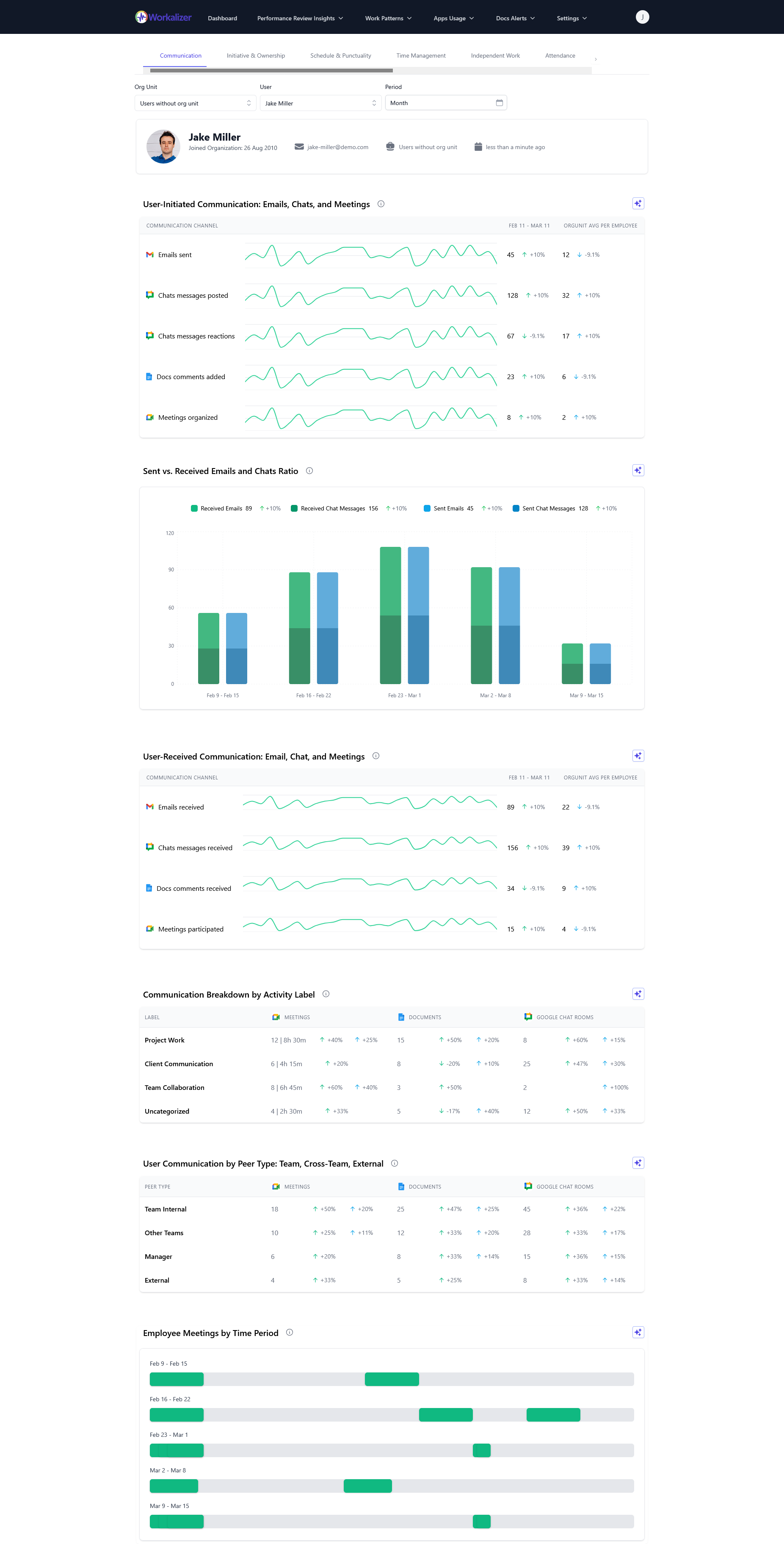
For Workalizer users, these trends have significant implications. As AI integrations become more prevalent, organizations will need to adapt their performance review processes to account for the contributions of AI agents and the changing roles of human developers. Workalizer's AI-powered platform is uniquely positioned to provide insights into how AI integrations are impacting productivity and collaboration within Google Workspace, enabling organizations to optimize their use of these tools and maximize their return on investment.
By analyzing signals from Gmail, Drive, Chat, and Meet, Workalizer can provide data-driven, unbiased productivity analytics that help organizations understand the impact of AI integrations on their workforce. This information can be used to identify areas where AI is boosting productivity, as well as areas where human intervention is still needed. Furthermore, Workalizer can help organizations track the performance of AI agents and ensure that they are aligned with business goals.
Preparing for the Future
The agentic revolution is already underway, and organizations that fail to embrace these new technologies risk falling behind. By investing in AI integrations, adopting context-driven development practices, and leveraging data-driven insights, organizations can unlock new levels of productivity, innovation, and competitive advantage. The future of software development is here, and it's powered by AI.